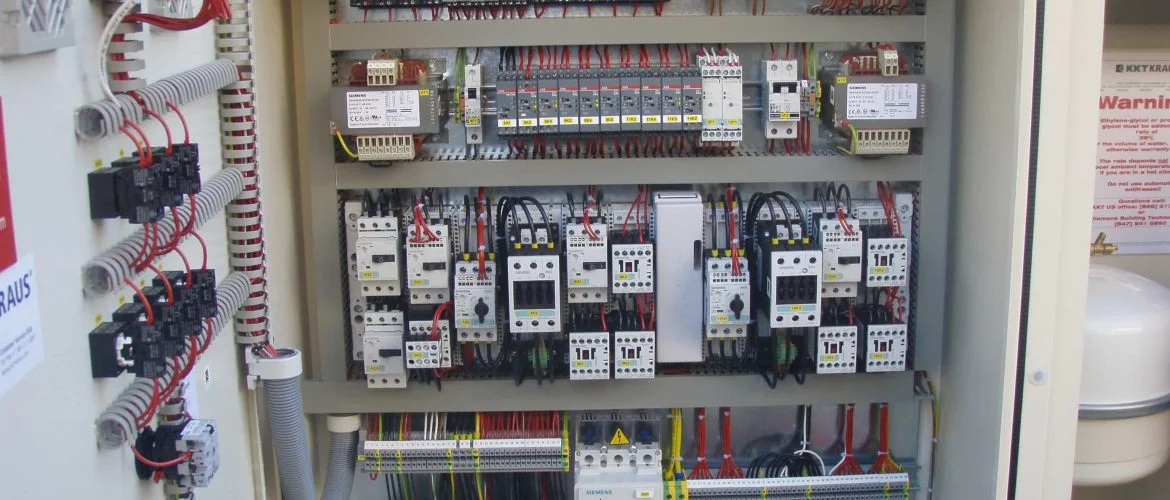
Precision Combustion Optimization for Southern California Boilers & Process Heaters
Direct Engineering Summary
SCAQMD Rule 1146 source test preparation by Western Mechanical, Inc. involves pre-compliance 5-gas electrochemical/NDIR flue gas analysis, FGR valve linkage hysteresis correction, and O2 trim servo mapping to achieve 9 ppm NOx (corrected to 3% O2) and CO below 50 ppm. Our UA Local 250 journeymen utilize calibrated test equipment across 25%–100% firing rates to ensure compliance. This rigorous process minimizes re-testing costs and potential penalties for commercial and industrial facilities. Contact Western Mechanical, Inc., CSLB #618138, at (661) 251-0111 for expert service.
Engineering Tolerances & Governing Standards
Parameter
Specification
Standard
NOx Emission Limit (Corrected)
9 ppm @ 3% O2 (dry basis)
SCAQMD Rule 1146.2
CO Emission Limit
50 ppm @ 3% O2 (dry basis)
SCAQMD Rule 1146.2
O2 Trim Control Accuracy
+/- 0.5% O2
OEM & Best Practices
Firing Rate Test Range
25% to 100% (4 points minimum)
SCAQMD Protocol
Flue Gas Analyzer Calibration
NIST Traceable, +/- 2% F.S. accuracy
EPA Method 7E / 10
Precision Flue Gas Analysis for Rule 1146 Compliance
Achieving and maintaining compliance with SCAQMD Rule 1146.2 for commercial and industrial boilers, steam generators, and process heaters requires meticulous pre-source test preparation. Our approach begins with a comprehensive 5-gas electrochemical and NDIR flue gas analysis, utilizing state-of-the-art, recently calibrated analyzers. This pre-compliance testing allows us to accurately measure NOx, CO, O2, CO2, and combustibles across the entire operational firing range, typically from 25% to 100% load, identifying potential excursions before the official source test. This proactive diagnostic step is critical for avoiding costly re-tests and regulatory fines.
The Southern California climate, with its specific ambient air quality concerns, mandates these stringent emission controls. Our UA Local 250 signatory journeymen are adept at interpreting these complex combustion analytics, correlating real-time data with historical performance and OEM specifications. We identify subtle deviations in combustion efficiency, air-to-fuel ratio, and flame stability that can lead to non-compliance. This deep technical understanding ensures that any adjustments made are precise and sustainable, optimizing burner performance while strictly adhering to the 9 ppm NOx and 50 ppm CO limits corrected to 3% O2.
Optimizing FGR and O2 Trim for Stable Emissions
A common challenge in achieving consistent low-NOx emissions is the proper function and calibration of the Flue Gas Recirculation (FGR) system and O2 trim controls. FGR valve linkage hysteresis, often overlooked, can lead to inconsistent NOx reduction, particularly during load changes. Our technicians meticulously inspect and correct mechanical linkages, ensuring smooth, repeatable modulation of FGR flow. This mechanical precision is then complemented by electronic optimization, where we map the O2 trim servo's response across various firing rates, ensuring the ideal excess oxygen level is maintained for efficient and clean combustion.
The interplay between FGR and O2 trim is crucial for maintaining the delicate balance required for 9 ppm NOx. Excess FGR can lead to flame instability and increased CO, while insufficient FGR fails to adequately cool the flame, resulting in higher NOx. Similarly, improper O2 trim can lead to either fuel-rich (high CO) or fuel-lean (higher NOx, reduced efficiency) conditions. Our expertise lies in tuning these parameters synergistically, accounting for fuel composition variations and atmospheric conditions common in the Acton and greater Los Angeles industrial corridors, maximizing both environmental compliance and operational efficiency.
Lifecycle ROI Through Proactive Compliance
Investing in rigorous SCAQMD Rule 1146 source test preparation offers significant lifecycle return on investment for commercial and industrial facilities. Beyond avoiding immediate fines, proactive compliance extends equipment lifespan by optimizing combustion, reducing thermal stress, and minimizing soot accumulation. Efficient combustion directly translates to lower fuel consumption, a substantial operational cost saving, especially with fluctuating natural gas prices in California. Our services are designed to not only pass the immediate source test but to establish a robust, repeatable combustion profile that ensures long-term regulatory adherence and peak energy performance.
Western Mechanical, Inc. provides comprehensive documentation of all pre-test adjustments, analytical readings, and performance curves, offering a clear audit trail for regulatory bodies. This transparency, combined with our CSLB #618138 licensed and UA Local 250 union journeymen's expertise, provides facility managers and chief engineers with unparalleled confidence. Our commitment to precision engineering and sustainable practices helps Southern California businesses navigate complex environmental regulations, ensuring their critical mechanical assets operate cleanly, reliably, and cost-effectively for years to come.
UA Local 250 Certified Field Diagnostic & Commissioning Protocol
Verify flue gas analyzer calibration with NIST traceable gases; confirm +/- 2% F.S. accuracy for NOx, CO, and O2.
Perform a multi-point combustion analysis (min. 4 points: 25%, 50%, 75%, 100% firing) to map NOx, CO, and O2 levels.
Inspect and lubricate FGR valve linkages; adjust for zero hysteresis and smooth, repeatable modulation across full travel.
Map O2 trim servo response to ensure precise excess air control (+/- 0.5% O2) across all firing rates, verifying sensor accuracy.
Confirm burner component integrity (e.g., fuel nozzles, air registers, igniters) to prevent flame instability or hot spots leading to elevated NOx.
Facility Director & Chief Engineer FAQs
What is the primary emission target for SCAQMD Rule 1146?
The primary emission target for SCAQMD Rule 1146.2 is 9 ppm NOx (nitrogen oxides) corrected to 3% oxygen on a dry basis, along with a CO (carbon monoxide) limit of 50 ppm, also corrected to 3% O2. Our tuning ensures compliance with these stringent limits.
How does FGR (Flue Gas Recirculation) help reduce NOx?
FGR reduces NOx by recirculating a portion of the cooled flue gases back into the combustion air stream. This inert gas lowers the flame temperature, which is the primary mechanism for thermal NOx formation. Proper FGR tuning is critical for optimal NOx reduction without increasing CO.
Why is O2 trim control important for Rule 1146 compliance?
O2 trim control is vital because it precisely maintains the optimal excess oxygen level for complete combustion. Too little O2 leads to high CO, while too much O2 can increase NOx and reduce efficiency. Accurate O2 trim ensures stable, low-emission operation.
How often should my boiler undergo source test preparation?
Boilers should undergo source test preparation annually or prior to any scheduled SCAQMD source test. This proactive approach ensures continuous compliance, identifies potential issues early, and optimizes performance, minimizing the risk of non-compliance penalties.
Acton Headquarters & 24/7 Southern California Dispatch
Western Mechanical, Inc. • 2210 Soledad Canyon Road, Suite O, Acton, CA 93510 • Primary Phone: (661) 251-0111 • 24/7 Toll-Free: (800) 585-5085 • CSLB #618138 (C-20, C-38, C-4)