Optimizing HVAC for Tech/Biotech R&D Headquarters and Data Centers in the Conejo Valley
Direct Engineering Summary
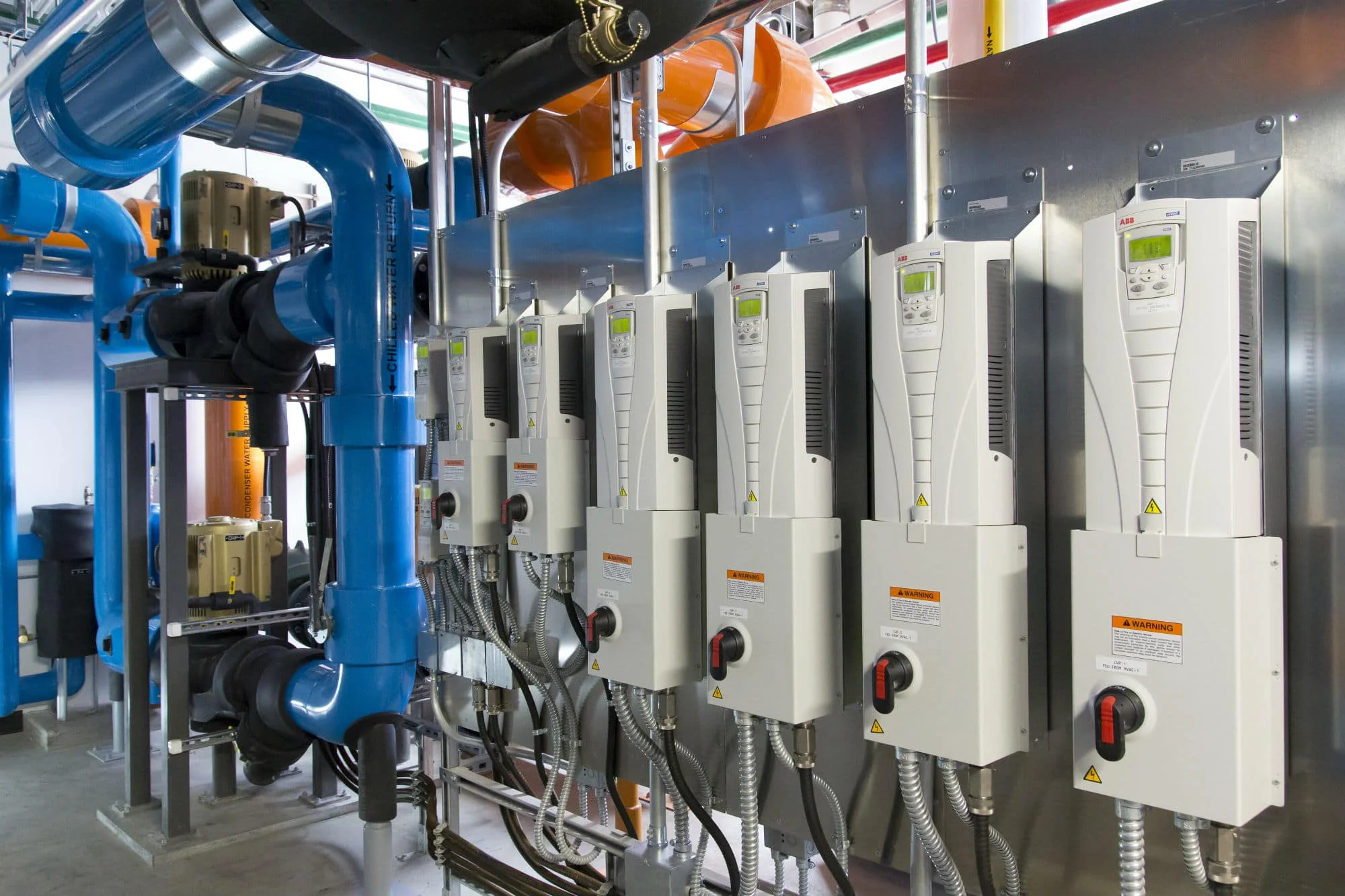
Western Mechanical, Inc. delivers specialized HVAC services for Calabasas, Agoura Hills, and Westlake corporate campuses, focusing on chiller, RTU, and VAV system optimization. This includes implementing MERV-14/carbon filtration for wildfire smoke, managing data closet cooling, and integrating with SCE automated demand response programs. Our UA Local 250 signatory journeymen ensure precise system calibration, adhering to ASHRAE 90.1 standards for energy efficiency. Contact Western Mechanical, Inc. at (661) 251-0111, CSLB #618138, for expert mechanical engineering solutions.
Engineering Tolerances & Governing Standards
Parameter
Specification
Standard
Chiller Approach Temperature
2-5°F (1.1-2.8°C) for optimal efficiency
ASHRAE 90.1-2019
VAV Box Minimum Airflow
20-30% of design maximum (per zone load)
ASHRAE 170-2021
MERV Filtration Rating (Wildfire Mode)
MERV 14 minimum, supplemented with activated carbon
NAFA 2021 Standard
Data Closet Temperature Setpoint
64-81°F (18-27°C) inlet air temperature
ASHRAE TC 9.9
RTU Economizer Damper Leakage
Max 10 CFM/sq ft at 1.0 in. w.c. static pressure
AMCA 511-18
Advanced HVAC Solutions for Calabasas & Agoura Hills Corporate Campuses
The unique demands of tech and biotech R&D headquarters in Calabasas, Agoura Hills, and Westlake Village necessitate a sophisticated approach to HVAC system design and maintenance. These facilities often feature critical data closets, multi-zone VAV air handlers, and specialized laboratory environments, all requiring precise temperature and humidity control. Western Mechanical, Inc. specializes in optimizing these complex systems, ensuring stable operational conditions for sensitive equipment and personnel comfort across diverse zones. Our expertise extends to integrating robust filtration strategies essential for maintaining indoor air quality, particularly during Southern California's wildfire seasons.
Maintaining peak efficiency in these environments is paramount, given the high energy consumption of R&D infrastructure. Our UA Local 250 signatory journeymen are adept at diagnosing and resolving issues in large-tonnage chillers, direct expansion (DX) RTUs, and intricate VAV networks. We focus on proactive maintenance and calibration to prevent costly downtime and energy waste. This includes fine-tuning control sequences, verifying sensor accuracy, and ensuring optimal refrigerant charge or chilled water flow, all critical for sustaining the rigorous operational demands of the Conejo Valley's leading corporate campuses.
Wildfire Smoke Mitigation and Enhanced Indoor Air Quality
The persistent threat of wildfires in Southern California presents a significant challenge for corporate campuses, demanding advanced air filtration capabilities beyond standard HVAC protocols. Our solutions for Calabasas and Agoura Hills campuses incorporate multi-stage filtration, specifically integrating MERV-14 or higher efficiency particulate air (HEPA) filters alongside activated carbon units. This combination effectively captures fine particulate matter (PM2.5) and volatile organic compounds (VOCs) originating from smoke, protecting sensitive electronic equipment and ensuring a healthy indoor environment for R&D staff, even during severe air quality events.
Implementing these enhanced filtration modes requires careful consideration of system static pressure and fan motor capacity to avoid compromising airflow or increasing energy consumption excessively. Western Mechanical, Inc. engineers evaluate existing air handler units (AHUs) and RTUs to determine the feasibility of filtration upgrades, often recommending variable frequency drive (VFD) installations to dynamically adjust fan speeds and maintain optimal airflow under varying filter loads. We also integrate advanced building management system (BMS) controls to automatically activate wildfire smoke mitigation sequences based on external air quality alerts, providing a seamless and responsive defense mechanism.
Energy Efficiency and SCE Demand Response Integration
Optimizing energy consumption is a core focus for corporate campuses in the Calabasas and Agoura Hills corridor, especially with Southern California Edison's (SCE) demand response programs. Western Mechanical, Inc. assists facilities in integrating their HVAC systems with automated demand response (ADR) protocols, allowing for strategic load shedding during peak utility periods. This involves programming chillers, RTUs, and VAV systems to temporarily adjust setpoints or operating schedules in response to grid signals, without compromising critical operations in data closets or R&D labs. The financial incentives and environmental benefits of ADR are substantial.
Our approach to energy efficiency extends beyond demand response, encompassing comprehensive system audits to identify and rectify inefficiencies. This includes optimizing chiller sequencing, calibrating economizers for maximum free cooling, and ensuring proper insulation on chilled water lines and ductwork. For data closets, we implement hot aisle/cold aisle containment strategies and deploy in-row cooling units or computer room air conditioners (CRACs) with precise control, minimizing bypass airflow and maximizing cooling effectiveness. These integrated strategies significantly reduce operational costs and enhance the overall sustainability profile of corporate campuses.
UA Local 250 Certified Field Diagnostic & Commissioning Protocol
Verify chiller approach temperature (condenser/evaporator) within 2-5°F using calibrated RTD sensors to ensure optimal heat transfer.
Measure static pressure drop across MERV-14/carbon filters in RTUs and AHUs; replace if exceeding manufacturer's specified limit (typically 0.8-1.2 in. w.c.).
Confirm VAV box minimum airflow setpoints (20-30% of max) via hot wire anemometer and verify proper damper modulation across all zones.
Log data closet inlet air temperatures and humidity levels using a data logger for 24-hour cycle, ensuring compliance with ASHRAE TC 9.9 guidelines.
Test SCE automated demand response (ADR) sequence for chillers and RTUs, verifying proper setpoint adjustments and load shedding without alarm generation.
Facility Director & Chief Engineer FAQs
How do you address cooling for high-density data closets within a corporate campus?
We implement targeted cooling solutions like in-row CRAC units, hot/cold aisle containment, and optimized airflow distribution. Our approach ensures stable temperatures (ASHRAE TC 9.9 compliant) and humidity, preventing hotspots while minimizing energy consumption across the entire data infrastructure for Calabasas and Agoura Hills facilities.
What specific filtration upgrades do you recommend for wildfire smoke events?
For wildfire smoke, we recommend upgrading to MERV-14 or higher particulate filters combined with activated carbon filtration. This dual approach effectively removes fine particulates (PM2.5) and harmful VOCs. We also assess fan capacity and integrate automatic control sequences for rapid deployment during smoke events in the Conejo Valley.
Can you integrate our existing HVAC system with SCE's demand response programs?
Yes, we specialize in integrating corporate campus HVAC systems with SCE's automated demand response (ADR) programs. This involves programming chillers, RTUs, and VAVs to strategically adjust operation during peak demand, optimizing energy costs and earning incentives without impacting critical R&D or data center operations.
How do you ensure multi-zone VAV systems maintain comfort and efficiency?
We meticulously calibrate VAV boxes, verify sensor accuracy, and optimize control sequences to ensure precise temperature and airflow delivery across all zones. Our service includes balancing air distribution, checking damper operation, and troubleshooting any stratification or pressure imbalances to maximize comfort and energy efficiency for your Calabasas campus.
Acton Headquarters & 24/7 Southern California Dispatch
Western Mechanical, Inc. • 2210 Soledad Canyon Road, Suite O, Acton, CA 93510 • Primary Phone: (661) 251-0111 • 24/7 Toll-Free: (800) 585-5085 • CSLB #618138 (C-20, C-38, C-4)