WESTERN MECHANICAL, INC. | Primary Dispatch: (661) 251-0111 | 24/7 Hotline: (800) 585-5085 | CSLB #618138 (C-20, C-38, C-4) | 100% UA Local 250 Union
NFPA 70B Infrared Thermography for HVAC Starters, VFDs & Steam
Precision Predictive Maintenance for Critical Mechanical & Electrical Infrastructure in Southern California
Direct Engineering Summary
NFPA 70B infrared thermography is a critical predictive maintenance technique used by Western Mechanical, Inc. to detect thermal anomalies in HVAC electrical and mechanical components. This non-contact inspection method identifies potential failures such as loose electrical connections, overloaded circuits, or bearing degradation in motors, with temperature differentials as low as 1°C often indicating incipient faults. Our UA Local 250 journeymen utilize radiometric FLIR cameras under load conditions, adhering to CSLB #618138 standards, to prevent costly downtime and optimize operational efficiency for Southern California facilities. Contact us at (661) 251-0111.
Engineering Tolerances & Governing Standards
Parameter
Specification
Standard
Thermal Sensitivity (NETD)
< 30 mK at 30°C
ISO 18434-1
Temperature Measurement Accuracy
±2°C or ±2% of reading
ASTM E1933
Minimum Load for Electrical Inspection
40% of rated load
NFPA 70B, Annex I
Emissivity Correction Range
0.01 to 1.00 adjustable
NIST Traceable
Recommended Inspection Interval
Annually for critical systems
NFPA 70B, Section 10.1.1
Detecting Incipient Failures in 480V/4160V Switchgear & VFDs
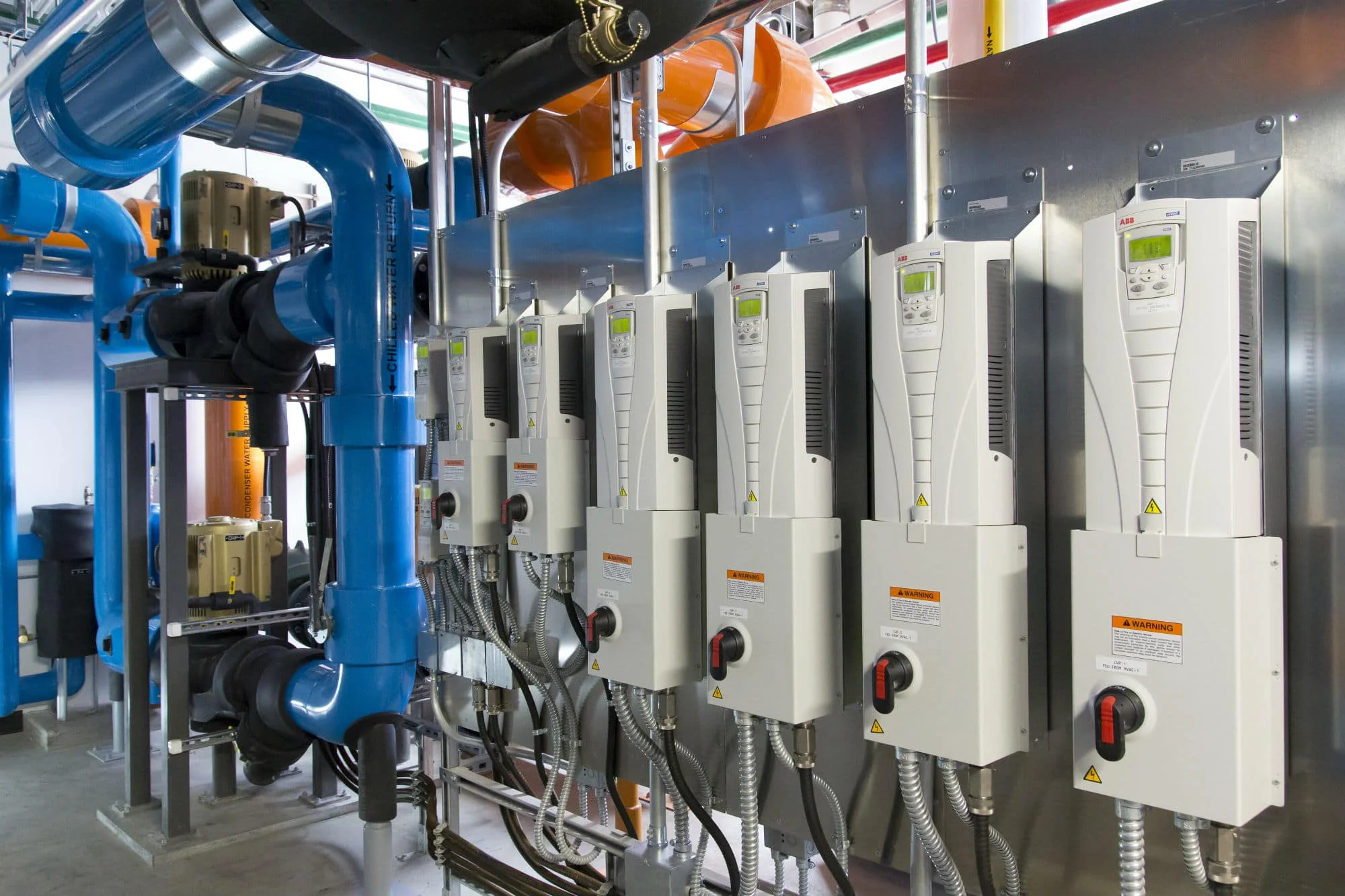
Infrared thermography, particularly when performed to NFPA 70B standards, provides an invaluable non-invasive window into the health of high-voltage electrical distribution systems powering critical HVAC equipment. Our UA Local 250 certified thermographers utilize advanced radiometric FLIR cameras to identify thermal anomalies in 480V and 4160V switchgear, motor control centers (MCCs), and variable frequency drives (VFDs) under actual operating loads. This allows for the detection of resistive heating caused by loose connections, corroded bus bars, or imbalanced phase loads, which often manifest as temperature differentials long before a catastrophic failure occurs. Early identification of these hotspots prevents arc flashes, equipment damage, and unplanned downtime.
For VFDs, specific attention is given to lug terminations, input/output reactors, and IGBT modules, where localized overheating can indicate impending insulation breakdown or component failure. The dynamic nature of VFD operation, with its rapid switching frequencies and potential for harmonic distortion, makes thermal monitoring particularly critical. By establishing a baseline thermal signature and trending deviations over time, Western Mechanical, Inc. can predict component lifespan and recommend targeted maintenance, ensuring the reliability of essential HVAC systems in Southern California's demanding climate. This proactive approach significantly reduces the total cost of ownership and improves facility safety.
Thermal Diagnostics for Overheated Motors & Saturated Insulation
Beyond electrical distribution, infrared thermography is highly effective for diagnosing mechanical issues in HVAC motors and associated rotating equipment. Overheated motor end-bells, for instance, can indicate failing bearings, shaft misalignment, or excessive load, all of which contribute to premature motor failure. Our inspections meticulously capture surface temperature profiles, allowing our UA Local 250 journeymen to differentiate between normal operational heat and abnormal thermal patterns indicative of friction or electrical resistance. This diagnostic capability extends to pumps, fans, and compressors, identifying issues such as coupling misalignment or lubrication deficiencies through their thermal signatures.
Furthermore, infrared thermography is crucial for assessing the integrity of insulation in steam systems and chilled water piping. Saturated or degraded insulation, often a result of moisture ingress or mechanical damage, will exhibit distinct thermal patterns, indicating significant energy losses. In steam traps, for example, a cold trap indicates a failed-closed condition, while a hot trap on the outlet side suggests a failed-open state, both leading to substantial energy waste. By pinpointing these inefficiencies, Western Mechanical, Inc. helps facilities optimize energy consumption and maintain system performance in compliance with Title 24 Part 6 and other energy efficiency mandates.
Integrating Thermography into Comprehensive Predictive Maintenance
The integration of NFPA 70B compliant infrared thermography into a comprehensive predictive maintenance program is a cornerstone of modern facility management. It complements other diagnostic techniques like vibration analysis and oil sampling, providing a holistic view of equipment health. For critical HVAC infrastructure, including large chillers, boilers, and cooling towers, regular thermal inspections are not merely reactive; they are a strategic investment in uptime and operational longevity. Our detailed radiometric reports provide actionable insights, prioritizing repairs based on severity and enabling facilities to schedule maintenance during planned outages, minimizing disruption to operations.
Western Mechanical, Inc. provides these specialized services across Southern California, leveraging our CSLB #618138 licensure and UA Local 250 union expertise to deliver unparalleled precision and reliability. Our thermographers are not just camera operators; they are experienced mechanical and electrical engineers who understand the underlying physics of failure and the operational context of complex HVAC systems. This depth of knowledge ensures that thermal anomalies are correctly interpreted and that recommended corrective actions are both effective and compliant with industry best practices, safeguarding your facility's critical assets and ensuring peak performance.
UA Local 250 Certified Field Diagnostic & Commissioning Protocol
Verify equipment is operating at minimum 40% load for electrical inspections per NFPA 70B.
Adjust emissivity settings on FLIR camera based on material surface properties (e.g., 0.95 for painted surfaces, 0.05 for polished copper).
Scan 480V/4160V switchgear and VFD panels with covers removed, maintaining safe working distance and PPE.
Document temperature differentials (Delta T) for identified hotspots, comparing against baseline and NFPA 70B severity guidelines.
Inspect motor end-bells and bearing housings for elevated temperatures, correlating with vibration data if available.
Facility Director & Chief Engineer FAQs
How often should critical HVAC electrical components be thermally scanned?
For critical HVAC electrical components like chiller starters and VFDs, NFPA 70B recommends annual infrared thermography inspections. More frequent scans may be warranted for high-load systems or those operating in harsh environments, ensuring early detection of potential failures and maximizing uptime.
What temperature differential indicates a significant electrical problem?
According to NFPA 70B, a temperature differential of 1°C to 3°C above ambient or similar components indicates a possible deficiency, while a 4°C to 15°C differential suggests an incipient fault requiring prompt attention. Above 15°C often signifies a serious deficiency needing immediate repair.
Can infrared thermography detect steam trap failures?
Yes, infrared thermography is highly effective for detecting steam trap failures. A properly functioning trap cycles between hot and cold. A continuously hot outlet indicates a failed-open trap, wasting steam, while a cold outlet suggests a failed-closed trap, causing condensate backup. Western Mechanical, Inc. accurately diagnoses these issues.
Is a facility required to shut down equipment for an infrared inspection?
No, a significant advantage of infrared thermography is its non-invasive nature. To obtain accurate thermal data reflecting operational stress, equipment should ideally be operating under normal load conditions. This allows Western Mechanical, Inc. to identify issues without disrupting facility operations.
Acton Headquarters & 24/7 Southern California Dispatch
Western Mechanical, Inc. • 2210 Soledad Canyon Road, Suite O, Acton, CA 93510 • Primary Phone: (661) 251-0111 • 24/7 Toll-Free: (800) 585-5085 • CSLB #618138 (C-20, C-38, C-4)