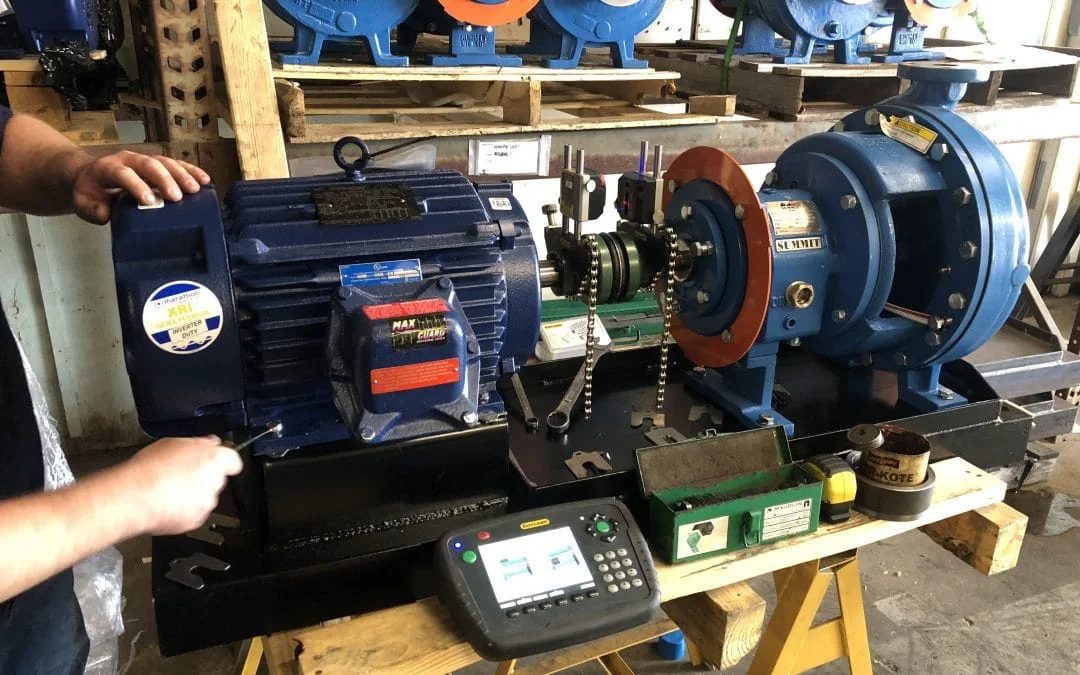
Western Mechanical, Inc. performs in-situ dynamic two-plane fan and impeller balancing to ISO 1940 G2.5 standards, targeting residual unbalance below 2.5 mm/s RMS velocity. This process involves precise measurement of vibration amplitude and phase angle using accelerometers and a strobe light, followed by calculated weight additions or removals to achieve optimal balance. Our UA Local 250 signatory journeymen ensure critical rotating equipment, including supply, return, and induced-draft fans, operates without detrimental structural resonance or premature pillow-block bearing failure. For expert service, contact Western Mechanical, Inc. at (661) 251-0111. CSLB #618138.
Engineering Tolerances & Governing Standards
Parameter
Specification
Standard
Balancing Grade (New/Repaired)
ISO 1940-1 G2.5
ISO 1940-1:2003
Residual Unbalance Velocity (RMS)
< 2.5 mm/s
ISO 20816-3 (Zone B)
Phase Angle Measurement Accuracy
+/- 1 degree
Internal QA/QC Protocol
Vibration Sensor Type
Piezoelectric Accelerometer (ICP)
ISO 2954:2012
Minimum Measurement Planes
Two (for dynamic balancing)
ISO 21940-11:2016
The Criticality of In-Situ Dynamic Balancing for HVAC Systems
Unbalanced fan impellers are a primary cause of excessive vibration in commercial and industrial HVAC systems, leading to structural fatigue, noise complaints, and significantly reduced bearing life. When a fan operates out of balance, the rotating mass creates centrifugal forces that are not uniformly distributed, resulting in dynamic loads transmitted through the shaft to the bearings and the supporting structure. This phenomenon is particularly acute in large air handling units (AHUs) and industrial exhaust fans, where the sheer mass of the impeller amplifies these forces, often manifesting as resonant frequencies within the building's penthouse or mechanical room structure.
Western Mechanical, Inc. employs advanced in-situ dynamic balancing techniques to address these issues without requiring complete fan disassembly. Our UA Local 250 journeymen utilize specialized vibration analysis equipment to measure the amplitude and phase of vibration in two planes simultaneously while the fan is operating. This allows for precise calculation of the necessary trim weights and their exact placement, correcting the unbalance to stringent ISO 1940 G2.5 standards. This proactive approach prevents costly premature bearing failures and mitigates structural stress, thereby extending equipment lifespan and ensuring optimal system performance, crucial for Southern California's demanding climate.
Diagnosing & Correcting Impeller Unbalance to ISO 1940 Standards
Diagnosing impeller unbalance involves more than just detecting high vibration; it requires identifying the specific type of unbalance (static, couple, or dynamic) and its precise location. Static unbalance occurs when the center of gravity is offset from the axis of rotation, while couple unbalance involves two equal and opposite forces in different planes. Dynamic unbalance, the most common and complex, is a combination of both. Our diagnostic process utilizes multi-channel vibration analyzers to capture real-time data, including overall RMS velocity, peak-to-peak displacement, and spectral analysis, which helps pinpoint the characteristic frequencies associated with unbalance (typically 1x RPM).
Once diagnosed, correction involves the precise addition or removal of material (trim weights) in specific locations and planes. Adhering to ISO 1940 G2.5 mandates a residual unbalance quality grade that ensures the center of mass is extremely close to the axis of rotation, minimizing dynamic forces. For example, a G2.5 grade for a fan operating at 1800 RPM translates to a very low permissible residual unbalance. Our certified technicians meticulously apply these corrections, often iteratively, until the vibration levels fall well within the acceptable limits, typically below 2.5 mm/s RMS velocity as per ISO 20816-3 for machine condition monitoring.
The long-term economic benefits of professional dynamic balancing are substantial. Premature bearing failure, often a direct consequence of persistent unbalance, can lead to unscheduled downtime, expensive replacement parts, and significant labor costs. A single pillow-block bearing replacement on a large industrial fan can easily incur thousands of dollars in parts and labor, not including the operational losses from system shutdown. By maintaining a G2.5 balance grade, the lifespan of bearings can be extended by factors of two or three, drastically reducing maintenance expenditures and improving overall asset reliability.
Beyond bearing longevity, proper balancing safeguards the entire mechanical system and supporting infrastructure. Chronic vibration can induce fatigue in fan housings, ductwork, and even the building's structural components, leading to cracks, loose fasteners, and compromised integrity. In critical facilities like hospitals (HCAI regulated) or data centers, such failures are not merely costly but can have severe operational repercussions. Western Mechanical, Inc.'s commitment to precision balancing ensures that your capital equipment investments are protected, operational continuity is maintained, and your total cost of ownership is minimized through enhanced reliability and reduced reactive maintenance.
UA Local 250 Certified Field Diagnostic & Commissioning Protocol
Verify fan lockout/tagout (LOTO) procedures are correctly implemented prior to any physical work.
Mount two accelerometers (e.g., PCB Piezotronics 603C01) in orthogonal directions on each bearing housing, ensuring proper adhesion and orientation.
Attach optical phase reference sensor (strobe light) to measure RPM and provide a phase reference for the balancing instrument.
Record initial 'as-found' vibration data (amplitude and phase) in two planes at operating speed using a dynamic balancing analyzer (e.g., CSI 2140 or Schenck SmartBalancer).
Calculate trial weight placement and magnitude based on initial data, apply trial weights, and re-run fan to record new vibration data for influence coefficient determination.
Facility Director & Chief Engineer FAQs
What is the primary benefit of in-situ dynamic balancing?
The primary benefit is correcting unbalance in place, eliminating the need for costly and time-consuming fan removal and transport. This minimizes downtime, reduces labor, and ensures the fan operates optimally within its actual installed environment, accounting for any structural influences.
How often should industrial fans be dynamically balanced?
The frequency depends on operational hours, environment, and criticality. For continuous operation, annual vibration analysis is recommended. If vibration trends upward, or after impeller cleaning/maintenance, dynamic balancing by Western Mechanical, Inc. should be performed to restore ISO 1940 G2.5 compliance.
What's the difference between static and dynamic balancing?
Static balancing corrects unbalance in a single plane, addressing only the center of gravity offset. Dynamic balancing, performed by Western Mechanical, Inc., corrects unbalance in two planes, accounting for both static and couple unbalance, which is crucial for long, narrow rotors like fan impellers to prevent wobbling forces.
Can dynamic balancing prevent structural resonance?
Yes, by significantly reducing the excitation forces transmitted by an unbalanced fan, dynamic balancing effectively mitigates the risk of exciting structural resonant frequencies. This prevents fatigue, cracking, and premature wear on building components and supporting structures, enhancing overall system integrity.
Acton Headquarters & 24/7 Southern California Dispatch
Western Mechanical, Inc. • 2210 Soledad Canyon Road, Suite O, Acton, CA 93510 • Primary Phone: (661) 251-0111 • 24/7 Toll-Free: (800) 585-5085 • CSLB #618138 (C-20, C-38, C-4)