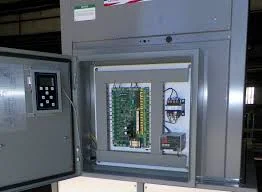
Precision Diagnostics for Industrial Burner Control Systems in Southern California
Direct Engineering Summary
Nuisance burner lockouts on Honeywell RM7800/7890/Slate and Fireye BurnerLogix E110 flame safeguard controllers are typically caused by insufficient flame signal strength (below 1.25 microamps for UV, 2.5 microamps for IR), faulty igniters, or gas train component failures. Western Mechanical, Inc., CSLB #618138, employs UA Local 250 journeymen to diagnose and rectify these issues, ensuring compliance with NFPA 85 and SCAQMD Rule 1146. Contact us at (661) 251-0111 for expert service.
Engineering Tolerances & Governing Standards
Parameter
Specification
Standard
Minimum UV Flame Signal
1.25 microamps (uA)
Honeywell RM7800 Series
Minimum IR Flame Signal
2.5 microamps (uA)
Fireye BurnerLogix E110
Gas Valve Leakage Rate
0.0% over 15 seconds (double block)
NFPA 85 Section 5.6.4.3
Ignition Trial Time (Pilot)
10 seconds maximum
NFPA 85 Section 5.6.3.2
Low Water Cutoff (LWCO) Test
Daily blowdown, monthly trip test
ASME Section I PG-60.1.2
Diagnosing Nuisance Lockouts on Honeywell RM7800/7890/Slate
The Honeywell RM7800, RM7890, and Slate series flame safeguard controllers are sophisticated microprocessor-based systems designed for reliable burner management in industrial applications. Nuisance lockouts, while frustrating, often point to subtle issues within the combustion train. Common culprits include intermittent flame signal loss due to aging UV or IR scanners, dirty sight pipes, or fluctuating fuel/air ratios. Our UA Local 250 journeymen utilize specialized diagnostic tools to analyze the controller's fault codes and real-time flame signal strength, pinpointing the exact cause rather than relying on guesswork.
Beyond flame signal, the RM7800 series monitors critical interlocks such as proof-of-closure switches, high/low gas pressure, and purge airflow. A transient dip in gas pressure or a sticky air proving switch can trigger a lockout. Our diagnostic process includes verifying the integrity and calibration of all associated sensors and switches. We also meticulously inspect the igniter and pilot assembly for proper spark gap, fuel delivery, and alignment, as a weak pilot flame is a frequent cause of main burner ignition failure and subsequent lockout, particularly in the fluctuating atmospheric conditions of Southern California.
Troubleshooting Fireye BurnerLogix E110 Flame Safeguard Systems
Fireye BurnerLogix E110 controllers offer robust flame supervision and burner sequencing, yet they too can experience nuisance lockouts. The E110 relies heavily on accurate flame detection, often via UV or IR scanners. A common issue is a degraded flame signal, which can stem from a contaminated scanner lens, a failing scanner tube, or even excessive ambient light interference. Our technicians are adept at measuring microamp signal strength directly from the scanner using a calibrated multimeter, ensuring the signal meets the manufacturer's minimum thresholds (e.g., 2.5 uA for IR) for stable operation.
Another critical area for Fireye E110 lockouts involves the gas train and associated safety interlocks. We perform rigorous double-block and bleed valve leak tests to NFPA 85 standards, ensuring zero leakage during burner startup and operation. Furthermore, we verify the functionality of low water cutoff (LWCO) devices on steam boilers, performing both daily blowdowns and monthly trip tests as per ASME Section I requirements. Addressing these often-overlooked components prevents costly downtime and ensures compliance with stringent safety regulations enforced by local authorities like SCAQMD.
Preventative Measures & Lifecycle ROI for Burner Controls
Implementing a proactive maintenance schedule is paramount to mitigating nuisance lockouts and extending the operational life of industrial burner controls. This includes routine cleaning of flame scanner lenses, verification of igniter performance, and calibration of pressure and temperature switches. For facilities operating in Southern California, dust, smog, and even seismic activity can contribute to sensor degradation and wiring issues. Our comprehensive service plans are designed to address these regional challenges, ensuring your combustion systems operate efficiently and reliably, minimizing unexpected downtime and maximizing energy efficiency.
Investing in regular, expert maintenance by CSLB #618138 certified UA Local 250 journeymen translates directly into significant lifecycle ROI. By preventing nuisance lockouts, facilities avoid lost production, costly emergency call-outs, and potential regulatory fines. Furthermore, optimized burner performance reduces fuel consumption and lowers emissions, aligning with SCAQMD Rule 1146 compliance. Our detailed service reports provide actionable insights into your system's health, allowing for informed capital planning and proactive component replacement before catastrophic failure occurs.
UA Local 250 Certified Field Diagnostic & Commissioning Protocol
Measure UV/IR flame scanner microamp signal strength during pilot and main flame stages, verifying against OEM specifications.
Perform a double-block and bleed gas valve leak test (bubble test or pressure decay) to NFPA 85 Section 5.6.4.3 standards.
Verify proper operation and calibration of all high/low gas pressure switches and air proving switches.
Conduct a functional test of the Low Water Cutoff (LWCO) device, including a blowdown and trip test (for boilers).
Inspect igniter electrode gap, ceramic integrity, and pilot flame stability under operating conditions.
Facility Director & Chief Engineer FAQs
What is the most common cause of a Honeywell RM7800 lockout?
The most frequent cause is an insufficient flame signal, often due to a dirty UV scanner, a failing scanner tube, or a misaligned pilot/main flame. Intermittent gas pressure issues or faulty air proving switches are also common culprits that require precise diagnostics.
How often should Fireye E110 flame scanners be cleaned?
Flame scanner lenses should be inspected and cleaned quarterly, or more frequently in dusty or high-particulate environments. Regular cleaning ensures optimal flame signal detection and prevents nuisance lockouts, especially critical for continuous industrial operations.
What is a 'double-block and bleed' test, and why is it important?
A double-block and bleed test verifies the integrity of the main gas shutoff valves, ensuring zero leakage past the valves when closed. It's crucial for safety, preventing uncombusted fuel from entering the furnace, and is mandated by NFPA 85 for industrial burners.
Can Western Mechanical, Inc. service older flame safeguard models?
Yes, our UA Local 250 journeymen are extensively trained on a wide range of industrial burner controls, including older Honeywell 7800 series and Fireye models, in addition to the latest BurnerLogix and Slate platforms. We provide expert repair and maintenance for diverse systems.
Acton Headquarters & 24/7 Southern California Dispatch
Western Mechanical, Inc. • 2210 Soledad Canyon Road, Suite O, Acton, CA 93510 • Primary Phone: (661) 251-0111 • 24/7 Toll-Free: (800) 585-5085 • CSLB #618138 (C-20, C-38, C-4)