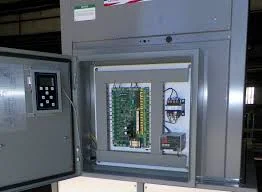
Upgrade Jackshaft Linkage Burners to Linkageless Servo Fuel-Air Control for Enhanced Efficiency and Emissions Compliance
Direct Engineering Summary
Upgrading jackshaft linkage burners to linkageless servo fuel-air control systems, such as Autoflame, Fireye Nexus, or LVM, can reduce natural gas consumption by 5-9% by eliminating mechanical hysteresis and enabling precise 0.1° stepper motor adjustments with O2/CO trim. This improves combustion efficiency and lowers NOx/CO emissions. Western Mechanical, Inc., CSLB #618138, employs UA Local 250 journeymen to perform these critical retrofits, ensuring compliance with SCAQMD Rule 1146 and Title 24 Part 6 standards. Contact us at (661) 251-0111 for expert service.
Engineering Tolerances & Governing Standards
Parameter
Specification
Standard
Fuel-Air Ratio Control Precision
0.1° stepper motor resolution
SCAQMD Rule 1146.2
Typical Natural Gas Savings
5% to 9% reduction
ASHRAE 90.1 Energy Standard
Oxygen Trim Range
1.5% to 5.0% O2 in flue gas
ASME CSD-1 Recommended Practice
Modulation Turndown Ratio
10:1 to 15:1 (typical)
Manufacturer Specific
Response Time for Trim Adjustment
< 3 seconds for 0.5% O2 change
NFPA 85 Boiler and Combustion Systems
The Inefficiency of Mechanical Linkage Burners
Traditional jackshaft linkage burners rely on mechanical rods and levers to simultaneously adjust fuel and air dampers. This inherent design introduces hysteresis and backlash, leading to imprecise fuel-air ratio control. Over time, wear in pivot points and linkages exacerbates these inefficiencies, causing the burner to operate sub-optimally across its modulation range. This results in higher excess air at low fire, increased CO emissions, and a significant portion of valuable natural gas being wasted, directly impacting operational costs for commercial and industrial facilities in Southern California.
The dynamic load fluctuations common in industrial processes demand a burner control system that can rapidly and accurately adjust to varying heat demands. Mechanical linkages struggle to maintain optimal combustion across wide turndown ratios, often leading to 'rich' or 'lean' firing conditions. This not only elevates fuel consumption but also contributes to higher NOx and CO emissions, making compliance with stringent SCAQMD regulations more challenging. Retrofitting to a linkageless system fundamentally addresses these mechanical limitations, unlocking substantial efficiency gains and emissions reductions.
Precision Fuel-Air Control with Linkageless Servo Technology
Linkageless burner control systems, such as Autoflame, Fireye Nexus, and LVM, replace mechanical linkages with independent stepper motors for each fuel valve and air damper. These digital servos offer unparalleled precision, typically providing 0.1° resolution for exact positioning. This granular control eliminates the hysteresis associated with jackshafts, allowing for a perfectly tuned fuel-air curve across the entire firing range. The result is consistently optimized combustion, minimizing excess air and maximizing heat transfer efficiency, which translates directly into 5-9% natural gas savings.
Beyond precise positioning, modern linkageless systems integrate advanced O2/CO trim capabilities. Flue gas analyzers continuously monitor oxygen and carbon monoxide levels, providing real-time feedback to the control system. The system then automatically adjusts the fuel and air servos to maintain the ideal stoichiometric ratio, compensating for variations in fuel quality, ambient air temperature, and barometric pressure. This dynamic optimization ensures peak efficiency and lowest possible emissions, crucial for meeting Title 24 Part 6 energy codes and SCAQMD Rule 1146 requirements in the diverse Southern California climate.
Retrofit Benefits and Lifecycle ROI for Commercial Boilers
The decision to upgrade to linkageless burner controls represents a strategic investment with a rapid return on investment (ROI) for commercial and industrial facilities. The 5-9% reduction in natural gas consumption directly lowers utility bills, often paying for the retrofit within 18-36 months, depending on boiler size and operational hours. Furthermore, improved combustion quality reduces soot formation, extending boiler component life and decreasing maintenance frequency. Western Mechanical, Inc.'s UA Local 250 journeymen are experts in integrating these advanced systems, ensuring seamless transition and optimal performance.
Beyond immediate cost savings, linkageless retrofits significantly enhance environmental compliance. By precisely controlling the fuel-air mixture and incorporating O2/CO trim, these systems dramatically reduce NOx and CO emissions, helping facilities meet increasingly stringent air quality regulations. The digital interface provides comprehensive diagnostics and trending data, empowering facility managers with real-time insights into boiler performance. This proactive monitoring capability allows for predictive maintenance, minimizing downtime and ensuring reliable, efficient operation of critical heating and process steam systems.
UA Local 250 Certified Field Diagnostic & Commissioning Protocol
Verify existing burner's turndown ratio and stable firing range using a calibrated flue gas analyzer (e.g., Testo 350) to establish baseline O2/CO/NOx.
Measure and log mechanical linkage hysteresis and backlash at 25%, 50%, 75%, and 100% firing rates using a digital protractor on damper/valve arms.
Confirm compatibility of existing boiler management system (BMS) with proposed linkageless control (e.g., Modbus RTU, BACnet IP) for seamless integration.
Conduct a post-retrofit combustion analysis with O2/CO trim engaged, verifying stable O2 levels within +/- 0.5% and CO < 50 ppm across the full firing range per SCAQMD Rule 1146.
Calibrate and test all independent stepper motor actuators for fuel gas, combustion air, and FGR (if applicable) to ensure 0.1° positional accuracy and repeatability.
Facility Director & Chief Engineer FAQs
What specific savings can I expect from a linkageless burner retrofit?
Facilities typically realize 5-9% reduction in natural gas consumption due to improved combustion efficiency, elimination of mechanical hysteresis, and precise O2/CO trim. Actual savings depend on boiler size, operating hours, and current burner efficiency. Western Mechanical, Inc. can provide a detailed ROI analysis.
How do linkageless controls improve emissions compliance?
By maintaining an optimal fuel-air ratio and utilizing O2/CO trim, linkageless systems minimize excess air and prevent rich/lean firing conditions. This directly reduces the formation of NOx and CO, helping facilities meet stringent SCAQMD Rule 1146 and other air quality regulations.
Is a linkageless retrofit disruptive to boiler operations?
While the retrofit requires downtime, Western Mechanical, Inc. plans projects meticulously to minimize disruption. Our UA Local 250 journeymen execute the upgrade efficiently, often integrating new controls into existing panels, ensuring a smooth transition back to full operation with enhanced performance.
What is the typical lifespan of linkageless burner control components?
Modern linkageless systems are built for durability, with stepper motors and digital components designed for long operational life, typically exceeding 10-15 years with proper maintenance. The robust design and lack of mechanical wear points contribute to their extended reliability compared to traditional linkages.
Acton Headquarters & 24/7 Southern California Dispatch
Western Mechanical, Inc. • 2210 Soledad Canyon Road, Suite O, Acton, CA 93510 • Primary Phone: (661) 251-0111 • 24/7 Toll-Free: (800) 585-5085 • CSLB #618138 (C-20, C-38, C-4)