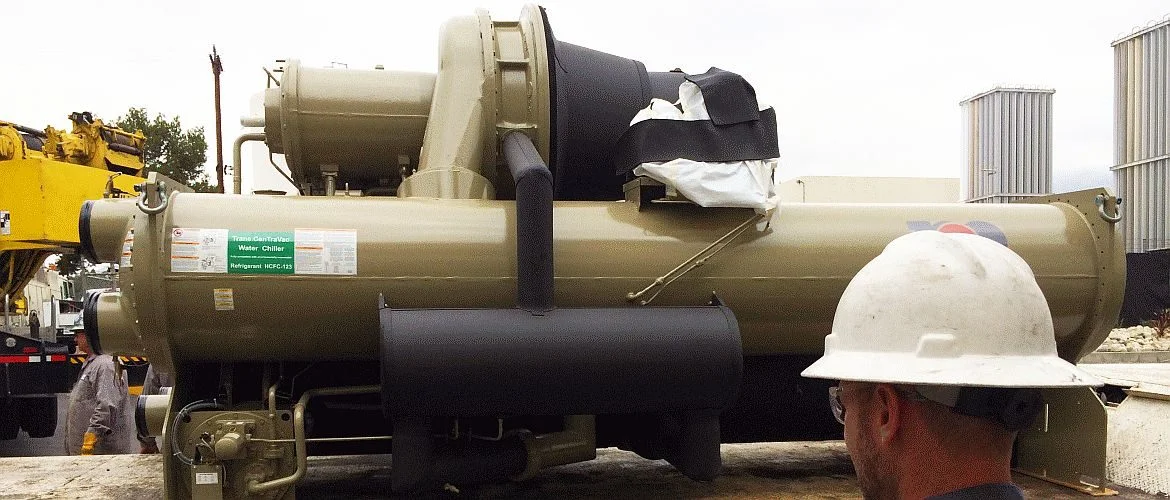
Precision Closed-Loop Process Cooling for Southern California's Defense & Aerospace Manufacturing
Direct Engineering Summary
Western Mechanical, Inc. provides critical closed-loop process cooling for aerospace autoclaves, cleanrooms, and environmental chambers, ensuring precise temperature control within +/- 0.5°F for composite curing and thermal-vacuum testing. Our UA Local 250 signatory union journeymen maintain systems to NADCAP AC7101 standards, preventing thermal shock and ensuring material integrity. Specializing in high-reliability solutions for defense primes across Southern California, Western Mechanical, Inc. (CSLB #618138) offers 24/7 emergency support. Contact us at (661) 251-0111 for expert service.
Engineering Tolerances & Governing Standards
Parameter
Specification
Standard
Process Cooling Temperature Stability
+/- 0.5°F (0.28°C)
NADCAP AC7101
Cooling Fluid Pressure Drop (Max)
5 PSI across heat exchanger
ASME B31.3 Process Piping
Cleanroom Temperature Uniformity
+/- 1.0°F (0.56°C) within occupied zone
ISO 14644-4: Design & Construction
Autoclave Cooling Rate
10-20°F/min (5.6-11.1°C/min)
OEM Specific / Composite Material Data Sheet
Environmental Chamber Humidity Control
+/- 3% RH
MIL-STD-810H Method 507.6
Engineered Process Cooling for Aerospace Autoclaves
Aerospace composite curing autoclaves demand exceptionally stable and responsive process cooling to manage exothermic reactions and achieve precise material properties. Our closed-loop systems are designed to rapidly cool large thermal masses, preventing overshoots and ensuring uniform temperature distribution throughout the cure cycle. This involves sophisticated chiller plants, often redundant, coupled with high-flow pumping stations and specialized heat exchangers capable of handling wide temperature differentials and demanding pressure profiles inherent in aerospace manufacturing.
The integrity of advanced composite structures, from wings to fuselage sections, directly correlates with the precision of their thermal processing. Western Mechanical, Inc. implements robust control strategies, integrating with existing SCADA or DCS platforms, to maintain cooling fluid temperatures within sub-degree Fahrenheit tolerances. This level of control is critical for preventing thermal degradation, delamination, and residual stresses, thereby meeting stringent NADCAP and OEM quality requirements for defense and commercial aerospace components manufactured across Southern California.
Thermal Management for Environmental & Thermal-Vacuum Chambers
Environmental and thermal-vacuum (TVAC) chambers are indispensable for qualifying aerospace components under extreme conditions, simulating everything from stratospheric temperatures to deep space vacuum. The process cooling infrastructure for these chambers must deliver precise and rapid temperature ramps and holds, often across ranges from -100°F to +300°F. This necessitates specialized cascade refrigeration systems, cryogenic cooling, or robust glycol/brine loops capable of absorbing significant heat loads from high-power test articles or internal heat generation.
Maintaining tight temperature and humidity control within these chambers is paramount for accurate test results and component reliability. Our expertise extends to designing and servicing systems that support the complex interplay of vacuum pumps, radiant heat shields, and test article thermal cycling. Western Mechanical, Inc. ensures that the cooling systems can handle the dynamic loads, preventing thermal shock to sensitive electronics or optical systems, which is vital for the mission-critical aerospace testing performed by defense contractors in the region.
Cleanroom HVAC & Specialized Process Heat Exchangers
Aerospace cleanrooms, particularly those for satellite assembly, optical component manufacturing, or precision machining, require meticulously controlled temperature, humidity, and particulate levels. Our HVAC solutions for these environments integrate high-efficiency filtration (HEPA/ULPA), precise air handling units, and redundant cooling sources to maintain ISO 14644 class ratings. The design accounts for internal heat gains from process equipment and personnel, ensuring stable conditions essential for preventing contamination and maintaining dimensional stability of critical parts.
Beyond environmental control, we specialize in high-performance process heat exchangers for applications such as laser/waterjet cutters and NADCAP heat-treat quench tanks. These systems demand rapid heat removal to maintain cutting accuracy or achieve specific metallurgical properties. Western Mechanical, Inc. selects and integrates robust plate-and-frame or shell-and-tube heat exchangers, optimized for specific fluid dynamics and heat transfer coefficients, ensuring maximum uptime and efficiency for critical aerospace manufacturing processes throughout Southern California.
UA Local 250 Certified Field Diagnostic & Commissioning Protocol
Verify closed-loop glycol/brine concentration and pH levels using a refractometer and pH meter; adjust to OEM spec +/- 0.5 pH.
Measure supply/return temperature differential across process heat exchangers with calibrated RTD probes; confirm within +/- 0.25°F of design.
Inspect and log chiller refrigerant charge (subcooling/superheat) and compressor operating parameters (amps, pressures) per OEM data.
Perform vibration analysis (ISO 20816-3) on all circulating pumps and chiller compressors; ensure velocity RMS values are below 0.18 in/s.
Calibrate and verify accuracy of chamber temperature sensors (e.g., Type K thermocouples) against a traceable standard; document deviations.
Facility Director & Chief Engineer FAQs
Why is closed-loop cooling preferred for aerospace autoclaves?
Closed-loop systems prevent contamination of the cooling fluid, ensuring consistent heat transfer efficiency and protecting sensitive autoclave components from scale or corrosion. This maintains precise temperature control within +/- 0.5°F, critical for composite material integrity and meeting NADCAP standards.
How does Western Mechanical, Inc. ensure uptime for critical aerospace cooling?
We implement redundant chiller plants, automated changeover controls, and proactive maintenance schedules. Our UA Local 250 journeymen are on call 24/7 for emergency service, minimizing downtime for vital aerospace manufacturing and testing operations across Southern California.
What challenges are unique to cooling thermal-vacuum chambers?
TVAC chambers require cooling systems capable of extreme temperature ranges, rapid ramp rates, and operation under vacuum, often involving cryogenic or cascade refrigeration. Precise control is essential to prevent thermal shock to test articles and ensure accurate simulation of space environments.
Can you integrate new process cooling with existing BMS/SCADA systems?
Absolutely. Our engineers specialize in seamless integration of new cooling infrastructure with existing Building Management Systems (BMS) or Supervisory Control and Data Acquisition (SCADA) platforms, providing centralized monitoring and control for optimized facility operations.
Acton Headquarters & 24/7 Southern California Dispatch
Western Mechanical, Inc. • 2210 Soledad Canyon Road, Suite O, Acton, CA 93510 • Primary Phone: (661) 251-0111 • 24/7 Toll-Free: (800) 585-5085 • CSLB #618138 (C-20, C-38, C-4)