WESTERN MECHANICAL, INC. | Primary Dispatch: (661) 251-0111 | 24/7 Hotline: (800) 585-5085 | CSLB #618138 (C-20, C-38, C-4) | 100% UA Local 250 Union
Process Chillers for Injection Molding, Extrusion & Food Plants
Precision Temperature Control for Critical Industrial Applications
Direct Engineering Summary
Western Mechanical, Inc. provides advanced process chiller solutions for injection molding, extrusion, and food processing plants, ensuring precise temperature stability within ±0.5°F for critical applications like mold channels and jacketed kettles. Our systems integrate dual-circuit industrial glycol and tower-water loops, along with hydraulic oil heat exchangers, adhering to USDA/FDA sanitary standards. With UA Local 250 journeymen and CSLB #618138, we deliver reliable, energy-efficient cooling. Contact us at (661) 251-0111 for expert service.
Engineering Tolerances & Governing Standards
Parameter
Specification
Standard
Temperature Stability
±0.5°F (±0.28°C)
ASTM D1998-15
Glycol Concentration (Typical)
30-50% Propylene Glycol
ASHRAE 12-2022
Hydraulic Oil Max Temp Delta
<10°F (5.6°C) across HX
ISO 4406:2017
Sanitary Surface Finish
3-A Sanitary Standard 00-01
FDA 21 CFR Part 110
Refrigerant Leak Detection
<10 ppm R-134a/R-410A
ASHRAE 15-2022
Precision Cooling for Injection Molding & Extrusion
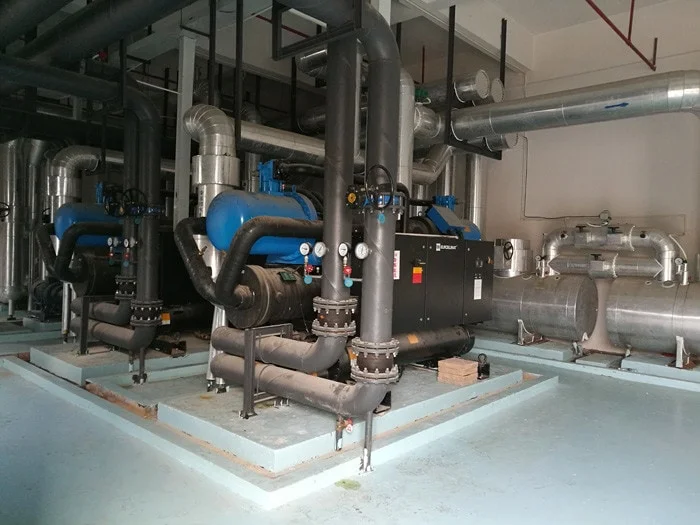
Maintaining precise temperature control in injection molding and extrusion processes is paramount for product quality, dimensional stability, and cycle time optimization. Our industrial process chillers are engineered to deliver a consistent coolant supply, typically a glycol-water mixture, to the mold channels or extruder barrels, ensuring temperature fluctuations are kept within an extremely tight ±0.5°F tolerance. This level of precision directly impacts polymer solidification rates, preventing warping, sink marks, and internal stresses that can compromise the final product's integrity and aesthetic.
Beyond mold and barrel cooling, these systems often integrate dedicated heat exchangers for hydraulic oil. Elevated hydraulic oil temperatures degrade lubricant viscosity, accelerate seal wear, and can lead to erratic machine operation and premature component failure. By actively cooling the hydraulic fluid, our chiller systems extend equipment lifespan, reduce maintenance downtime, and ensure consistent machine performance, particularly critical in high-volume production environments where even minor deviations can result in significant material waste and operational losses.
Sanitary Chiller Solutions for Food Processing Plants
Food processing plants require chiller systems that not only provide reliable cooling but also adhere to stringent sanitary standards mandated by USDA and FDA regulations. Our specialized process chillers for food applications feature sanitary stainless steel construction, particularly for components in contact with process fluids, such as jacketed kettle cooling loops. These systems are designed to facilitate easy cleaning and prevent microbial growth, often incorporating features like sloped surfaces, crevice-free welds, and CIP (Clean-in-Place) compatibility to maintain aseptic conditions.
The precise temperature management offered by these chillers is critical for product quality, safety, and shelf-life in various food applications, from rapid chilling of cooked products to maintaining optimal fermentation temperatures. Our dual-circuit designs often separate food-grade glycol loops from utility tower water circuits, minimizing contamination risks while maximizing cooling efficiency. Western Mechanical, Inc. ensures compliance with all relevant food safety standards, delivering robust, hygienic, and energy-efficient cooling infrastructure.
Optimizing Chiller Performance and Energy Efficiency
The operational efficiency of process chillers is a significant factor in the overall profitability of manufacturing and food processing facilities, especially in Southern California with its fluctuating utility costs. Our approach involves selecting and integrating chillers with advanced controls, variable frequency drives (VFDs) for compressors and pumps, and optimized condenser designs to minimize energy consumption. We analyze the specific thermal load profiles of each application – whether it's intermittent batch cooling or continuous extrusion – to right-size equipment and implement control strategies that adapt to demand.
Proper maintenance and commissioning by UA Local 250 signatory journeymen are crucial for sustaining peak performance. This includes regular refrigerant charge verification, condenser coil cleaning, and glycol loop integrity checks to prevent fouling and ensure optimal heat transfer. By focusing on the entire lifecycle cost, from initial installation to ongoing energy consumption, Western Mechanical, Inc. helps facilities achieve significant operational savings and maintain consistent process temperatures critical for product quality and compliance.
UA Local 250 Certified Field Diagnostic & Commissioning Protocol
Verify glycol concentration and pH in process loop using a refractometer and pH meter; adjust to 35-45% propylene glycol and pH 7.5-8.5.
Measure mold channel or jacketed kettle inlet/outlet temperatures with calibrated RTD sensors, ensuring ±0.5°F stability.
Inspect hydraulic oil heat exchanger for fouling and verify oil temperature differential across the HX remains below 10°F (5.6°C).
Perform refrigerant leak detection test on all chiller circuits using an electronic leak detector, ensuring no leaks above 10 ppm.
Confirm proper operation of sanitary washdown systems and verify surface finishes meet 3-A Sanitary Standards for food-contact components.
Facility Director & Chief Engineer FAQs
Why is ±0.5°F temperature stability critical for injection molding?
Precise ±0.5°F stability ensures consistent polymer solidification, preventing defects like warping, sink marks, and internal stresses. This directly impacts part dimensions, quality, and reduces scrap rates, optimizing production efficiency and material utilization in high-precision molding operations.
How do process chillers handle hydraulic oil cooling?
Process chillers often integrate dedicated plate-and-frame or shell-and-tube heat exchangers to cool hydraulic oil. This prevents oil degradation, extends component life, and ensures consistent machine performance by maintaining optimal viscosity and preventing overheating in critical hydraulic systems.
What sanitary standards do food plant chillers meet?
Our food plant chillers meet stringent USDA and FDA sanitary standards, including 3-A Sanitary Standards. This involves using stainless steel construction, ensuring crevice-free welds, designing for easy cleanability (CIP compatibility), and preventing cross-contamination between process fluids and utility cooling loops.
Can Western Mechanical upgrade existing process chiller systems?
Yes, Western Mechanical, Inc. specializes in upgrading and optimizing existing process chiller systems. We can integrate VFDs, advanced controls, and more efficient heat exchangers to improve temperature stability, reduce energy consumption, and enhance overall system reliability for industrial and food processing applications.
Acton Headquarters & 24/7 Southern California Dispatch
Western Mechanical, Inc. • 2210 Soledad Canyon Road, Suite O, Acton, CA 93510 • Primary Phone: (661) 251-0111 • 24/7 Toll-Free: (800) 585-5085 • CSLB #618138 (C-20, C-38, C-4)