WESTERN MECHANICAL, INC. | Primary Dispatch: (661) 251-0111 | 24/7 Hotline: (800) 585-5085 | CSLB #618138 (C-20, C-38, C-4) | 100% UA Local 250 Union
Hospital Pathology, Histology & Autopsy Downdraft Exhaust HVAC Service
Precision Airflow & Vapor Capture for Critical Healthcare Environments
Direct Engineering Summary
Western Mechanical, Inc. provides specialized HVAC service for hospital pathology, histology, and autopsy downdraft exhaust systems, ensuring critical air changes per hour (ACH) and hazardous vapor capture. These systems maintain a minimum of 12 ACH single-pass negative pressure, with downdraft velocities typically 60-100 FPM for effective formalin vapor capture at bench level, compliant with ASHRAE 170 and HCAI PIN 70. Our UA Local 250 journeymen utilize 316L stainless steel for corrosion resistance in exhaust blowers. Contact Western Mechanical, Inc., CSLB #618138, at (661) 251-0111 for expert service.
Engineering Tolerances & Governing Standards
Parameter
Specification
Standard
Minimum Air Changes Per Hour (ACH)
12 ACH (single-pass, non-recirculating)
ASHRAE 170, HCAI PIN 70
Downdraft Velocity at Bench
60-100 FPM (0.3-0.5 m/s)
NFPA 45, ACGIH Industrial Ventilation Manual
Room Pressure Differential
-0.001" to -0.005" w.c. (negative)
ASHRAE 170, FGI Guidelines
Exhaust Blower Material
316L Stainless Steel (corrosion-resistant)
SMACNA HVAC Duct Construction Standards
Formaldehyde Exposure Limit (PEL)
0.75 ppm (8-hour TWA)
OSHA 29 CFR 1910.1048
Critical Airflow Dynamics for Pathological Safety
Maintaining precise airflow dynamics in hospital pathology and autopsy suites is paramount for personnel safety and regulatory compliance. Downdraft grossing stations are engineered to draw hazardous vapors, primarily formalin, downwards and away from the operator's breathing zone. This requires a carefully balanced exhaust system capable of achieving and sustaining a minimum of 12 air changes per hour (ACH) with single-pass, non-recirculating air, as mandated by ASHRAE 170 and HCAI PIN 70 for critical spaces. Our UA Local 250 journeymen specialize in calibrating these complex systems to ensure optimal capture velocity and room pressure differentials.
The effectiveness of these systems hinges on the precise integration of supply air, exhaust fan capacity, and ductwork design. In Southern California's varied climate, managing internal heat loads from equipment and personnel while maintaining negative pressure and specific downdraft velocities (typically 60-100 FPM at the bench) presents unique engineering challenges. Western Mechanical, Inc. employs advanced diagnostics to evaluate system performance, identifying potential short-circuiting or inadequate capture that could lead to dangerous vapor concentrations and non-compliance with OSHA 29 CFR 1910.1048 formaldehyde exposure limits.
Formalin Vapor Capture & Corrosion Resistance
Formalin, a common fixative in histology and pathology, off-gasses formaldehyde, a known carcinogen. Effective downdraft exhaust systems are designed to capture these vapors at their source, preventing their dispersion into the room. This necessitates robust exhaust blowers and ductwork capable of resisting the highly corrosive nature of formaldehyde and other chemical fumes. Western Mechanical, Inc. exclusively utilizes and services systems featuring 316L stainless steel for all wetted parts of exhaust blowers and critical duct sections, ensuring long-term integrity and preventing premature failure due to chemical attack.
The lifecycle cost and reliability of pathology exhaust systems are directly tied to material selection and installation quality. Inferior materials or improper sealing can lead to leaks, reduced exhaust efficiency, and costly repairs. Our CSLB #618138 licensed technicians are adept at specifying and installing corrosion-resistant components that meet or exceed SMACNA HVAC Duct Construction Standards for chemical exhaust. Regular inspection and preventative maintenance are critical to verify the integrity of these specialized systems, especially in high-volume facilities across Los Angeles and Orange Counties.
A fundamental requirement for pathology and autopsy suites is maintaining a consistent negative pressure differential relative to adjacent spaces. This ensures that any airborne contaminants or odors are contained within the room and exhausted, preventing cross-contamination. Achieving and sustaining a differential pressure of -0.001" to -0.005" w.c. requires precise control of supply and exhaust air volumes, often managed by sophisticated DDC (Direct Digital Control) systems with pressure transducers. Our team is proficient in commissioning and troubleshooting these controls to guarantee continuous compliance.
Regulatory bodies like HCAI (Healthcare California) and local air quality districts impose stringent requirements on healthcare facility HVAC systems. Beyond basic airflow, documentation of maintenance, calibration, and performance testing is critical. Western Mechanical, Inc. provides comprehensive service records and assists facilities in meeting these audit requirements, ensuring that their pathology and histology departments operate safely, efficiently, and in full compliance with ASHRAE 170, FGI Guidelines, and local environmental regulations. Proactive maintenance minimizes downtime and protects both staff and patients.
UA Local 250 Certified Field Diagnostic & Commissioning Protocol
Verify downdraft velocity at grossing station bench using an anemometer, targeting 60-100 FPM.
Measure room pressure differential with a digital manometer, confirming -0.001" to -0.005" w.c. negative pressure.
Conduct smoke stick test at bench perimeter to visualize and confirm effective vapor capture and downdraft.
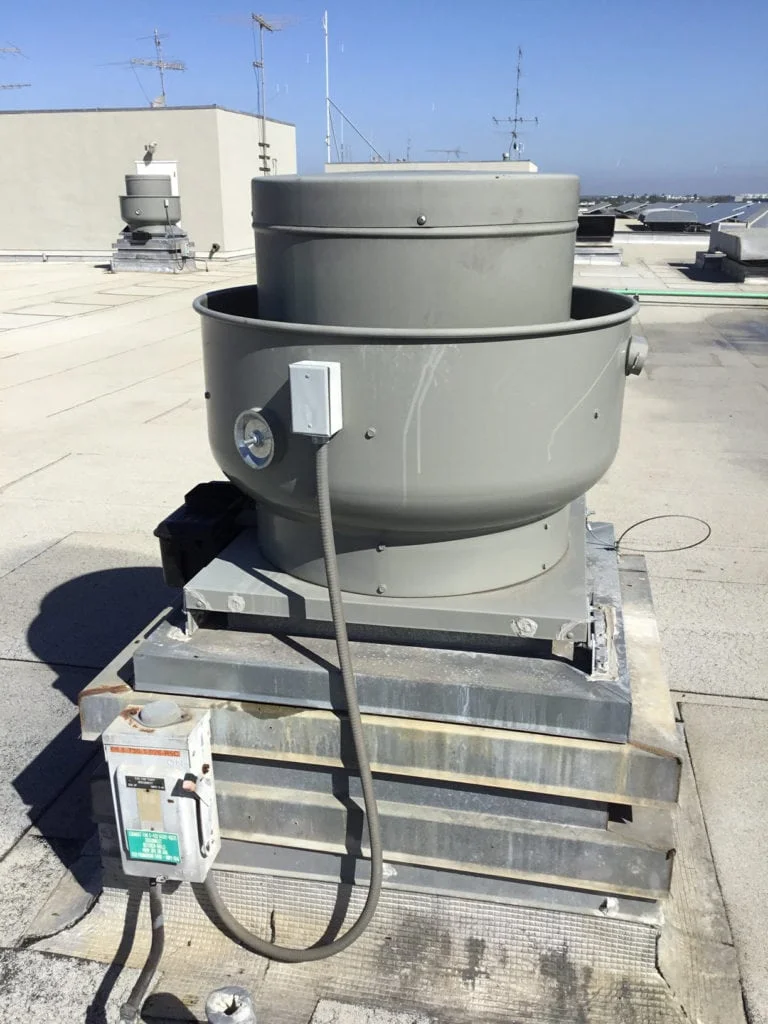
Inspect 316L stainless steel exhaust blower housing and impeller for signs of corrosion or imbalance.
Calibrate DDC system pressure transducers and airflow sensors to ensure accurate control of ACH and pressure.
Facility Director & Chief Engineer FAQs
Why is 316L stainless steel critical for pathology exhaust blowers?
316L stainless steel offers superior corrosion resistance against aggressive chemical vapors like formaldehyde, which are prevalent in pathology labs. This material choice prevents premature equipment failure, maintains system integrity, and ensures long-term operational safety and reliability, crucial for demanding healthcare environments.
How often should pathology downdraft systems be certified?
Pathology downdraft exhaust systems, especially in HCAI-regulated facilities, should be certified annually, or more frequently if there are changes to the system or operational issues. This ensures continuous compliance with ASHRAE 170, HCAI PIN 70, and OSHA formaldehyde exposure limits.
What is the primary risk of inadequate downdraft exhaust?
The primary risk of inadequate downdraft exhaust is the exposure of personnel to hazardous chemical vapors, particularly formaldehyde. This can lead to acute health effects, long-term occupational diseases, and regulatory non-compliance, resulting in significant fines and operational disruptions.
Can Western Mechanical service my existing pathology exhaust system?
Yes, Western Mechanical, Inc. provides comprehensive service, maintenance, and repair for all major brands of existing pathology, histology, and autopsy downdraft exhaust systems. Our UA Local 250 journeymen are equipped to diagnose and rectify issues to ensure optimal performance and safety.
Acton Headquarters & 24/7 Southern California Dispatch
Western Mechanical, Inc. • 2210 Soledad Canyon Road, Suite O, Acton, CA 93510 • Primary Phone: (661) 251-0111 • 24/7 Toll-Free: (800) 585-5085 • CSLB #618138 (C-20, C-38, C-4)