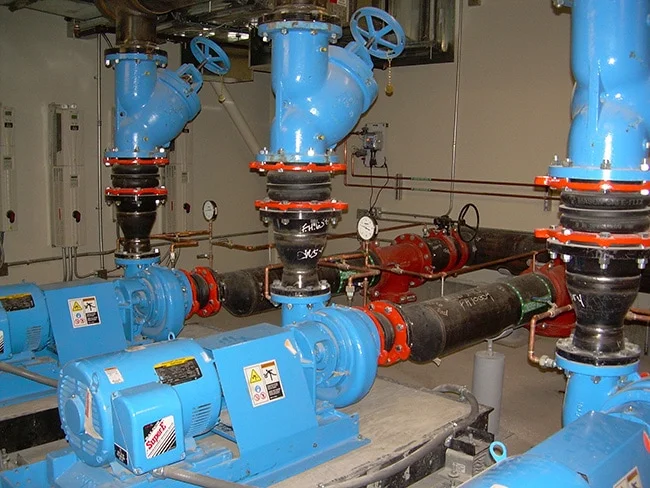
Mitigating Galvanic Corrosion at Copper-to-Steel Hydronic System Transitions in Commercial & Industrial Facilities
Direct Engineering Summary
Galvanic corrosion at copper-to-steel hydronic transitions is best prevented by using ASTM F1545 dielectric flanged waterways or full-port bronze isolation ball valves, which provide superior electrical isolation and mechanical integrity compared to standard dielectric unions. These components prevent electron flow between dissimilar metals, particularly critical in Southern California's aggressive water chemistries. Western Mechanical, Inc. (CSLB #618138) specifies and installs these solutions, ensuring system longevity and reducing maintenance. Our UA Local 250 journeymen adhere to ASME B31.1 standards for optimal performance. Contact us at (661) 251-0111.
Engineering Tolerances & Governing Standards
Parameter
Specification
Standard
Dielectric Flange Material
ASTM F1545 (PTFE, Neoprene, or EPDM Gasket)
ASME B16.5
Isolation Valve Material
Bronze (ASTM B62/B584) or Brass (ASTM B16)
ASME B16.34
Electrical Resistance (Min)
100,000 Ohms (Dry)
ASTM F1545
Pressure Rating (Min)
150 PSI @ 200°F
ASME B16.11
Maximum pH Differential
0.5 pH (Between Dissimilar Metals)
ASHRAE 188
The Electrochemical Imperative: Understanding Galvanic Corrosion
Galvanic corrosion, a pervasive issue in hydronic systems, arises when two dissimilar metals are electrically connected in the presence of an electrolyte, such as circulating water. In commercial and industrial HVAC, the common interface between copper piping (cathode) and steel components like boiler headers, expansion tanks, or coil connections (anode) creates a galvanic cell. The more active metal (steel) sacrifices itself, leading to localized pitting, pinhole leaks, and premature component failure, often exacerbated by the high mineral content and fluctuating pH of Southern California's municipal water supplies.
Standard dielectric unions, often specified for these transitions, frequently fail due to their inherent design limitations. Their internal plastic sleeves or rubber gaskets can degrade under thermal cycling, chemical exposure from water treatment additives, or mechanical stress, compromising the electrical isolation. This breakdown allows electron flow, re-establishing the galvanic circuit and initiating rapid corrosion. Furthermore, the restricted flow path within many unions can lead to turbulence and cavitation, accelerating material degradation and reducing system efficiency over time.
Superior Solutions: ASTM F1545 Waterways and Bronze Isolation Valves
To genuinely mitigate galvanic corrosion at copper-to-steel interfaces, Western Mechanical, Inc. advocates for robust, engineered solutions. ASTM F1545 dielectric flanged waterways provide a superior, long-term barrier. These assemblies utilize heavy-duty, non-conductive gaskets (e.g., PTFE, EPDM) between steel flanges, ensuring complete electrical isolation. Their full-port design minimizes pressure drop and turbulence, preserving system efficiency and preventing localized erosion-corrosion. Properly installed, these waterways offer exceptional durability and resistance to chemical attack, crucial for the demanding operational cycles of large-scale mechanical systems.
Alternatively, incorporating full-port bronze or brass isolation ball valves at these critical junctions offers a dual benefit: effective electrical isolation and convenient system maintenance. Bronze (a copper alloy) is galvanically compatible with copper piping, while its material properties provide a sufficient barrier to prevent electron transfer to steel components. The full-port design ensures unimpeded flow, and the ability to isolate sections simplifies future repairs or component replacements, significantly reducing downtime and lifecycle costs for facility managers in Los Angeles and Ventura counties.
Installation Best Practices and Lifecycle ROI
Correct installation is paramount for the efficacy of any corrosion prevention strategy. Western Mechanical, Inc.'s UA Local 250 signatory journeymen meticulously follow ASME B31.1 piping standards, ensuring proper alignment, torqueing of flange bolts, and verification of electrical isolation using multimeters. We emphasize clean pipe preparation and the avoidance of unintended metal-to-metal contact that could bypass the dielectric barrier. Our approach considers the entire system, including proper grounding and bonding, to prevent stray currents from compromising the integrity of the dielectric solution.
Investing in high-quality dielectric solutions like ASTM F1545 waterways or bronze isolation valves yields significant lifecycle ROI. By preventing premature failure of costly components such as heat exchanger coils, pumps, and boilers, facilities avoid expensive emergency repairs, unscheduled downtime, and potential water damage. These proactive measures ensure consistent system performance, reduce water and energy waste from leaks, and extend the operational lifespan of critical hydronic infrastructure, aligning with Title 24 Part 6 energy efficiency mandates and HCAI PIN 70 compliance for healthcare facilities.
UA Local 250 Certified Field Diagnostic & Commissioning Protocol
Verify electrical isolation across the dielectric joint using a multimeter (target >100k Ohms).
Inspect gasket material (PTFE, EPDM, Neoprene) for proper seating and absence of damage.
Confirm bolt torque on dielectric flanges meets manufacturer specifications for leak-free seal.
Check for any unintended metallic bridging (e.g., paint, pipe clamps) bypassing the dielectric barrier.
Document system water chemistry (pH, conductivity, dissolved solids) to assess corrosion potential.
Facility Director & Chief Engineer FAQs
Why are standard dielectric unions prone to failure?
Standard dielectric unions often fail due to degradation of internal plastic sleeves or rubber gaskets from thermal cycling, chemical exposure, or mechanical stress. This compromises electrical isolation, allowing galvanic corrosion to resume, leading to leaks and system damage in commercial hydronic applications.
What is the primary benefit of using ASTM F1545 dielectric flanged waterways?
ASTM F1545 dielectric flanged waterways offer superior, long-term electrical isolation with robust, non-conductive gaskets and a full-port design. This prevents galvanic corrosion, minimizes pressure drop, and ensures greater durability and resistance to chemical attack compared to traditional unions.
Can bronze isolation valves effectively prevent galvanic corrosion?
Yes, full-port bronze or brass isolation ball valves are effective. Bronze is galvanically compatible with copper and provides a sufficient electrical barrier to prevent electron transfer to steel components. They also offer the added benefit of system isolation for maintenance, enhancing operational flexibility.
How does Western Mechanical, Inc. ensure proper installation of these components?
Our UA Local 250 journeymen meticulously follow ASME B31.1 standards, ensuring precise alignment, correct bolt torque, and multimeter verification of electrical isolation. We also ensure proper grounding and bonding to prevent stray currents, guaranteeing optimal performance and longevity for your mechanical systems.
Acton Headquarters & 24/7 Southern California Dispatch
Western Mechanical, Inc. • 2210 Soledad Canyon Road, Suite O, Acton, CA 93510 • Primary Phone: (661) 251-0111 • 24/7 Toll-Free: (800) 585-5085 • CSLB #618138 (C-20, C-38, C-4)