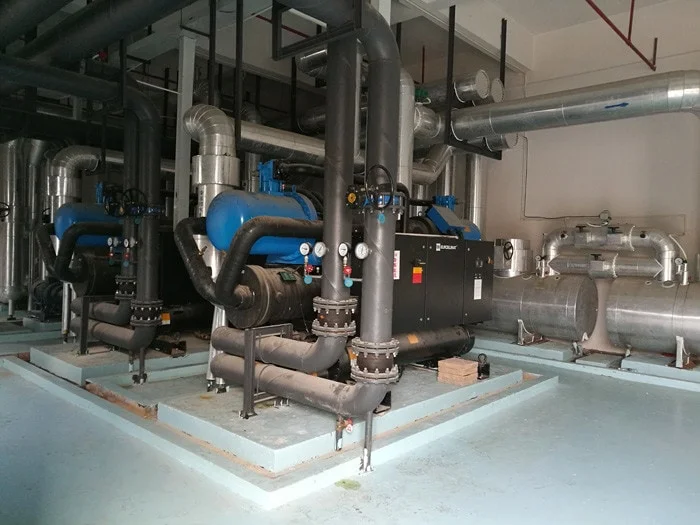
Preventing Critical Compressor Damage from Liquid Refrigerant Dilution in POE/Mineral Oil
Direct Engineering Summary
Chiller sump heater burnout allows liquid refrigerant (e.g., R-134a, R-410A) to migrate and condense in the compressor oil sump during off-cycles, driven by vapor pressure differentials and solubility. This refrigerant-diluted oil, when heated rapidly at startup, violently boils (foams), causing a net oil-pressure safety trip due to inadequate lubrication. Western Mechanical, Inc. (CSLB #618138) employs UA Local 250 journeymen to inspect and replace failed sump heaters, preventing catastrophic compressor failure. Contact us at (661) 251-0111 for expert chiller lubrication diagnostics and repair.
Engineering Tolerances & Governing Standards
Parameter
Specification
Standard
Oil Sump Temperature (Heated)
20-30°F (11-17°C) above ambient
OEM Specific / ASHRAE 15
Refrigerant Solubility in POE Oil (R-134a)
20-30% by weight at 40°F (4.4°C)
ASHRAE Handbook - Refrigeration
Minimum Net Oil Pressure
10-20 psid (69-138 kPa) above suction
OEM Specific / ASME B31.5
Compressor Start-Up Delay (Minimum)
15-30 minutes after heater energization
OEM Control Logic
Heater Resistance Tolerance
±5% of nameplate Ohms at 77°F (25°C)
NEMA MG 1 / IEEE 112
The Physics of Refrigerant Migration and Oil Dilution
When a chiller's compressor is idle, the oil sump temperature naturally equilibrates with the ambient conditions. Without a functioning sump heater, the oil temperature can drop significantly below the saturation temperature of the refrigerant in the evaporator or suction line. This temperature differential creates a vapor pressure gradient, driving gaseous refrigerant to migrate from the colder parts of the system to the relatively warmer, lower-pressure oil sump. Modern POE (Polyolester) and mineral oils exhibit high hygroscopicity and a strong affinity for refrigerants like R-134a and R-410A, readily absorbing them into solution.
The solubility of refrigerant in compressor oil is inversely proportional to temperature and directly proportional to pressure. During extended off-cycles, especially in Southern California's cooler winter months or during overnight shutdowns, the refrigerant can condense and dissolve into the oil, effectively diluting its viscosity and lubricating properties. This phenomenon, known as refrigerant migration, can lead to significant concentrations of liquid refrigerant in the oil sump, sometimes exceeding 30% by weight, setting the stage for catastrophic compressor damage upon startup.
Startup Foaming and Net Oil Pressure Safety Trips
Upon compressor startup, the rapid pressure drop within the crankcase and the sudden increase in oil temperature cause the dissolved refrigerant to flash-boil violently out of solution. This explosive vaporization creates a dense, frothy foam that significantly reduces the effective volume of oil available for lubrication and drastically lowers its density. The oil pump, designed to move liquid oil, struggles to establish adequate flow and pressure with this refrigerant-oil emulsion, leading to a critical drop in net oil pressure.
The compressor's internal safety controls, typically a differential pressure switch, are designed to detect this insufficient net oil pressure (the difference between discharge and suction oil pressure). When the net oil pressure falls below the OEM-specified threshold (e.g., 10-20 psid), the compressor is immediately shut down to prevent bearing damage and motor burnout. This protective trip, while safeguarding the compressor, indicates a fundamental issue rooted in the failed sump heater and the subsequent refrigerant dilution, demanding immediate attention from UA Local 250 certified technicians.
Preventative Maintenance and Diagnostic Protocols
Regular inspection and testing of chiller sump heaters are paramount to preventing refrigerant migration and its cascading failures. Western Mechanical, Inc. employs UA Local 250 journeymen who utilize clamp-on ammeters and ohmmeters to verify heater functionality. A common diagnostic is to measure the resistance of the heater element; a reading significantly deviating from the OEM specification (typically within ±5%) or an open circuit indicates a failed heater. Additionally, monitoring the oil sump temperature during off-cycles provides direct evidence of heater efficacy, ensuring it maintains the oil at least 20-30°F above ambient.
Beyond electrical checks, our technicians conduct oil analysis to detect refrigerant content, a crucial indicator of migration issues. Implementing a timed startup delay, allowing the sump heater sufficient time (15-30 minutes) to degas the oil before compressor engagement, is also a critical operational safeguard. Addressing sump heater failures proactively extends compressor lifespan, reduces energy consumption from repeated safety trips, and maintains the overall reliability of industrial and HCAI-compliant chiller systems across Southern California, ensuring Title 24 Part 6 compliance and optimal facility performance.
UA Local 250 Certified Field Diagnostic & Commissioning Protocol
Verify sump heater electrical continuity and resistance (Ohms) using a digital multimeter; compare to OEM specification.
Measure oil sump temperature during off-cycle with an infrared thermometer to confirm it's 20-30°F above ambient.
Perform refrigerant leak detection around compressor and oil sight glass using an electronic leak detector to rule out external leaks contributing to migration.
Check net oil pressure at compressor startup using a calibrated manifold gauge set or internal sensor readings to confirm proper lubrication.
Visually inspect oil sight glass for foaming or excessive bubbling immediately after compressor startup, indicating dissolved refrigerant.
Facility Director & Chief Engineer FAQs
Why is a chiller sump heater so critical if the compressor isn't running?
A chiller sump heater is critical because it keeps the compressor oil warm during off-cycles. This elevated temperature prevents liquid refrigerant from migrating and dissolving into the oil, which would otherwise dilute the lubricant and lead to severe foaming and potential damage upon startup.
What are the immediate signs of refrigerant migration into chiller oil?
Immediate signs include a noticeable drop in oil level in the sight glass during shutdown, excessive oil foaming upon compressor startup, and repeated net oil pressure safety trips. An oil sample analysis would confirm high refrigerant content.
How does Western Mechanical, Inc. diagnose a failed sump heater?
Our UA Local 250 journeymen diagnose failed sump heaters by measuring their electrical resistance with an ohmmeter and verifying continuity. We also monitor oil sump temperature during idle periods to ensure it maintains the required differential above ambient, confirming proper heat output.
Can a chiller operate safely with a failed sump heater for a short period?
Operating a chiller with a failed sump heater is highly risky and not recommended, even for a short period. It significantly increases the likelihood of refrigerant migration, leading to oil foaming, inadequate lubrication, and potential catastrophic compressor failure, especially during cold starts.
Acton Headquarters & 24/7 Southern California Dispatch
Western Mechanical, Inc. • 2210 Soledad Canyon Road, Suite O, Acton, CA 93510 • Primary Phone: (661) 251-0111 • 24/7 Toll-Free: (800) 585-5085 • CSLB #618138 (C-20, C-38, C-4)