WESTERN MECHANICAL, INC. | Primary Dispatch: (661) 251-0111 | 24/7 Hotline: (800) 585-5085 | CSLB #618138 (C-20, C-38, C-4) | 100% UA Local 250 Union
Cleaning Microchannel Aluminum Condenser Coils Without Chemical Destruction
Neutral pH Surfactant Protocols & E-Coating Preservation for Air-Cooled Chillers
Direct Engineering Summary
Cleaning microchannel aluminum condenser coils requires neutral pH surfactant protocols to prevent galvanic corrosion and dissolution of brazed aluminum fins, especially on e-coated units. High-pH alkaline cleaners (pH > 8.5) can irreversibly damage the aluminum oxide layer and the aluminum itself, leading to refrigerant leaks and reduced heat transfer efficiency. Western Mechanical, Inc. specifies back-flushing pressure limits below 150 PSI and utilizes UA Local 250 journeymen to ensure proper care, preserving coil integrity and extending chiller lifespan. Contact us at (661) 251-0111 for expert service. CSLB #618138.
Engineering Tolerances & Governing Standards
Parameter
Specification
Standard
Recommended Cleaning Solution pH
6.0 - 8.0 (Neutral to slightly acidic/alkaline)
OEM Guidelines, Aluminum Association Standards
Maximum Back-Flushing Pressure
150 PSI (10.3 bar)
ASHRAE 15, Manufacturer Specifications
Aluminum Dissolution Rate (pH 9.0)
> 0.1 mils/year (0.0025 mm/year)
NACE MR0175 / ISO 15156 (Corrosion Rates)
E-Coating Thickness (Typical)
0.8 - 1.2 mils (20 - 30 microns)
ASTM B117, OEM Quality Control
Microchannel Fin Spacing
0.02 - 0.05 inches (0.5 - 1.2 mm)
Thermodynamic Design Principles
The Peril of Alkaline Cleaners on Aluminum Microchannel Coils
Modern air-cooled chillers increasingly utilize brazed aluminum microchannel condenser coils for their superior heat transfer efficiency and reduced refrigerant charge. However, their delicate construction and material composition, primarily aluminum, render them highly susceptible to chemical attack from conventional high-pH alkaline coil cleaners. These aggressive solutions, often with a pH exceeding 8.5, can irreversibly dissolve the protective aluminum oxide layer and directly corrode the aluminum alloy itself, leading to galvanic degradation and eventual refrigerant leaks. The intricate microchannel geometry also makes it challenging to rinse out corrosive residues completely, exacerbating long-term damage.
The chemical reaction involves the hydrolysis of aluminum, where hydroxyl ions (OH-) from alkaline solutions react with aluminum to form aluminum hydroxide and hydrogen gas. This process is particularly aggressive at elevated temperatures common in Southern California, accelerating material loss. For coils with factory-applied e-coatings (electrophoretic deposition), high-pH cleaners can also compromise the integrity of this protective barrier, exposing the underlying aluminum to further environmental and chemical degradation. Western Mechanical, Inc. emphasizes the critical need for neutral pH (6.0-8.0) surfactant-based cleaning agents to preserve coil longevity and maintain thermal performance.
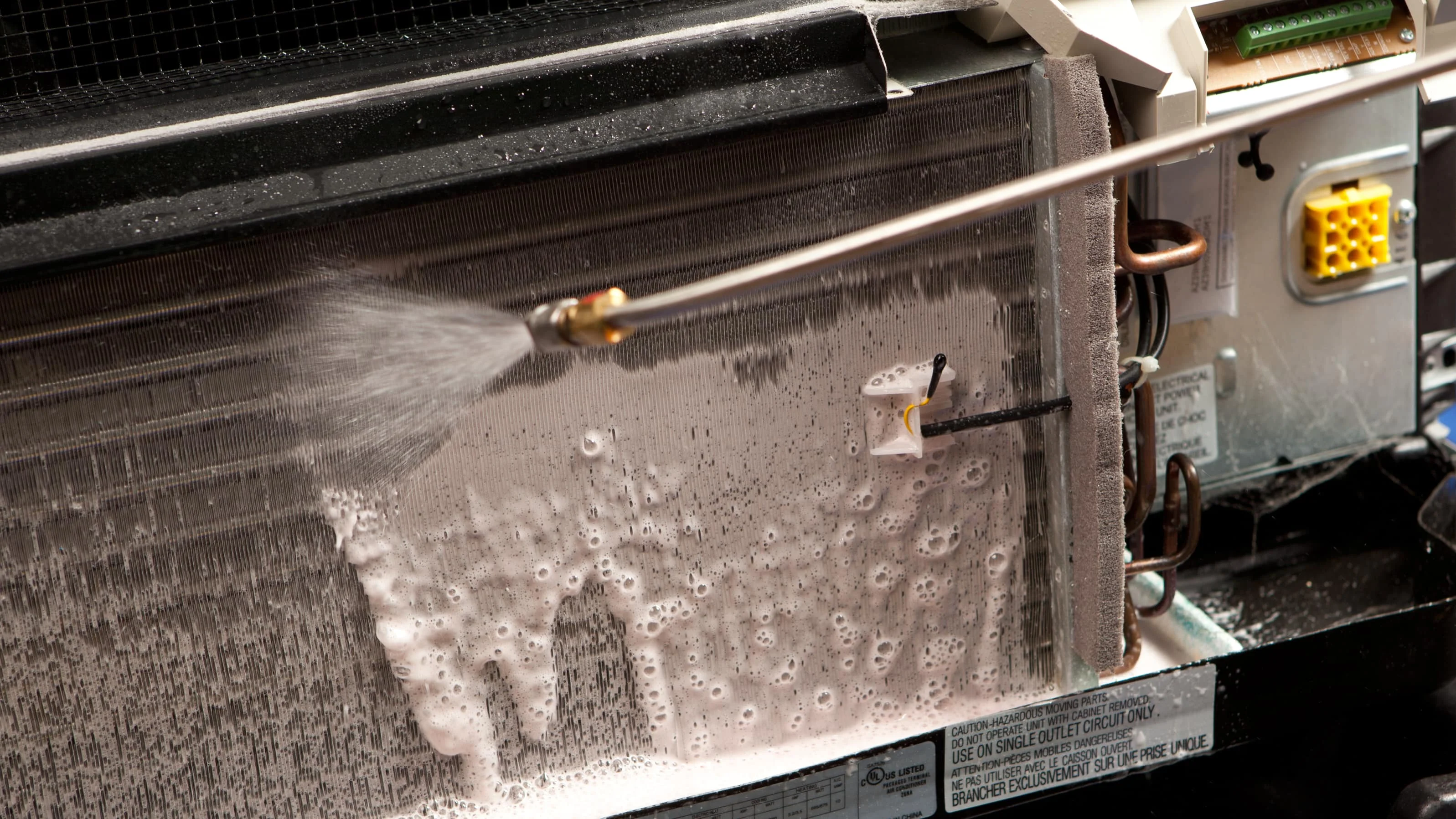
Effective cleaning of microchannel coils without causing damage necessitates a precise methodology centered on neutral pH surfactant-based cleaners. These specialized formulations leverage surface-active agents to encapsulate and lift dirt, dust, and biological contaminants from the coil surface without chemically reacting with the aluminum. The cleaning process typically involves a low-pressure application of the surfactant solution, allowing adequate dwell time for the surfactants to penetrate and loosen fouling, followed by a thorough, controlled back-flush with deionized or potable water. This prevents the mechanical impingement that can bend delicate fins or damage brazed joints.
Crucially, the back-flushing pressure must be meticulously controlled. Exceeding 150 PSI can deform the thin aluminum fins, reducing airflow and heat transfer, or even compromise the brazed tube-to-fin connections, leading to leaks. Our UA Local 250 journeymen utilize calibrated low-pressure sprayers and flow-controlled rinses, ensuring that contaminants are gently removed without physical stress to the coil matrix. This approach not only cleans effectively but also safeguards the structural integrity and factory e-coatings, which are vital for corrosion resistance in harsh Southern California environments.
Long-Term ROI and Performance Preservation
Investing in proper microchannel coil cleaning protocols directly translates into significant long-term return on investment for facility managers. By preventing chemical degradation and physical damage, the lifespan of expensive air-cooled chiller condenser coils is substantially extended, deferring costly replacements. Maintaining optimal coil cleanliness ensures peak heat transfer efficiency, which directly reduces compressor workload and electrical consumption. In Southern California's demanding climate, even a slight reduction in heat rejection capability can dramatically increase energy costs and strain chiller components, leading to premature failures.
Furthermore, preserving the integrity of factory e-coatings through neutral pH cleaning enhances the coil's resistance to atmospheric corrosion, salt spray, and other environmental aggressors prevalent near coastal areas or industrial corridors. Western Mechanical, Inc.'s adherence to stringent cleaning standards, performed by CSLB #618138 certified UA Local 250 technicians, guarantees that your chiller assets operate at their designed efficiency, comply with Title 24 Part 6 energy standards, and minimize operational downtime, ensuring reliable cooling for critical facilities.
UA Local 250 Certified Field Diagnostic & Commissioning Protocol
Verify coil material (aluminum vs. copper/aluminum) and presence of e-coating before selecting cleaning agent.
Measure and confirm cleaning solution pH is between 6.0-8.0 using a calibrated digital pH meter.
Utilize a low-pressure (max 150 PSI) fan-spray nozzle for application and rinsing to prevent fin damage.
Perform a thorough back-flush from the inside out to dislodge debris, ensuring no residue remains within microchannels.
Inspect fins for bending or physical damage post-cleaning; use a fin comb if necessary for minor straightening.
Facility Director & Chief Engineer FAQs
Why are microchannel coils more sensitive to cleaners than traditional fin-and-tube coils?
Microchannel coils are typically constructed from aluminum, which is highly reactive to alkaline chemicals. Their delicate brazed joints and thin fins are also more susceptible to physical damage from high-pressure washing, unlike the more robust copper-tube, aluminum-fin designs of traditional coils.
What happens if I use a high-pH cleaner on an e-coated microchannel coil?
High-pH cleaners can degrade or strip the e-coating, exposing the bare aluminum beneath. This compromises the coil's corrosion resistance, making it vulnerable to environmental elements and accelerating the dissolution of the aluminum itself, leading to premature failure and leaks.
How often should microchannel condenser coils be cleaned in Southern California?
Cleaning frequency depends on environmental factors like dust, pollen, and industrial pollutants. In typical Southern California commercial settings, annual or semi-annual cleaning is often recommended. High-traffic or dusty industrial sites may require more frequent inspections and cleaning to maintain efficiency.
Can improper cleaning void my chiller's warranty?
Yes, using unapproved cleaning agents or methods that damage the coil can absolutely void your chiller's manufacturer warranty. Always adhere to OEM specifications and utilize qualified technicians like those at Western Mechanical, Inc. to ensure proper maintenance and warranty compliance.
Acton Headquarters & 24/7 Southern California Dispatch
Western Mechanical, Inc. • 2210 Soledad Canyon Road, Suite O, Acton, CA 93510 • Primary Phone: (661) 251-0111 • 24/7 Toll-Free: (800) 585-5085 • CSLB #618138 (C-20, C-38, C-4)