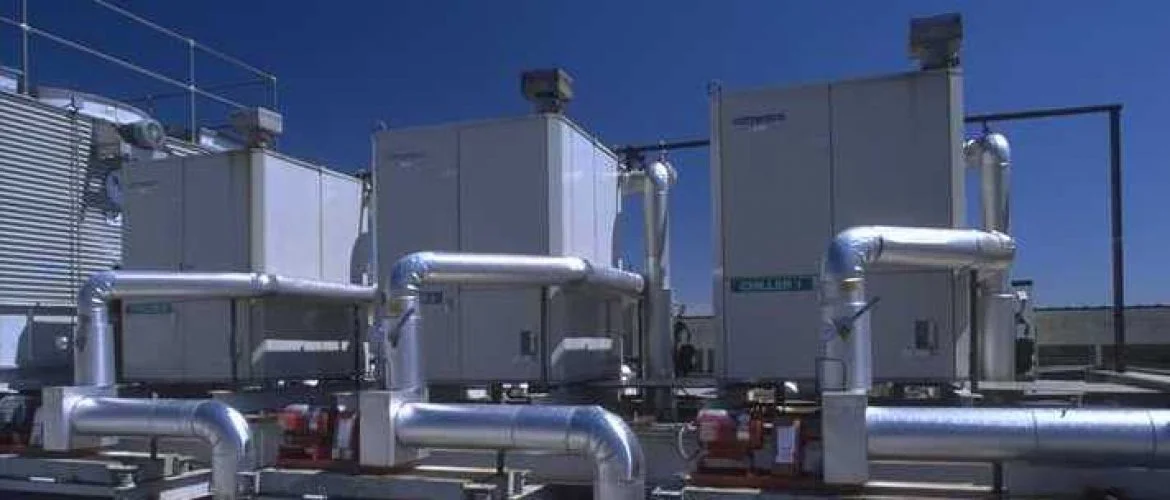
Restoring LiBr Chiller Performance with Advanced Decrystallization and Helium Mass-Spectrometer Leak Detection
Direct Engineering Summary
Lithium bromide (LiBr) absorption chiller decrystallization involves dissolving solidified LiBr salt crystals that impede heat transfer and circulation. Western Mechanical, Inc. utilizes controlled heating cycles, octyl alcohol surfactant dosing, and precise inhibitor balancing (molybdate/lithium chromate) to restore solution concentration and chiller efficiency. Vacuum integrity is verified via helium mass-spectrometer leak detection, ensuring non-condensable gas removal. Our UA Local 250 journeymen, CSLB #618138, provide this specialized service throughout Southern California. Contact us at (661) 251-0111.
Engineering Tolerances & Governing Standards
Parameter
Specification
Standard
Solution Concentration (Normal)
58-63% LiBr by weight
OEM Specific / ASHRAE 15
Vacuum Leak Rate (Post-Repair)
< 1 x 10^-7 atm-cc/sec (helium)
ASME B31.5 / ISO 20456
Inhibitor Concentration (Molybdate)
200-400 ppm
OEM Specific / ASTM D1384
Decrystallization Temperature Range
140-180°F (solution side)
OEM Specific / ASME Section VIII
Non-Condensable Gas Pressure
< 0.05 psia
ARI 560 / AHRI 560
Understanding LiBr Crystallization Physics and Prevention
Lithium bromide absorption chillers operate on the principle of water's high affinity for LiBr, creating a vacuum that allows water to evaporate at low temperatures. Crystallization occurs when the LiBr solution becomes oversaturated, typically due to excessive cooling of the concentrated solution, low evaporator temperatures, or dilution from water leaks. This solidification of LiBr salt impedes solution flow, reduces heat transfer efficiency, and can cause significant damage to internal components, leading to complete chiller shutdown and substantial operational losses for industrial facilities.
Preventing crystallization involves meticulous control of operating parameters, including maintaining proper cooling water flow and temperature, ensuring adequate purge system function, and regular analysis of solution concentration and inhibitor levels. In Southern California's often fluctuating ambient conditions, precise control logic and robust maintenance practices are critical. Western Mechanical, Inc. emphasizes proactive monitoring and trending of critical parameters to identify early indicators of crystallization risk, thereby mitigating costly downtime and extending equipment lifespan for our commercial and industrial clients.
Advanced Decrystallization and Vacuum Restoration Techniques
When crystallization occurs, Western Mechanical, Inc. employs a systematic decrystallization process. This typically involves controlled heating of the chiller's components, often using steam or hot water, to gradually redissolve the LiBr crystals. The introduction of specific surfactants, such as octyl alcohol, can significantly aid in breaking down crystal structures and improving solution homogeneity. Our UA Local 250 journeymen meticulously monitor temperature gradients and solution flow to prevent thermal shock and ensure complete dissolution without further damaging the chiller's sensitive internal surfaces.
Post-decrystallization, restoring the chiller's vacuum integrity is paramount. Non-condensable gases (NCGs), often introduced during crystallization events or maintenance, severely degrade performance. We utilize state-of-the-art helium mass-spectrometer leak detection to pinpoint even microscopic leaks, ensuring the chiller operates at its optimal vacuum. Following leak repair, thorough evacuation and precise recharging of the LiBr solution, along with balancing molybdate or lithium chromate inhibitors, are performed to prevent future corrosion and crystallization, safeguarding long-term operational reliability.
Lifecycle ROI and Regulatory Compliance in Southern California
Investing in professional lithium bromide absorption chiller decrystallization and vacuum repair yields significant lifecycle ROI through restored energy efficiency and extended equipment life. A crystallized chiller can see its COP (Coefficient of Performance) plummet by 20-30%, leading to exorbitant utility costs, especially with Southern California's high electricity and natural gas rates. By restoring the chiller to its design specifications, facilities can realize immediate energy savings and avoid the far greater capital expenditure of premature chiller replacement.
Furthermore, proper maintenance and repair ensure compliance with critical environmental and safety regulations. Absorption chillers, while not using ozone-depleting refrigerants, still fall under strict operational guidelines, particularly concerning pressure vessel integrity (ASME Section VIII) and hazardous material handling (LiBr solution). Western Mechanical, Inc., CSLB #618138, ensures all decrystallization and repair procedures adhere to the highest industry standards and local Southern California regulatory requirements, providing peace of mind and operational continuity for hospitals, data centers, and manufacturing plants.
UA Local 250 Certified Field Diagnostic & Commissioning Protocol
Verify LiBr solution concentration using a refractometer (target: 58-63% by weight) before and after decrystallization.
Perform helium mass-spectrometer leak detection on all vacuum-side components, targeting leak rates below 1 x 10^-7 atm-cc/sec.
Monitor chiller shell and solution temperatures during controlled heating cycles to maintain 140-180°F and prevent thermal stress.
Analyze solution inhibitor levels (e.g., molybdate 200-400 ppm) and pH (target: 9.0-10.5) post-decrystallization and adjust as needed.
Confirm proper purge unit operation and non-condensable gas removal, verifying vacuum pressure below 0.05 psia.
Facility Director & Chief Engineer FAQs
What causes lithium bromide crystallization in absorption chillers?
Crystallization primarily results from oversaturation of the LiBr solution due to excessive cooling of the concentrated solution, low evaporator temperatures, or dilution from water leaks. Inadequate heat rejection or poor purge system function can also contribute to this critical failure mode.
How long does a typical decrystallization process take?
The duration varies significantly based on the chiller's size and the severity of crystallization. A complete decrystallization, including vacuum restoration and solution balancing, can range from a few days to over a week, requiring precise monitoring and controlled temperature cycling.
Can crystallization damage the chiller permanently?
Yes, if left unaddressed, severe crystallization can lead to permanent damage, including tube rupture, corrosion, and deformation of internal components, necessitating costly repairs or even full chiller replacement. Timely intervention is crucial to prevent irreversible harm.
What is the role of a helium mass-spectrometer in this repair?
A helium mass-spectrometer is critical for detecting minute vacuum leaks that allow non-condensable gases into the chiller. These gases severely degrade performance. The spectrometer precisely locates leaks that are otherwise impossible to find, ensuring optimal vacuum integrity post-repair.
Acton Headquarters & 24/7 Southern California Dispatch
Western Mechanical, Inc. • 2210 Soledad Canyon Road, Suite O, Acton, CA 93510 • Primary Phone: (661) 251-0111 • 24/7 Toll-Free: (800) 585-5085 • CSLB #618138 (C-20, C-38, C-4)