WESTERN MECHANICAL, INC. | Primary Dispatch: (661) 251-0111 | 24/7 Hotline: (800) 585-5085 | CSLB #618138 (C-20, C-38, C-4) | 100% UA Local 250 Union
Commercial Real Estate Mechanical Due Diligence & CapEx Audits
Pre-Acquisition Engineering Inspections for Institutional REITs and Buyers
Direct Engineering Summary
Commercial HVAC due diligence and CapEx audits by Western Mechanical, Inc. involve comprehensive pre-acquisition engineering inspections. These include remaining useful life (RUL) scoring per ASHRAE median tables, R-22/R-123 refrigerant liability assessments, SCAQMD permit verification for boilers/chillers, and 10-year capital expenditure modeling. Our UA Local 250 journeymen provide precise condition assessments, ensuring compliance and accurate financial forecasting for institutional REITs and buyers. Contact Western Mechanical, Inc. (CSLB #618138) at (661) 251-0111 for expert service.
Engineering Tolerances & Governing Standards
Parameter
Specification
Standard
RUL Assessment Methodology
ASHRAE HVAC Design Manual for Hospitals and Clinics (Median Life Tables)
ASHRAE Handbook (Multiple Volumes)
Refrigerant Liability Audit
Identification of R-22, R-123, and other high-GWP refrigerants
EPA Section 608, CARB HFC Regulations
SCAQMD Permit Verification
Compliance check for Rule 1146 (boilers) and Rule 1110.2 (chillers)
SCAQMD Rules & Regulations
CapEx Model Horizon
Minimum 10-year projection with annual escalation rates
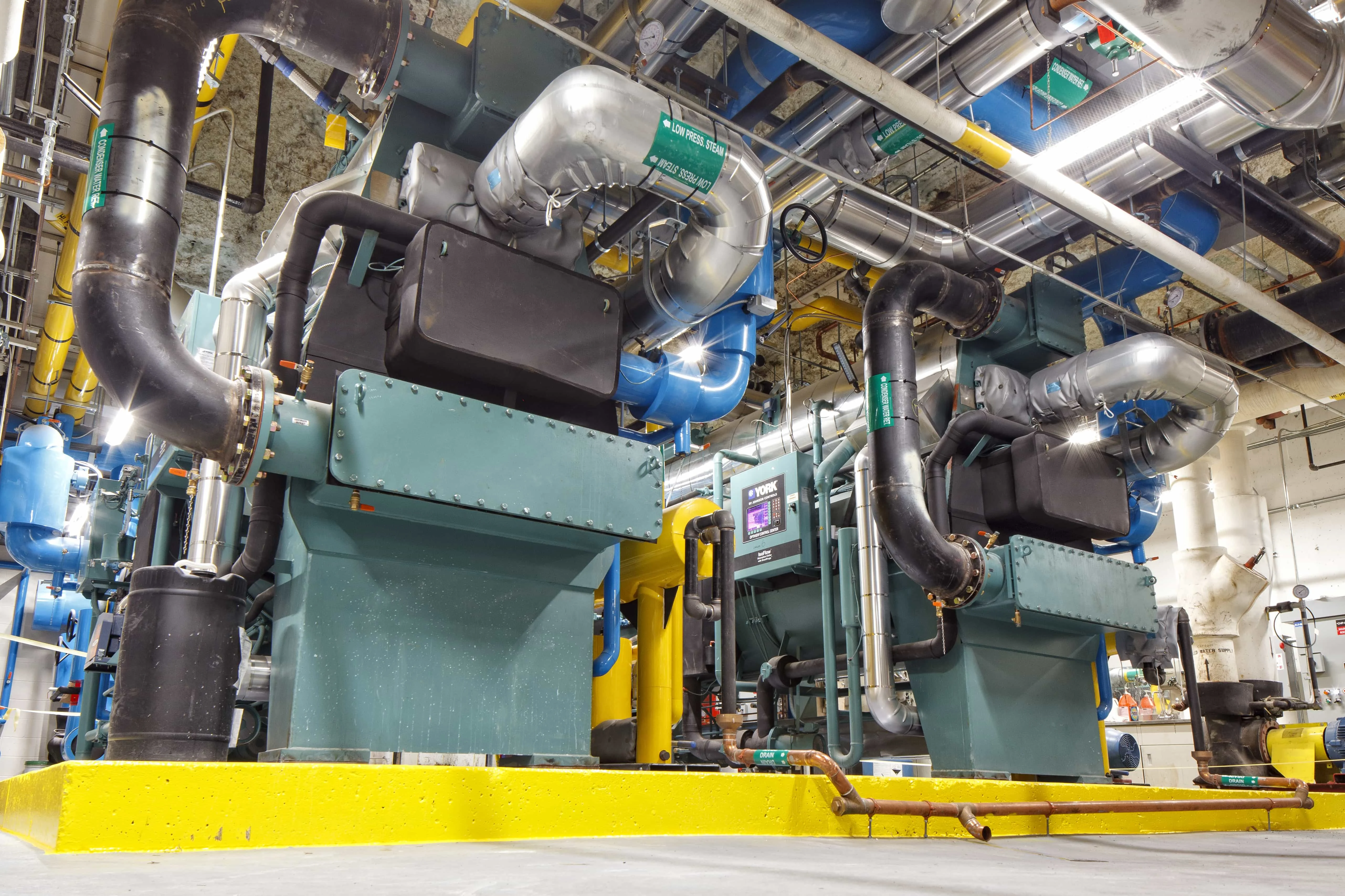
Our mechanical due diligence process centers on highly accurate Remaining Useful Life (RUL) scoring, utilizing ASHRAE median life tables as the foundational benchmark. This goes beyond superficial visual inspections, incorporating operational data, maintenance history, and specific component wear analysis. For critical assets like centrifugal chillers, which typically have a 20-30 year lifespan, a detailed assessment of compressor bearing wear, tube fouling, and refrigerant charge integrity provides a far more reliable RUL than generic estimates, directly impacting CapEx forecasting.
The subsequent lifecycle cost analysis integrates these RUL scores into a dynamic 10-year CapEx model. This model accounts for anticipated major component replacements, energy efficiency upgrades, and regulatory compliance expenditures specific to Southern California's evolving utility costs and environmental mandates. For institutional investors, this granular financial projection is indispensable for accurate pro forma development and mitigating unforeseen capital outlays post-acquisition, ensuring a robust ROI calculation.
Refrigerant Liability and Regulatory Compliance Audits
A critical component of our pre-acquisition audits involves a thorough assessment of refrigerant liabilities. The presence of R-22 (HCFC-22) or R-123 (HCFC-123) in existing chiller plants represents significant future operational and compliance risks due to ongoing phase-out schedules and escalating refrigerant costs. Our UA Local 250 technicians meticulously verify refrigerant types, quantify existing charges, and assess leak rates, providing a clear financial exposure profile for potential buyers.
Beyond refrigerants, we conduct rigorous audits of all relevant air quality permits, particularly for boilers and large-tonnage chillers subject to SCAQMD Rule 1146 (boilers) and Rule 1110.2 (chillers). Non-compliance can result in substantial fines and mandatory equipment upgrades, significantly impacting the asset's valuation. Our comprehensive review ensures that all mechanical systems meet current and projected regulatory standards, safeguarding the investor from environmental penalties and forced capital expenditures.
Comprehensive Mechanical System Condition Assessment
The core of our due diligence is a deep dive into the physical condition and operational integrity of all major mechanical systems. This includes detailed inspections of boilers (fire-tube, water-tube), chillers (centrifugal, screw, scroll), cooling towers, pumps, and air handling units. We employ advanced diagnostics such as infrared thermography for electrical panels, vibration analysis for rotating machinery, and combustion analysis for boilers to identify latent defects and potential failure points not visible during a standard walkthrough.
This engineering-grade assessment extends to the building automation systems (BAS), evaluating their functionality, integration capabilities, and potential for energy optimization. In Southern California's climate, efficient control of HVAC systems is paramount for managing operational expenses. Our reports provide actionable recommendations for system upgrades, energy conservation measures, and preventative maintenance strategies, empowering buyers with a clear roadmap for asset management and value enhancement.
UA Local 250 Certified Field Diagnostic & Commissioning Protocol
Verify chiller refrigerant type (e.g., R-22, R-123, R-134a) and quantify charge via service ports.
Perform combustion analysis on all boilers, measuring O2, CO, and NOx against SCAQMD Rule 1146 limits.
Conduct vibration analysis on main chiller compressors and cooling tower fans per ISO 20816-3.
Inspect cooling tower fill, drift eliminators, and basin for scale, biological growth, and structural integrity.
Review BAS trend logs for operational anomalies, setpoint drifts, and control loop stability over 30-day period.
Facility Director & Chief Engineer FAQs
What is the primary benefit of a mechanical due diligence audit for a commercial property acquisition?
The primary benefit is mitigating financial risk by identifying existing mechanical system deficiencies, refrigerant liabilities, and future capital expenditure requirements. This allows buyers to negotiate better terms or adjust their acquisition strategy based on accurate, engineering-backed data from Western Mechanical, Inc.
How does Western Mechanical, Inc. assess Remaining Useful Life (RUL) for HVAC equipment?
We assess RUL using ASHRAE median life tables as a baseline, combined with detailed operational data, maintenance records, and physical inspection findings. This includes component-level analysis and diagnostic testing to provide a precise RUL estimate.
Are SCAQMD permits checked during your due diligence process?
Yes, a critical part of our audit involves verifying all relevant SCAQMD permits for boilers, chillers, and other regulated equipment. We ensure compliance with rules like 1146 and 1110.2 to identify any potential regulatory liabilities for the buyer.
What is included in your 10-year CapEx model for mechanical systems?
Our 10-year CapEx model projects anticipated major equipment replacements, significant repairs, energy efficiency upgrades, and compliance-driven expenditures. It provides a clear financial roadmap for maintaining and optimizing the mechanical assets post-acquisition.
Acton Headquarters & 24/7 Southern California Dispatch
Western Mechanical, Inc. • 2210 Soledad Canyon Road, Suite O, Acton, CA 93510 • Primary Phone: (661) 251-0111 • 24/7 Toll-Free: (800) 585-5085 • CSLB #618138 (C-20, C-38, C-4)