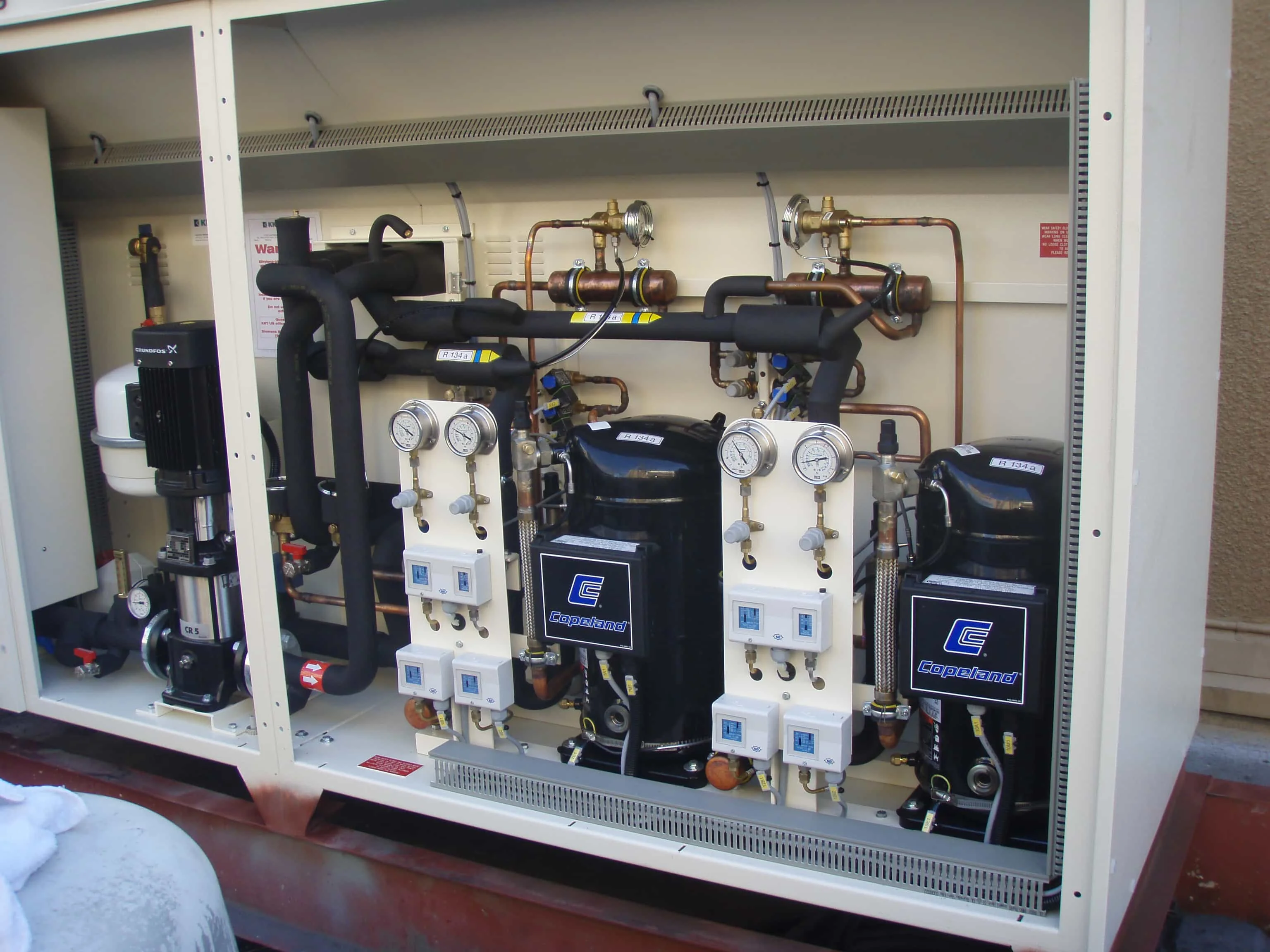
Precision Carbon Steel Pipe Welding by UA Local 250 for Critical Infrastructure
Direct Engineering Summary
Western Mechanical, Inc. specializes in ASME B31.1 and B31.9 welded carbon steel piping for high-pressure steam and hydronic systems, ensuring compliance with critical codes through certified GTAW/SMAW pipe welding, radiographic weld QA, and engineered thermal expansion compensation. Our UA Local 250 signatory journeymen adhere to strict dimensional tolerances, typically +/- 1/16 inch for alignment, and utilize pipe shoes to mitigate stress. This robust approach, superior to pressed or grooved shortcuts, guarantees long-term integrity and operational safety, backed by CSLB #618138. Contact us at (661) 251-0111.
ASME Section IX, utilizing GTAW (Gas Tungsten Arc Welding) for root pass, SMAW (Shielded Metal Arc Welding) for fill passes
ASME Section IX
Radiographic Testing (RT) Coverage
100% for critical service (ASME B31.1 Category D fluid), 10-25% spot for non-critical (ASME B31.9)
ASME B31.1, ASME B31.9, ASME Section V
Hydrostatic Test Pressure
1.5 times design pressure, held for minimum 30 minutes, no visible leakage
ASME B31.1, ASME B31.9
Pipe Support Spacing & Type
Per MSS SP-58/69, incorporating pipe shoes to prevent direct contact with structural steel and allow axial movement
ASME B31.1, MSS SP-58, MSS SP-69
The Criticality of ASME B31.1 & B31.9 Compliance in Welded Systems
Adherence to ASME B31.1 (Power Piping) and B31.9 (Building Services Piping) is non-negotiable for the safe and efficient operation of high-pressure steam and hydronic systems in commercial and industrial facilities. These codes govern the design, materials, fabrication, erection, examination, and testing of pressure piping, ensuring structural integrity under demanding thermal and pressure cycles. Western Mechanical, Inc.'s UA Local 250 journeymen are rigorously trained and certified in GTAW (Gas Tungsten Arc Welding) and SMAW (Shielded Metal Arc Welding) processes, which are essential for producing full-penetration, defect-free welds in carbon steel, particularly for Schedule 40 and Schedule 80 piping.
The distinction between B31.1 and B31.9 is crucial: B31.1 applies to power generation and industrial plants with more stringent requirements for high-temperature, high-pressure steam, while B31.9 covers building services with lower pressure and temperature limits. Our expertise spans both, ensuring that whether it's a central plant's main steam header or a chilled water distribution loop, the welding procedures, material selection, and quality assurance protocols meet the exact code requirements. This meticulous approach mitigates risks associated with catastrophic failures, such as steam explosions or hydronic system leaks, which can lead to significant downtime and safety hazards.
Engineered Solutions for Thermal Expansion and Stress Management
High-temperature steam and chilled water systems inherently experience significant thermal expansion and contraction, which can induce immense stresses on rigid piping networks. Without proper engineering, these forces can lead to pipe rupture, support failure, and premature component fatigue. Western Mechanical, Inc. designs and implements robust solutions such as thermal expansion loops, bellows expansion joints, and strategically placed anchors and guides to absorb and redirect these stresses. Our UA Local 250 pipefitters precisely fabricate and install these elements, ensuring that pipe runs maintain their structural integrity across the full operational temperature range, from ambient startup to peak load conditions.
Beyond expansion loops, the proper selection and installation of pipe shoes are vital. Pipe shoes, often fabricated from carbon steel with insulation, lift the pipe off its support structure, preventing direct metal-to-metal contact that could cause galvanic corrosion or localized stress points. They also facilitate smooth axial movement, reducing friction and wear on supports. This attention to detail, combined with radiographic weld QA to verify internal weld integrity, significantly extends the lifecycle of critical piping infrastructure, offering superior longevity and reliability compared to less robust, shortcut methods like pressed or grooved fittings that lack the same structural resilience under thermal cycling.
Radiographic Weld QA: Ensuring Unseen Integrity for Longevity
While visual inspection is a fundamental step in weld quality control, it cannot reveal subsurface defects that compromise the long-term integrity of high-pressure piping. Radiographic Testing (RT) is a non-destructive examination (NDE) method that uses X-rays or gamma rays to detect internal discontinuities such as porosity, slag inclusions, incomplete fusion, and cracks within the weldment. For critical ASME B31.1 applications, 100% radiographic coverage is often mandated, providing an irrefutable record of weld quality. Western Mechanical, Inc. collaborates with certified NDE partners to perform these rigorous examinations, ensuring every critical weld meets or exceeds code requirements.
The investment in certified GTAW/SMAW pipe welding and subsequent radiographic QA translates directly into enhanced operational safety and reduced total cost of ownership. Shortcuts like pressed or grooved fittings, while seemingly faster to install, introduce potential leak points and are not suitable for the high pressures and temperatures encountered in many ASME B31.1 steam and B31.9 hydronic applications. Our commitment to using only UA Local 250 signatory journeymen and adhering to the highest welding and inspection standards guarantees a piping system that will perform reliably for decades, minimizing maintenance requirements and maximizing facility uptime in Southern California's demanding industrial and commercial environments.
UA Local 250 Certified Field Diagnostic & Commissioning Protocol
Verify pipe material (e.g., A106 Gr. B carbon steel) and schedule (e.g., Schedule 40/80) against P&ID and specifications.
Perform fit-up inspection, checking root gap, alignment (typically +/- 1/16 inch), and bevel preparation before welding.
Conduct visual inspection of completed welds for surface defects (undercut, porosity, cracks) and ensure proper bead profile.
Coordinate NDE (Non-Destructive Examination) like Radiographic Testing (RT) for critical welds and review film/digital images for acceptance criteria.
Facility Director & Chief Engineer FAQs
Why are welded connections preferred over grooved or pressed fittings for high-pressure steam?
Welded connections create a monolithic joint with superior strength and leak integrity, essential for high-pressure and high-temperature steam. Grooved or pressed fittings rely on gaskets and mechanical seals, which are prone to degradation and failure under extreme thermal cycling and pressure, leading to costly leaks and safety hazards over time.
What is the role of a thermal expansion loop in a steam piping system?
A thermal expansion loop is a U-shaped or Z-shaped section of pipe designed to absorb the linear expansion and contraction of the piping system due to temperature changes. It prevents excessive stress buildup on the pipe, supports, and connected equipment, thereby extending the system's operational life and preventing structural failures.
How does Western Mechanical, Inc. ensure weld quality for ASME B31.1 piping?
Western Mechanical, Inc. utilizes UA Local 250 certified journeymen proficient in GTAW and SMAW, adhering to ASME Section IX qualified weld procedures. We implement rigorous quality control including visual inspection, and for critical applications, employ Non-Destructive Examination (NDE) methods like Radiographic Testing (RT) to verify internal weld integrity.
What is the difference between ASME B31.1 and B31.9 piping codes?
ASME B31.1 (Power Piping) covers high-pressure, high-temperature steam and water systems typically found in power plants and industrial facilities. ASME B31.9 (Building Services Piping) applies to lower pressure and temperature hydronic and steam systems within commercial and institutional buildings. Both ensure safety, but B31.1 has more stringent requirements.
Acton Headquarters & 24/7 Southern California Dispatch
Western Mechanical, Inc. • 2210 Soledad Canyon Road, Suite O, Acton, CA 93510 • Primary Phone: (661) 251-0111 • 24/7 Toll-Free: (800) 585-5085 • CSLB #618138 (C-20, C-38, C-4)