WESTERN MECHANICAL, INC. | Primary Dispatch: (661) 251-0111 | 24/7 Hotline: (800) 585-5085 | CSLB #618138 (C-20, C-38, C-4) | 100% UA Local 250 Union
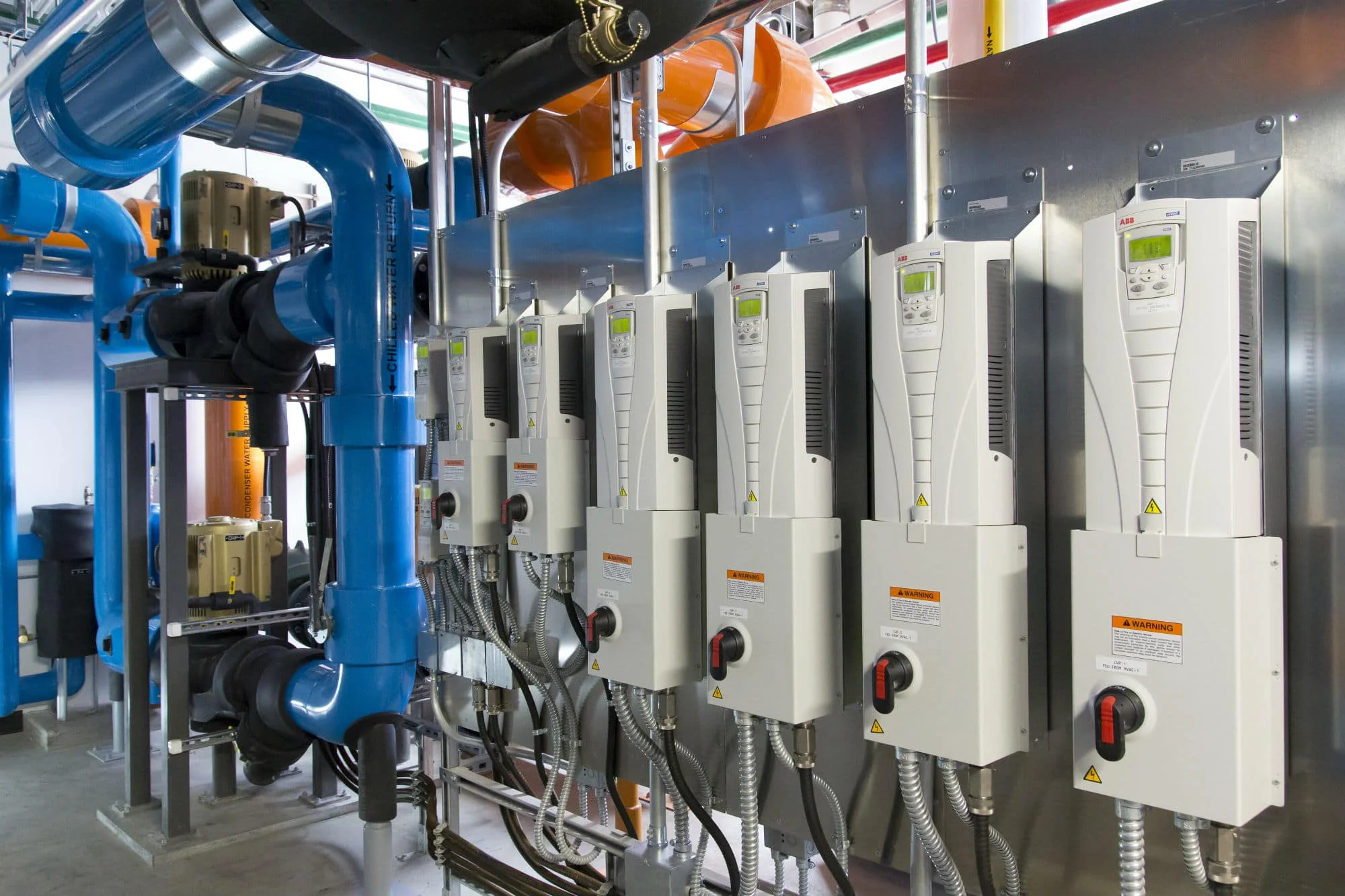
3-Contactor VFD Bypass for Critical HVAC Systems
Ensuring Uninterrupted Operation for HCAI Air Handlers & Condenser Pumps
Direct Engineering Summary
A 3-contactor VFD bypass system provides true across-the-line manual transfer for critical HVAC applications, isolating the VFD for maintenance while maintaining motor operation. This configuration prevents VFD control board failures from disrupting essential services in facilities like HCAI hospitals. Western Mechanical, Inc. ensures proper installation and commissioning of these systems, adhering to NEMA ICS 7.0 and NEC Article 430 standards. Our UA Local 250 journeymen utilize precise diagnostic tools to verify safe service isolation, guaranteeing continuous operation. Contact Western Mechanical, Inc. at (661) 251-0111, CSLB #618138.
Engineering Tolerances & Governing Standards
Parameter
Specification
Standard
Bypass Contactor Rating
115% of Motor Full Load Amps (FLA)
NEC Article 430.110(A)
Isolation Contactor Interlock
Mechanical and Electrical (Hardwired)
NEMA ICS 7.0, Section 7.2.3
Transfer Time (Manual)
< 5 seconds (Typical)
ASHRAE 90.1-2019 (Implied Redundancy)
Harmonic Distortion (Bypass)
< 5% THD (Voltage & Current)
IEEE 519-2014
Control Circuit Voltage
120 VAC or 24 VDC (Class 2)
NEC Article 725
Understanding the 3-Contactor VFD Bypass Architecture
The 3-contactor VFD bypass system is a robust solution designed to ensure continuous operation of critical HVAC motors, such as those powering HCAI hospital air handlers or condenser water pumps, even in the event of a Variable Frequency Drive (VFD) failure. Unlike simpler 2-contactor designs, the 3-contactor configuration features a dedicated input contactor, an output contactor, and a bypass contactor. This arrangement allows for true across-the-line (ATL) operation directly from the utility, completely isolating the VFD from the motor circuit during bypass mode. This isolation is paramount for safety and reliability, especially when servicing a failed VFD control board.
The primary benefit of this architecture lies in its ability to completely de-energize and isolate the VFD for maintenance or replacement without interrupting the motor's power supply. This is achieved through a meticulously engineered interlock system, both mechanical and electrical, preventing simultaneous engagement of the VFD and bypass contactors. For critical Southern California facilities, where uptime is non-negotiable and ambient temperatures demand constant cooling, the 3-contactor bypass mitigates significant operational risks and avoids costly downtime, aligning with stringent HCAI requirements for essential systems.
Ensuring Redundancy and Safety in Critical Applications
For facilities like HCAI hospitals, data centers, or pharmaceutical manufacturing plants, the failure of a single VFD should never lead to a catastrophic shutdown of essential services. The 3-contactor bypass provides a critical layer of redundancy. If a VFD experiences a fault, such as a control board malfunction or power component failure, trained UA Local 250 journeymen can manually switch the motor to ATL operation via the bypass contactor. This immediate transfer maintains system functionality, allowing the VFD to be safely de-energized, troubleshot, or replaced offline without impacting the building's environmental control or process cooling.
Safety during VFD servicing is significantly enhanced with a 3-contactor system. The input and output contactors effectively create a service-isolation point, ensuring that even if the VFD's internal components fail catastrophically, no voltage or current can reach the motor through the VFD when in bypass mode. This complete electrical isolation protects technicians from arc flash hazards and ensures the motor receives clean, direct utility power. Western Mechanical, Inc. rigorously tests these interlock mechanisms and transfer sequences during commissioning to guarantee compliance with NEC and NEMA safety standards.
Lifecycle ROI and Preventative Maintenance
Investing in a 3-contactor VFD bypass system offers substantial long-term return on investment (ROI) by minimizing unscheduled downtime and extending equipment lifespan. While the initial capital cost may be slightly higher than simpler VFD installations, the avoided costs associated with operational interruptions, emergency repairs, and potential regulatory fines for HCAI facilities far outweigh this difference. The ability to perform planned VFD maintenance or replacement during off-peak hours, without disrupting critical processes, optimizes facility management and resource allocation.
Effective preventative maintenance schedules for 3-contactor bypass systems include routine inspection of contactor contacts for pitting or wear, verification of interlock functionality, and testing of the manual transfer sequence. Western Mechanical, Inc.'s CSLB #618138 certified technicians utilize thermal imaging to detect hot spots in contactors and perform insulation resistance testing on motors to ensure their readiness for ATL operation. This proactive approach ensures that when a VFD issue arises, the bypass system is fully operational, guaranteeing seamless continuity for your critical HVAC infrastructure in Southern California.
UA Local 250 Certified Field Diagnostic & Commissioning Protocol
Verify mechanical and electrical interlocks between VFD and bypass contactors using a multimeter for continuity.
Measure voltage at motor terminals in both VFD and bypass modes to confirm proper phase sequence and balanced voltage (within +/- 2%).
Conduct insulation resistance test (Megger) on motor windings before and after bypass transfer to detect potential degradation.
Confirm bypass contactor coil voltage and current draw are within manufacturer specifications during ATL operation.
Document and log manual transfer sequence timing from VFD mode to bypass mode, ensuring smooth transition without motor trip.
Facility Director & Chief Engineer FAQs
Why is a 3-contactor bypass preferred over a 2-contactor for critical HVAC?
A 3-contactor system provides true VFD isolation, meaning the VFD is completely de-energized and disconnected from the motor during bypass. A 2-contactor system often leaves the VFD output connected to the motor, which can pose safety risks or allow VFD faults to affect the motor even in bypass mode. This full isolation is critical for HCAI compliance.
Can a VFD bypass system be automated for failover?
While the core 3-contactor bypass is typically manual for service isolation, it can be integrated into a broader Building Management System (BMS) for automated fault detection and notification. However, the physical transfer to bypass is usually a deliberate manual action to ensure safety and system integrity, especially in HCAI environments.
What maintenance is required for bypass contactors?
Regular maintenance includes inspecting contactor contacts for signs of pitting, carbon buildup, or excessive wear. Checking coil integrity, verifying spring tension, and ensuring clean, tight electrical connections are also crucial. Western Mechanical, Inc. recommends annual inspections to ensure reliable operation.
How does a VFD bypass affect motor starting current?
When a motor is transferred to bypass, it operates across-the-line (ATL), meaning it draws full inrush current directly from the utility. This can be 6-8 times the motor's full load amperage. The electrical infrastructure must be designed to accommodate this surge, which is a key consideration for Western Mechanical, Inc. during design and installation.
Acton Headquarters & 24/7 Southern California Dispatch
Western Mechanical, Inc. • 2210 Soledad Canyon Road, Suite O, Acton, CA 93510 • Primary Phone: (661) 251-0111 • 24/7 Toll-Free: (800) 585-5085 • CSLB #618138 (C-20, C-38, C-4)