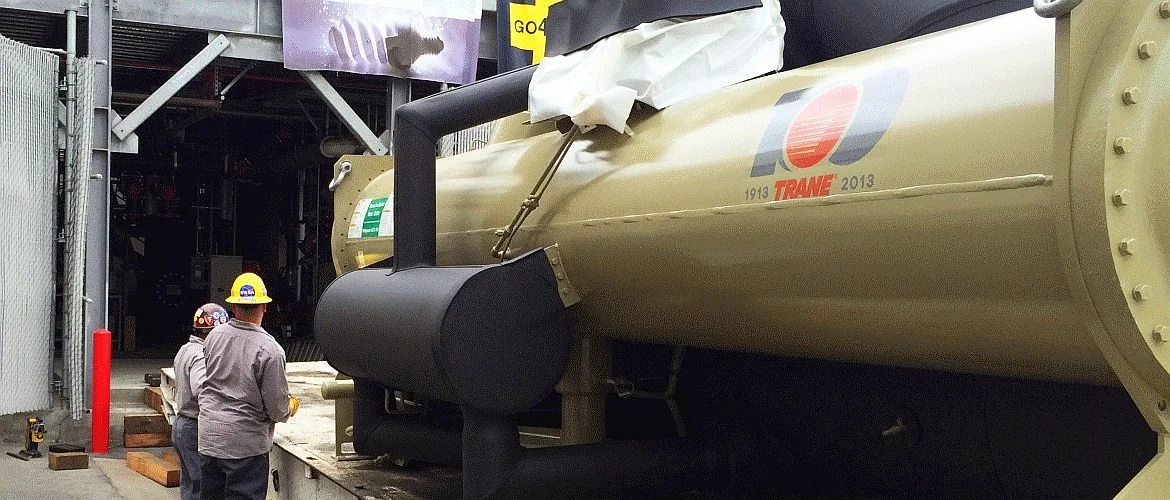
Expert mechanical engineering for sterile and hazardous compounding pharmacy environments, ensuring rigorous air changes, differential pressures, and CETA certification.
Direct Engineering Summary
USP <797> and <800> cleanroom HVAC compliance requires maintaining specific air changes per hour (ACPH), differential pressure cascades, and semi-annual CETA certification to ensure sterile and hazardous compounding safety. ISO 7 buffer rooms typically require 30+ ACPH and a positive pressure of 0.02"-0.05" w.c. relative to ante-rooms. Western Mechanical, Inc., CSLB #618138, provides specialized services with UA Local 250 journeymen to meet these stringent standards, including HEPA filtration and roof plume stack design. Contact us at (661) 251-0111.
Engineering Tolerances & Governing Standards
Parameter
Specification
Standard
ISO 7 Buffer Room ACPH
Minimum 30 Air Changes Per Hour
USP <797> (2023 Revision)
Differential Pressure (Buffer to Ante)
0.02" - 0.05" w.c. (Positive)
USP <797> (2023 Revision)
Differential Pressure (Hazardous Buffer to Ante)
0.01" - 0.03" w.c. (Negative)
USP <800> (2023 Revision)
HEPA Filter Efficiency
99.99% @ 0.3 microns
IEST-RP-CC001
Cleanroom Recertification Frequency
Semi-Annually (Every 6 Months)
CETA CAG-003
Achieving Precise Air Changes Per Hour (ACPH) for USP Compliance
Maintaining the specified Air Changes Per Hour (ACPH) is paramount for USP <797> and <800> cleanroom compliance, directly impacting contamination control. For ISO 7 buffer rooms, a minimum of 30 ACPH is mandated to effectively dilute airborne particulates generated during compounding. This high air exchange rate, coupled with unidirectional airflow and terminal HEPA filtration, ensures that airborne contaminants are rapidly swept away from critical work surfaces, minimizing the risk of microbial and particulate deposition on sterile products. The HVAC system must be meticulously balanced to deliver this precise volume of conditioned air consistently.
The thermodynamic implications of high ACPH rates in Southern California's variable climate are significant. Our designs account for the increased sensible and latent loads associated with introducing large volumes of conditioned outdoor air or recirculated air. Western Mechanical, Inc. engineers optimize fan motor efficiencies, VFD controls, and energy recovery ventilation (ERV) strategies to mitigate energy consumption while strictly adhering to the ACPH requirements. Proper duct sizing, pressure drop calculations, and filter loading considerations are integral to sustaining compliant airflow without compromising system longevity or operational costs.
Critical Differential Pressure Cascades and Containment Strategies
Differential pressure cascades are a foundational element of cleanroom design, establishing controlled airflow pathways to prevent contamination ingress or egress. For USP <797> sterile compounding, ISO 7 buffer rooms must maintain a positive pressure of 0.02"-0.05" w.c. relative to adjacent less-clean areas (e.g., ante-rooms). Conversely, USP <800> hazardous compounding requires a negative pressure differential, typically 0.01"-0.03" w.c., to ensure containment of hazardous drugs. These precise pressure gradients are achieved through meticulous balancing of supply, return, and exhaust air volumes.
Failure to maintain these critical pressure differentials can lead to regulatory non-compliance, compromised product sterility, or hazardous drug exposure. Our UA Local 250 journeymen utilize highly sensitive manometers and digital pressure transducers for continuous monitoring and precise adjustment. Beyond the cleanroom envelope, Western Mechanical, Inc. also designs and installs dedicated exhaust systems with appropriate HEPA filtration and roof plume stacks for hazardous compounding, ensuring safe dispersion of exhaust air above building air intakes and occupied spaces, as required by environmental regulations.
Semi-Annual CETA Certification and Lifecycle Maintenance
Semi-annual CETA (Controlled Environment Testing Association) certification is a non-negotiable requirement for USP <797> and <800> compliant cleanrooms. This rigorous testing verifies that the HVAC system and cleanroom environment meet specified performance criteria, including particle counts, airflow velocity and uniformity, HEPA filter integrity (leak testing), room pressurization, and temperature/humidity control. Our role extends beyond initial installation to providing the ongoing preventative maintenance and calibration necessary to ensure facilities consistently pass these critical audits.
Western Mechanical, Inc. understands that sustaining certification requires a proactive, data-driven approach. Our comprehensive maintenance programs include regular filter changes, fan balancing, VFD tuning, and calibration of critical sensors. We provide detailed documentation for all maintenance activities, supporting the facility's compliance records. This lifecycle approach minimizes downtime, extends equipment lifespan, and ultimately reduces the total cost of ownership for complex pharmacy cleanroom HVAC systems, ensuring uninterrupted operation for critical healthcare services.
UA Local 250 Certified Field Diagnostic & Commissioning Protocol
Verify ISO 7 buffer room positive pressure differential (0.02"-0.05" w.c.) using a calibrated digital manometer.
Measure and confirm minimum 30 ACPH in ISO 7 areas using a balometer or hot-wire anemometer and room volume calculations.
Perform HEPA filter integrity scan (leak test) with a photometer and challenge aerosol (e.g., PAO) per IEST-RP-CC034.1.
Confirm negative pressure differential (0.01"-0.03" w.c.) in USP <800> hazardous compounding rooms relative to adjacent spaces.
Document and calibrate all differential pressure transducers and temperature/humidity sensors, ensuring accuracy within ±5% and ±2% RH respectively.
Facility Director & Chief Engineer FAQs
What is the primary difference in pressure requirements between USP <797> and <800> cleanrooms?
USP <797> sterile compounding cleanrooms (e.g., ISO 7 buffer rooms) require positive pressure (0.02"-0.05" w.c.) relative to adjacent areas to prevent contamination ingress. USP <800> hazardous compounding cleanrooms require negative pressure (0.01"-0.03" w.c.) to contain hazardous drug aerosols within the space.
How often must cleanroom HVAC systems be certified for USP compliance?
Cleanroom HVAC systems for USP <797> and <800> compliance must undergo semi-annual (every six months) certification by a qualified third-party professional, typically following CETA (Controlled Environment Testing Association) guidelines, to verify performance parameters like ACPH, pressure, and particle counts.
What role do roof plume stacks play in USP <800> compliance?
Roof plume stacks are critical for USP <800> compliance in hazardous compounding facilities. They ensure that exhaust air containing hazardous drug particles, after passing through HEPA filtration, is discharged at a sufficient height and velocity to prevent re-entrainment into the building's air intakes or adjacent occupied areas, protecting public health.
Beyond ACPH and pressure, what other HVAC parameters are critical for USP cleanrooms?
Beyond ACPH and pressure, critical HVAC parameters for USP cleanrooms include precise temperature control (typically 68-72°F), humidity control (30-60% RH), unidirectional airflow patterns, and the integrity of terminal HEPA filters (99.99% efficiency at 0.3 microns). All must be continuously monitored and maintained.
Acton Headquarters & 24/7 Southern California Dispatch
Western Mechanical, Inc. • 2210 Soledad Canyon Road, Suite O, Acton, CA 93510 • Primary Phone: (661) 251-0111 • 24/7 Toll-Free: (800) 585-5085 • CSLB #618138 (C-20, C-38, C-4)