WESTERN MECHANICAL, INC. | Primary Dispatch: (661) 251-0111 | 24/7 Hotline: (800) 585-5085 | CSLB #618138 (C-20, C-38, C-4) | 100% UA Local 250 Union
Strainer Mesh Selection for Plate Heat Exchangers & PICVs
Optimizing Chilled Water System Filtration: 20-Mesh vs. 40-Mesh Stainless Steel Strainer Screens
Direct Engineering Summary
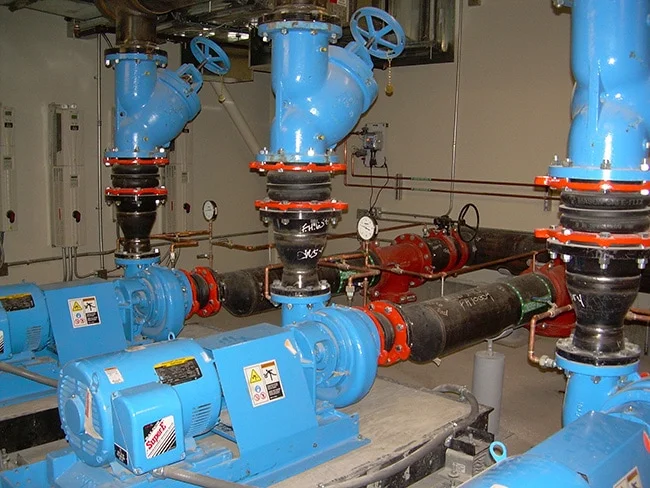
Proper strainer mesh selection is critical for protecting sensitive components like plate heat exchangers (PHXs) and pressure-independent control valves (PICVs) in chilled water systems. Western Mechanical, Inc. recommends 20-mesh (840 microns) for general protection against larger debris like weld slag, and 40-mesh (420 microns) for finer filtration against tower scale, especially for PHXs with 2mm plate gaps. This prevents fouling and extends equipment life, ensuring optimal system performance. Our UA Local 250 journeymen ensure compliance with ASHRAE 90.1. Call (661) 251-0111. CSLB #618138.
Engineering Tolerances & Governing Standards
Parameter
Specification
Standard
Minimum Plate Gap (Brazed PHX)
1.8 mm to 2.5 mm
Manufacturer Specific
Recommended Strainer Mesh (General)
20-mesh (840 microns)
ASHRAE 90.1-2019, Section 6.4.4.1
Recommended Strainer Mesh (Fine Filtration)
40-mesh (420 microns)
Equipment Manufacturer Guidelines
Maximum Allowable Pressure Drop (Clean Strainer)
0.5 PSI (3.45 kPa)
Hydronic Institute (HI) Standards
Minimum Net Positive Suction Head (NPSH)
System NPSHa > Pump NPSHr + 2 ft
Hydraulic Institute (HI) ANSI/HI 9.6.3
The Criticality of Strainer Selection for Plate Heat Exchangers
Plate heat exchangers (PHXs) are highly efficient due to their narrow plate gaps, typically ranging from 1.8mm to 2.5mm in brazed or gasketed designs. This compact construction, while maximizing heat transfer, makes them exceptionally vulnerable to fouling and blockage from particulate matter in the chilled water loop. Common debris includes weld slag, pipe scale, rust, and cooling tower carryover. Without adequate upstream filtration, these contaminants can rapidly degrade PHX performance, leading to reduced heat transfer efficiency, increased pressure drop, and ultimately, costly downtime and component replacement.
The choice between a 20-mesh (840 micron) and 40-mesh (420 micron) strainer screen hinges on the specific vulnerabilities of downstream components and the expected particulate load. While 20-mesh provides robust protection against larger construction debris and initial system flushing, 40-mesh offers finer filtration essential for safeguarding PHXs with extremely tight plate channels and delicate pressure-independent control valve (PICV) cartridges. Over-filtration, however, must be balanced against maintaining adequate net positive suction head (NPSH) for pumps, especially in systems with high flow rates or extended piping runs, to prevent cavitation and premature pump failure.
Mitigating Pressure Drop and Maintaining Pump NPSH
Installing strainers, particularly finer mesh variants, inherently introduces a pressure drop into the hydronic system. This pressure loss directly impacts pump performance and can reduce the available Net Positive Suction Head (NPSHa). If the NPSHa falls below the pump's required NPSH (NPSHr), cavitation will occur, leading to noise, vibration, reduced efficiency, and severe damage to pump impellers and seals. Our UA Local 250 journeymen meticulously calculate system head loss, considering pipe friction, valve losses, and strainer pressure drop, to ensure that pump selections and strainer placements do not compromise system integrity or operational longevity.
To minimize pressure drop while ensuring adequate filtration, Western Mechanical, Inc. often specifies oversized strainers or duplex strainer configurations, allowing for maintenance without system shutdown. Regular monitoring of differential pressure across the strainer is crucial; a significant increase indicates a clogged screen requiring immediate cleaning. In Southern California's often hard water environments, cooling tower scale can be a persistent issue, necessitating proactive water treatment programs in conjunction with appropriate strainer mesh to prevent accumulation in chilled water loops and protect sensitive equipment like plate heat exchangers and PICVs.
Optimizing Lifecycle ROI Through Advanced Filtration Strategies
The initial investment in higher-quality strainers and finer mesh screens, coupled with a robust maintenance protocol, yields significant lifecycle return on investment (ROI). By preventing fouling and abrasion in expensive components like plate heat exchangers and PICVs, facilities avoid premature equipment failure, reduce energy consumption due to optimized heat transfer, and minimize unscheduled downtime. This proactive approach is particularly vital in critical facilities such as HCAI-regulated healthcare environments where operational reliability is paramount and system failures can have severe consequences.
Western Mechanical, Inc. employs advanced diagnostic tools, including ultrasonic flow meters and differential pressure transducers, to precisely quantify system performance and identify potential filtration deficiencies. Our comprehensive maintenance plans for chilled water systems integrate strainer inspection and cleaning schedules, tailored to the specific debris profile of each facility. This ensures that filtration elements are neither neglected nor excessively cleaned, striking an optimal balance between protection, operational efficiency, and maintenance cost, while adhering to stringent standards like ASHRAE 188 for Legionella risk management.
UA Local 250 Certified Field Diagnostic & Commissioning Protocol
Verify installed strainer mesh size against design specifications (e.g., 20-mesh or 40-mesh) using visual inspection and manufacturer data.
Measure differential pressure across the strainer using a calibrated manometer or DP gauge; record readings before and after cleaning.
Inspect strainer screen for tears, corrosion, or deformation; replace damaged screens to prevent bypass of particulates.
Confirm proper sealing of strainer cover and drain plugs after cleaning to prevent leaks and air ingress into the chilled water system.
Check pump suction pressure and calculate available NPSH (NPSHa) to ensure it exceeds pump's NPSHr, especially after finer mesh installation.
Facility Director & Chief Engineer FAQs
Why are plate heat exchangers so sensitive to particulate fouling?
Plate heat exchangers feature extremely narrow flow channels, typically 1.8mm to 2.5mm, designed for high heat transfer efficiency. These tight passages are easily obstructed by even small particulates like weld slag, pipe scale, or cooling tower debris, leading to reduced performance and increased pressure drop.
When should I choose a 40-mesh strainer over a 20-mesh?
A 40-mesh (420 micron) strainer is recommended for systems requiring finer filtration, especially upstream of sensitive components like plate heat exchangers with very small plate gaps or pressure-independent control valves. It effectively captures smaller particulates like fine tower scale that a 20-mesh (840 micron) might miss.
How does strainer pressure drop affect my chilled water pumps?
Strainer pressure drop reduces the available Net Positive Suction Head (NPSHa) at the pump inlet. If NPSHa falls below the pump's required NPSH (NPSHr), cavitation can occur, causing noise, vibration, reduced efficiency, and severe damage to pump impellers and seals over time.
What maintenance is required for strainers in a chilled water system?
Regular maintenance involves monitoring differential pressure across the strainer. When the pressure drop significantly increases, the strainer screen needs cleaning or replacement. The frequency depends on system cleanliness and particulate load, often quarterly or semi-annually, to prevent fouling and maintain efficiency.
Acton Headquarters & 24/7 Southern California Dispatch
Western Mechanical, Inc. • 2210 Soledad Canyon Road, Suite O, Acton, CA 93510 • Primary Phone: (661) 251-0111 • 24/7 Toll-Free: (800) 585-5085 • CSLB #618138 (C-20, C-38, C-4)