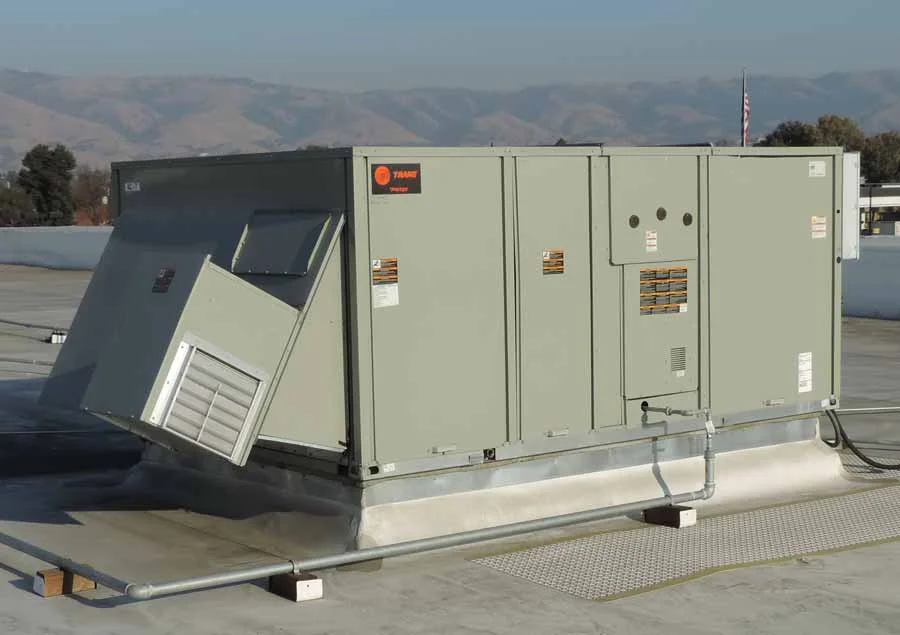
Optimizing RTU Reliability: Diagnosing Polished Sheave Wear and Implementing EC Plug Fan Conversions
Direct Engineering Summary
Rooftop unit (RTU) V-belts frequently snap due to worn cast-iron sheaves, which cause slippage even with proper tension and new Kevlar belts. Worn sheaves exhibit polished grooves that prevent proper belt seating, leading to heat buildup and premature failure. Western Mechanical, Inc. (CSLB #618138) recommends using a sheave groove gauge to quantify wear, with a maximum allowable wear of 0.015 inches (0.38 mm) before replacement. For ultimate reliability, UA Local 250 journeymen perform direct-drive EC plug fan retrofits, eliminating belts entirely. Contact us at (661) 251-0111.
Engineering Tolerances & Governing Standards
Parameter
Specification
Standard
Maximum Sheave Groove Wear
0.015 inches (0.38 mm)
Manufacturer Guidelines / Industry Best Practice
Belt Tension (New Belts)
1.5x operating tension (first 24-48 hrs)
ARPM IP-3 / ISO 5293
Belt Tension (Operating)
1/64 inch deflection per inch of span per pound of force
ARPM IP-3 / ISO 5293
Pulley Misalignment Tolerance
0.5 degrees (angular) / 1/16 inch per foot (parallel)
The persistent failure of V-belts in rooftop units, often manifesting as premature snapping or excessive slipping, frequently points to a deeper issue than mere tensioning. While proper tension is critical, a common overlooked culprit is the wear on the cast-iron sheaves. Over thousands of operating hours, the abrasive action of the belt against the sheave grooves causes material removal, altering the groove geometry. This wear creates a polished, U-shaped profile where the belt no longer seats correctly, losing its wedging action. Even new, high-quality Kevlar belts will slip in such a worn sheave, generating excessive heat and ultimately leading to early failure.
Accurate diagnosis requires more than a visual inspection. Western Mechanical, Inc.'s UA Local 250 journeymen utilize precision sheave groove gauges to quantitatively measure the wear. A sheave with more than 0.015 inches (0.38 mm) of wear in the groove depth or width deviation from nominal is functionally compromised and must be replaced. Ignoring this critical diagnostic step results in a cycle of repeated belt replacements, wasted labor, and increased operational costs, especially in Southern California's demanding climate where RTUs operate extensively.
The Physics of Sheave Wear and Its Impact on RTU Performance
The physics behind V-belt sheave wear is rooted in tribology and fatigue. As the belt transmits power, it constantly deforms and reforms within the sheave groove. Over time, this cyclical stress and friction erode the cast iron, particularly in the flanks of the groove. This erosion reduces the effective contact area and the crucial wedging action that V-belts rely on. The result is increased slip, which directly translates to lost fan RPM, reduced airflow, and diminished cooling/heating capacity. This inefficiency forces the RTU to run longer to meet thermostat setpoints, consuming more energy and accelerating component wear across the entire system.
Beyond efficiency losses, worn sheaves induce vibration and noise, signaling mechanical distress. The increased slip generates significant heat, which degrades both the belt material and the motor bearings, shortening their lifespan. In Southern California, where ambient temperatures are often high, this added heat load exacerbates the problem, pushing components past their thermal limits. Addressing sheave wear proactively not only prevents costly belt failures but also preserves the integrity of the motor and fan assembly, extending the overall service life of the RTU and improving its energy performance under Title 24 Part 6 requirements.
Future-Proofing RTUs: EC Plug Fan Direct-Drive Retrofits
For facility managers seeking to eliminate V-belt maintenance entirely and achieve superior RTU reliability, an EC (Electronically Commutated) plug fan direct-drive retrofit is the ultimate solution. This conversion replaces the traditional belt-driven fan and motor assembly with a high-efficiency EC motor directly coupled to a plenum fan. EC motors offer exceptional turndown capabilities, precise airflow control, and significantly higher part-load efficiencies compared to conventional AC motors, aligning perfectly with Title 24 Part 6 energy mandates for commercial buildings in California.
The benefits of an EC plug fan retrofit extend beyond energy savings. By removing belts, sheaves, and associated bearings, the system eliminates a major source of maintenance, downtime, and failure points. This translates to lower labor costs, reduced spare parts inventory, and enhanced operational uptime—critical for facilities like HCAI-regulated hospitals or data centers. Western Mechanical, Inc.'s UA Local 250 experts engineer and install these retrofits, ensuring optimal performance, reduced noise levels, and a substantial return on investment through improved reliability and energy efficiency for years to come.
UA Local 250 Certified Field Diagnostic & Commissioning Protocol
Utilize a sheave groove gauge to measure groove wear; replace if deviation exceeds 0.015 inches.
Perform laser pulley alignment to ensure parallelism and angular alignment within 0.5 degrees.
Verify proper belt tension using a tension gauge; adjust to manufacturer's specifications for new and run-in belts.
Inspect motor and fan shaft bearings for excessive play or noise; replace if radial or axial movement is detected.
Measure fan RPM with a strobe tachometer before and after belt replacement to quantify slip and airflow impact.
Facility Director & Chief Engineer FAQs
How often should RTU V-belts and sheaves be inspected?
V-belts and sheaves should be inspected quarterly or during routine preventative maintenance. High-usage RTUs or those in dusty environments may require more frequent checks. Early detection of wear prevents catastrophic failures and ensures consistent airflow, which is vital for occupant comfort and process control.
What are the signs that a sheave is worn and needs replacement?
Key indicators of sheave wear include polished, shiny grooves, excessive belt dust, frequent belt slipping despite proper tension, and premature belt failure. A sheave groove gauge provides definitive quantitative proof. Visual inspection alone is often insufficient for accurate diagnosis.
Can I just replace the belts if the sheaves are slightly worn?
While new belts may temporarily mitigate slipping on slightly worn sheaves, it's a short-term fix. The worn geometry will quickly degrade the new belts, leading to accelerated wear, reduced efficiency, and repeated failures. For optimal performance and longevity, replace worn sheaves concurrently with new belts.
What are the long-term benefits of an EC plug fan retrofit for an RTU?
An EC plug fan retrofit offers significant long-term benefits: elimination of belt-related maintenance, substantial energy savings (up to 30-50%), precise airflow control, reduced noise, and extended equipment lifespan. It's a strategic upgrade for facilities prioritizing reliability, efficiency, and lower operational costs.
Acton Headquarters & 24/7 Southern California Dispatch
Western Mechanical, Inc. • 2210 Soledad Canyon Road, Suite O, Acton, CA 93510 • Primary Phone: (661) 251-0111 • 24/7 Toll-Free: (800) 585-5085 • CSLB #618138 (C-20, C-38, C-4)