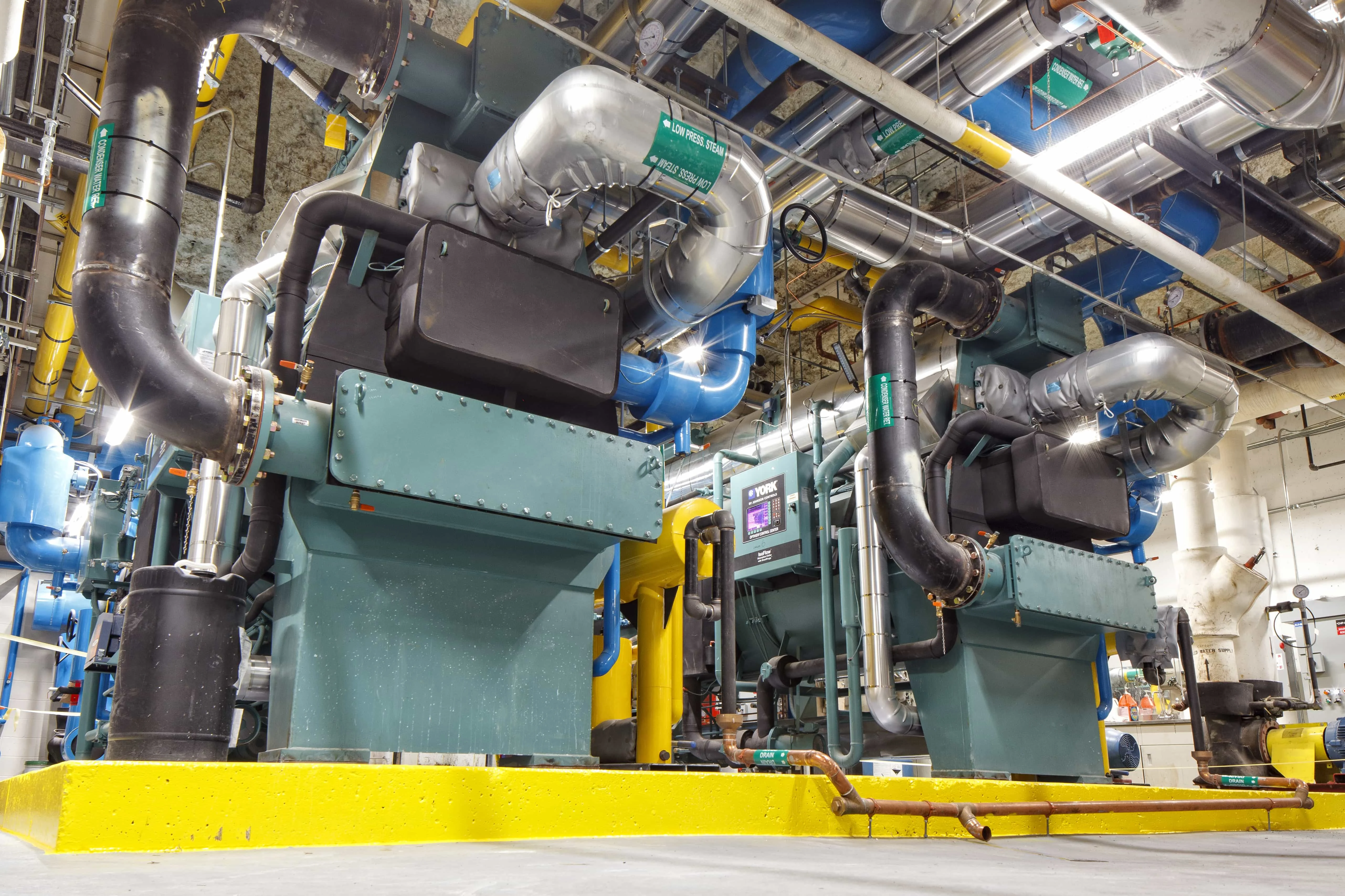
Expert Guidance on HCFC-123 Management for Legacy Trane CVHE/CVHF Centrifugal Chillers in Southern California
Direct Engineering Summary
Navigating the R-123 virgin manufacturing ban requires strategic planning for Trane CVHE/CVHF chillers. Facility managers must consider two primary paths: utilizing ARI-700 certified reclaimed R-123, which is critical for maintaining OEM performance, or executing a comprehensive R-514A retrofit. R-514A conversions necessitate specific compressor seal and orifice plate replacements to ensure system compatibility and efficiency. Western Mechanical, Inc., a UA Local 250 signatory contractor (CSLB #618138), specializes in these complex refrigerant transitions, ensuring compliance and optimal system operation. Contact us at (661) 251-0111 for detailed engineering assessments.
Engineering Tolerances & Governing Standards
Parameter
Specification
Standard
R-123 Virgin Production Ban
January 1, 2020 (Manufacturing) / January 1, 2030 (Service)
Montreal Protocol / EPA SNAP
Reclaimed R-123 Purity Standard
ARI-700-2019 (99.5% purity, max 10 ppm moisture)
AHRI Standard 700
R-514A GWP (Global Warming Potential)
2 (AR5)
IPCC Fifth Assessment Report
R-514A Compressor Seal Compatibility
Specific EPDM/Viton blends required (OEM-specified)
Trane Service Bulletin
R-514A Orifice Plate Sizing
Recalibrated for R-514A mass flow (typically 5-10% smaller)
ASHRAE 15 / OEM Guidelines
Understanding the R-123 Virgin Refrigerant Ban and Stockpile Strategy
The manufacturing ban on virgin HCFC-123 (R-123) took effect on January 1, 2020, as mandated by the Montreal Protocol and EPA regulations. While existing R-123 chillers, predominantly Trane CVHE and CVHF series, can continue to operate, the long-term availability of refrigerant for service and recharge is a critical concern. Facility managers must now rely exclusively on reclaimed R-123 for any system top-offs or full recharges, making a robust stockpile strategy and meticulous leak detection paramount to operational continuity and cost control.
The integrity of reclaimed R-123 is governed by AHRI Standard 700, which stipulates strict purity requirements, including a maximum of 10 ppm moisture and 0.5% non-condensables. Western Mechanical, Inc. emphasizes the importance of verifying ARI-700 certification for all reclaimed refrigerant purchases. Failure to use properly reclaimed R-123 can lead to compressor damage, accelerated oil degradation, and reduced chiller efficiency, ultimately increasing lifecycle costs and potentially forcing premature system replacement.
Evaluating R-514A Retrofit: Technical Considerations and Performance Implications
For facilities seeking to eliminate reliance on R-123 entirely, an R-514A (Opteon XP30) retrofit presents a viable, low-GWP alternative. R-514A is a non-flammable, low-pressure hydrofluoroolefin (HFO) blend specifically designed for centrifugal chillers. However, a successful retrofit is not a simple drop-in. It necessitates precise engineering adjustments, including the replacement of specific compressor seals (often requiring EPDM or Viton blends for compatibility) and the recalibration or replacement of orifice plates to optimize refrigerant mass flow and evaporator/condenser performance.
The thermodynamic properties of R-514A differ from R-123, impacting chiller capacity and efficiency. While R-514A typically offers comparable or slightly reduced capacity (often within 5-10% of R-123), proper system tuning by UA Local 250 journeymen is crucial to minimize performance penalties. Western Mechanical, Inc. conducts thorough pre-retrofit assessments, including thermodynamic modeling and existing component evaluation, to ensure the R-514A conversion yields reliable operation and acceptable energy efficiency for Southern California's demanding cooling loads.
Lifecycle Cost Analysis: Reclaimed R-123 vs. R-514A Conversion vs. Replacement
Facility directors face a complex economic decision when planning their R-123 chiller strategy. Continuing with reclaimed R-123 offers the lowest upfront cost but carries the risk of escalating refrigerant prices and dwindling supply post-2030. An R-514A retrofit, while involving a higher initial investment for parts and labor, provides long-term refrigerant security and often qualifies for energy efficiency incentives, especially if coupled with other chiller optimizations. This approach extends the useful life of a significant capital asset.
The third option, full chiller replacement with a new magnetic-bearing unit, represents the highest capital expenditure but delivers the greatest energy efficiency gains and eliminates all refrigerant transition concerns. Western Mechanical, Inc. provides comprehensive lifecycle cost analyses, factoring in current R-123 market prices, projected R-514A retrofit costs, and the ROI of new, ultra-efficient chillers. Our CSLB #618138 certified engineers help clients in Acton and throughout Southern California make informed decisions tailored to their operational budgets and sustainability goals.
UA Local 250 Certified Field Diagnostic & Commissioning Protocol
Perform comprehensive leak detection on R-123 systems using an infrared leak detector (sensitivity < 0.1 oz/year) and soap bubble test on all accessible joints.
For R-514A retrofits, confirm OEM-specified compressor shaft seal material (e.g., EPDM/Viton) and replace as required.
Measure and verify R-514A orifice plate sizing and installation for correct mass flow and pressure drop across the expansion device.
Post-retrofit, conduct a thorough performance test, logging evaporator/condenser approach temperatures and compressor power draw to validate efficiency against design conditions.
Facility Director & Chief Engineer FAQs
What is the primary risk of relying on reclaimed R-123 after 2030?
The primary risk is the potential for extreme price volatility and scarcity of reclaimed R-123. While service is permitted, the finite supply means any significant leak or major repair requiring a full charge could become prohibitively expensive or impossible to source, leading to unexpected operational downtime. Proactive leak management is crucial.
Does an R-514A retrofit require a new compressor for Trane CVHE/CVHF chillers?
Generally, an R-514A retrofit for Trane CVHE/CVHF chillers does not require a new compressor. The existing compressor can typically be retained, but critical components like the shaft seals and potentially the motor bearings must be replaced with materials compatible with R-514A's properties to ensure long-term reliability and prevent leaks.
What is the typical capacity impact when retrofitting an R-123 chiller to R-514A?
The typical capacity impact when retrofitting from R-123 to R-514A is a minor reduction, usually in the range of 5-10%. This is due to the differing thermodynamic properties of R-514A. However, proper orifice plate sizing, control adjustments, and expert commissioning by UA Local 250 technicians can minimize this reduction and optimize performance.
Are there any tax credits or incentives for R-514A conversions in Southern California?
While direct federal tax credits for R-514A conversions are not always explicit, many utility companies in Southern California offer energy efficiency incentives for chiller upgrades that improve overall system efficiency. An R-514A retrofit, especially when combined with controls upgrades, may qualify for these programs. Western Mechanical, Inc. can assist with identifying applicable incentives.
Acton Headquarters & 24/7 Southern California Dispatch
Western Mechanical, Inc. • 2210 Soledad Canyon Road, Suite O, Acton, CA 93510 • Primary Phone: (661) 251-0111 • 24/7 Toll-Free: (800) 585-5085 • CSLB #618138 (C-20, C-38, C-4)