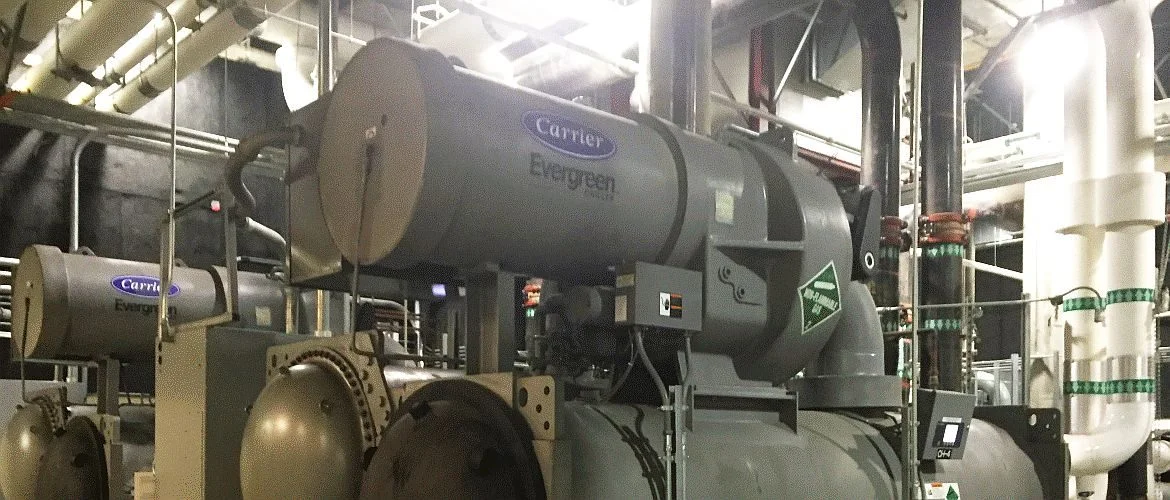
Engineered Solutions for Siemens, GE, and Philips 1.5T/3T MRI Suites in Southern California
Direct Engineering Summary
Western Mechanical, Inc. implements N+1 chiller redundancy, city-water auto-changeover valves, and glycol plate heat exchangers to safeguard MRI and CT cryogenic magnets from costly liquid-helium boil-off quenches. This critical redundancy, essential for Siemens, GE, and Philips 1.5T/3T MRI suites, ensures continuous cooling, preventing system shutdowns and maintaining operational integrity in healthcare facilities. Our UA Local 250 journeymen provide expert installation and service, backed by CSLB #618138. Contact us at (661) 251-0111.
Engineering Tolerances & Governing Standards
Parameter
Specification
Standard
Glycol Concentration (MRI Chiller)
35-45% Propylene Glycol
OEM Specific / ASHRAE 170
Chiller Redundancy
N+1 Minimum
HCAI PIN 70 / NFPA 99
Quench Pipe Discharge Temperature
< 120°F (49°C)
NFPA 99 (Helium Venting)
Cooling Water Pressure Differential
20-40 psi across HX
OEM System Requirements
Helium Compressor Inlet Temperature
40-60°F (4-15°C)
OEM Specification
Mitigating Cryogenic Magnet Quenches with Robust Chiller Systems
The operational integrity of Siemens, GE, and Philips 1.5T/3T MRI machines hinges on precise and continuous cooling of their cryogenic magnets. A failure in the helium compressor cooling loop can lead to a 'quench,' a rapid boil-off of liquid helium, resulting in a catastrophic loss of cryogen, significant downtime, and a repair cost often exceeding $50,000. Western Mechanical, Inc. engineers N+1 chiller redundancy solutions, ensuring that a primary chiller failure immediately triggers a seamless transition to a standby unit, preventing thermal excursions that could compromise magnet superconductivity. This proactive approach is vital for uninterrupted patient care in Southern California hospitals.
Our designs integrate automated city-water auto-changeover valves and dedicated glycol plate heat exchangers. These components provide crucial layers of protection. In the event of a primary chiller or glycol loop issue, the auto-changeover valve diverts city water directly to the helium compressor's heat exchanger, maintaining critical cooling until the primary system is restored. The glycol plate heat exchangers isolate the sensitive helium compressor cooling circuit from the main chilled water loop, preventing contamination and ensuring optimal heat transfer efficiency, which is paramount for maintaining the ultra-low temperatures required by superconducting magnets.
Engineering Redundant Cooling for Diagnostic Imaging Suites
Designing chiller redundancy for MRI and CT suites requires a deep understanding of thermodynamics, fluid dynamics, and HCAI PIN 70 compliance. Our UA Local 250 certified journeymen meticulously size N+1 chiller configurations to handle peak heat loads from multiple imaging modalities, considering ambient Southern California temperatures that can stress cooling capacity. We specify chillers with high Coefficient of Performance (COP) and integrate advanced controls for intelligent load balancing and automatic failover, minimizing energy consumption while maximizing reliability. This ensures that even during extreme heat events, the critical cooling infrastructure remains robust and operational.
Beyond the chillers themselves, the piping network, pump configurations, and control logic are engineered for maximum uptime. We implement dual-path piping, redundant pumps with variable frequency drives (VFDs), and sophisticated building management system (BMS) integration. This allows for real-time monitoring of critical parameters like glycol temperature, flow rates, and pressure differentials. Alarms are configured to alert facility staff and our dispatch center immediately upon detecting any deviation, enabling swift intervention and preventing minor issues from escalating into costly system failures. Our solutions are designed for longevity and minimal lifecycle cost.
Preventing Downtime and Protecting Capital Investment
The financial and operational impact of an MRI quench extends far beyond the cost of helium replacement; it includes lost revenue from canceled appointments, potential patient rescheduling challenges, and the significant expense of magnet re-ramping. Western Mechanical, Inc.'s comprehensive redundancy strategies for MRI and CT chiller systems represent a critical investment in asset protection and operational continuity. By proactively addressing potential single points of failure, we safeguard millions of dollars in diagnostic imaging equipment and ensure that hospitals can maintain their vital services without interruption, which is especially important in high-demand Southern California healthcare environments.
Our expertise extends to the precise installation and commissioning of all components, from the chillers and glycol loops to the specialized quench pipe routing. We ensure that quench pipes are correctly sized and configured to safely vent helium outside the building in the unlikely event of a quench, adhering to NFPA 99 standards. This comprehensive approach, executed by our highly skilled UA Local 250 union journeymen, guarantees that every aspect of the cooling system is optimized for reliability, safety, and peak performance, providing facility directors and chief engineers with unparalleled peace of mind.
UA Local 250 Certified Field Diagnostic & Commissioning Protocol
Verify glycol concentration with refractometer (35-45% propylene glycol) and pH (7.5-8.5).
Confirm N+1 chiller auto-changeover sequence and failover logic via BMS simulation.
Measure helium compressor cooling water inlet/outlet temperatures and flow rates (delta T < 10°F).
Inspect city-water auto-changeover valve for proper operation and pressure differential during test.
Perform vibration analysis on chiller compressors and pumps per ISO 20816-3 standards.
Facility Director & Chief Engineer FAQs
Why is N+1 chiller redundancy critical for MRI machines?
N+1 chiller redundancy is critical because a single point of failure in the cooling system can lead to an MRI magnet quench, causing expensive helium boil-off and extensive downtime. Redundancy ensures continuous cooling, safeguarding the magnet and preserving operational continuity for patient care.
How do city-water auto-changeover valves protect MRI systems?
City-water auto-changeover valves provide a crucial backup cooling source for the helium compressor. If the primary chiller or glycol loop fails, these valves automatically divert city water to maintain cooling, preventing overheating and potential magnet quenches until repairs can be made.
What role do glycol plate heat exchangers play in MRI cooling?
Glycol plate heat exchangers isolate the sensitive helium compressor cooling circuit from the main chilled water loop. This prevents contamination, maintains precise temperature control, and ensures optimal heat transfer efficiency, which is vital for the stability of superconducting MRI magnets.
What is a 'quench' and how does Western Mechanical prevent it?
A 'quench' is the rapid boil-off of liquid helium in an MRI magnet due to a loss of superconductivity, often triggered by insufficient cooling. Western Mechanical prevents quenches through N+1 chiller redundancy, city-water auto-changeover, and robust glycol systems, ensuring uninterrupted cooling.
Acton Headquarters & 24/7 Southern California Dispatch
Western Mechanical, Inc. • 2210 Soledad Canyon Road, Suite O, Acton, CA 93510 • Primary Phone: (661) 251-0111 • 24/7 Toll-Free: (800) 585-5085 • CSLB #618138 (C-20, C-38, C-4)