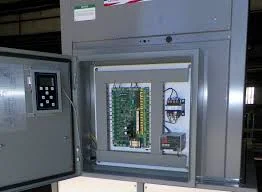
Preventing Chiller Thrashing and Surge Through Intelligent Lead-Lag Sequencing and Deadband Management
Direct Engineering Summary
Optimal multi-chiller staging prevents short-cycling and surge by integrating thermal load calculations, compressor RLA percentage, and minimum 20-minute proof timers, rather than relying solely on leaving-water temperature. This advanced logic, implemented by Western Mechanical, Inc.'s UA Local 250 journeymen, ensures stable operation, extends equipment lifespan, and maintains efficiency. Critical parameters include a 2-3°F deadband, 10-15% RLA staging differential, and a minimum 1.5 GPM/ton evaporator flow. Contact Western Mechanical, Inc. at (661) 251-0111. CSLB #618138.
Engineering Tolerances & Governing Standards
Parameter
Specification
Standard
Chilled Water Deadband
2.0-3.0°F (ΔT)
ASHRAE 90.1, Title 24 Part 6
Minimum Chiller Run Time
20 minutes (Proof Timer)
Manufacturer's Recommendation, Industry Best Practice
Compressor RLA Staging Differential
10-15% of Rated Load Amps
NEMA MG 1, NEC Article 430
Minimum Evaporator Flow Rate
1.5-2.4 GPM/ton
AHRI 550/590, Chiller Manufacturer
Maximum Chilled Water ΔP Fluctuation
±5% during staging events
Hydronic System Design Guidelines
Beyond Simple Temperature: Advanced Staging Logic
Traditional chiller staging often relies solely on leaving chilled water temperature, which can lead to inefficient short-cycling and premature equipment wear, especially in Southern California's fluctuating ambient conditions. A more robust approach integrates real-time thermal load calculations, derived from supply and return water temperatures and flow rates, with compressor Rated Load Amps (RLA) percentage. This method provides a more accurate representation of actual cooling demand, allowing for proactive rather than reactive staging decisions. By evaluating the collective RLA of online chillers, the system gains insight into their current capacity utilization, preventing the addition of unnecessary capacity that would inevitably lead to short-cycling.
The integration of RLA percentage into staging logic is critical for preventing chiller-2 thrashing, where a second chiller rapidly cycles on and off due to minor load fluctuations. When the lead chiller's RLA consistently exceeds a predefined threshold (e.g., 85-90%) for a sustained period, it signals a genuine increase in load, justifying the activation of the lag chiller. Conversely, if the lead chiller's RLA drops below a lower threshold (e.g., 60-70%) for an extended duration, it indicates an opportunity to shed the lag chiller. This dynamic, load-based control, executed by Western Mechanical, Inc.'s UA Local 250 journeymen, significantly enhances system stability and energy efficiency.
Implementing Proof Timers and Deadbands for Stability
To further mitigate short-cycling and protect compressor integrity, minimum proof timers are indispensable. A common industry standard dictates a minimum run time of 20 minutes for any chiller once it starts. This prevents rapid on/off cycling that subjects compressors to unnecessary stress from repeated starts and stops, which are major contributors to motor winding degradation and mechanical fatigue. These timers ensure that once a chiller is brought online, it operates for a sufficient duration to stabilize its internal pressures and temperatures, contributing to a longer operational lifespan and reduced maintenance costs for large commercial and industrial facilities.
Equally important are precisely calibrated deadbands for chilled water temperature. A typical deadband of 2-3°F (e.g., target 44°F, stage on 46°F, stage off 43°F) provides sufficient hysteresis to prevent the control system from oscillating. Without adequate deadbands, even minor temperature fluctuations can trigger rapid staging changes, leading to energy waste and accelerated wear. Western Mechanical, Inc. meticulously calibrates these parameters, alongside intelligent run-hour rotation, to distribute wear evenly across all chillers in a central plant, ensuring optimal performance and longevity for our clients in Southern California, adhering to CSLB #618138 standards.
Optimizing Hydronic Flow and Surge Prevention
Proper hydronic system design and control are paramount for effective multi-chiller staging. Maintaining a minimum evaporator flow rate, typically 1.5-2.4 GPM/ton, is essential to prevent low-flow alarms and potential chiller damage from freezing or oil logging. Variable Primary Flow (VPF) systems, while energy-efficient, require sophisticated control logic to ensure adequate flow through online chillers while managing bypass flow to maintain stable differential pressure. Improper flow management can lead to chiller surge, a critical condition characterized by unstable refrigerant flow and severe mechanical stress on centrifugal compressors.
Western Mechanical, Inc.'s engineers prioritize active bypass valve control and differential pressure monitoring across the chiller plant header. During staging events, the control system must smoothly adjust bypass flow to prevent sudden pressure drops or spikes that could destabilize the entire chilled water loop. By integrating flow meters and pressure transducers into the staging logic, the system can anticipate and react to hydronic changes, preventing surge conditions and maintaining stable cooling delivery. This comprehensive approach ensures that the entire central plant operates as an integrated, resilient system, maximizing efficiency and reliability for critical facilities.
UA Local 250 Certified Field Diagnostic & Commissioning Protocol
Verify chilled water supply/return temperature sensor calibration (±0.2°F accuracy) using a NIST-traceable reference thermometer.
Monitor individual chiller compressor RLA% and compare against manufacturer's performance curves to identify potential underloading/overloading.
Confirm minimum 20-minute proof timers are active and correctly configured in the BAS for each chiller.
Measure evaporator flow rates (GPM) on each online chiller to ensure minimum 1.5 GPM/ton is maintained, especially during staging transitions.
Log chilled water header differential pressure (ΔP) during staging sequences to confirm stability within ±5% fluctuation.
Facility Director & Chief Engineer FAQs
Why is relying solely on leaving-water temperature for staging problematic?
Solely relying on leaving-water temperature can cause rapid, inefficient cycling (thrashing) as minor temperature fluctuations trigger chiller starts/stops. This leads to increased energy consumption, premature equipment wear, and unstable plant operation, especially with dynamic loads. Advanced logic considers actual thermal load and RLA% for stability.
What is a 'proof timer' in chiller staging, and why is it important?
A proof timer is a minimum run-time setting, typically 20 minutes, for a chiller once it starts. It's crucial for preventing short-cycling, which stresses compressors with frequent starts/stops. This extends compressor lifespan, reduces maintenance, and allows the chiller to reach stable operating conditions, enhancing overall system reliability.
How does compressor RLA% factor into optimal chiller staging?
Compressor RLA% (Rated Load Amps) indicates the chiller's current load relative to its maximum capacity. Integrating RLA% into staging logic allows the system to add or shed chillers based on actual capacity utilization (e.g., stage on at 85% RLA, stage off at 65% RLA), preventing over-capacity operation and ensuring efficient load matching.
What role does minimum evaporator flow play in multi-chiller plants?
Maintaining minimum evaporator flow (e.g., 1.5-2.4 GPM/ton) is critical to prevent low-flow conditions that can lead to chiller damage, such as tube freezing or oil logging, and potential compressor surge in centrifugal units. Proper flow ensures efficient heat transfer and protects the chiller's internal components from thermal and mechanical stress.
Acton Headquarters & 24/7 Southern California Dispatch
Western Mechanical, Inc. • 2210 Soledad Canyon Road, Suite O, Acton, CA 93510 • Primary Phone: (661) 251-0111 • 24/7 Toll-Free: (800) 585-5085 • CSLB #618138 (C-20, C-38, C-4)