Optimizing R&D Lab HVAC Efficiency with Safe, Contamination-Free Energy Recovery
Direct Engineering Summary
Manifolded VAV lab exhaust systems with run-around glycol heat recovery loops significantly reduce HVAC energy consumption in R&D facilities by up to 40% without cross-contamination. These systems utilize variable air volume (VAV) controls for precise airflow and Strobic plume fans for effective exhaust dispersion, coupled with glycol coils to transfer thermal energy between exhaust and supply air streams. Western Mechanical, Inc. (CSLB #618138), with UA Local 250 journeymen, specializes in designing and implementing these high-efficiency solutions, ensuring compliance and performance. Contact us at (661) 251-0111.
Engineering Tolerances & Governing Standards
Parameter
Specification
Standard
Energy Savings Potential
35-45% of total HVAC energy
ASHRAE 90.1-2019
Exhaust-Supply Cross-Contamination
0.0% (inherent glycol loop design)
ASHRAE 170-2021
Typical Plume Exit Velocity
3,000-4,000 FPM (Strobic fan)
ACGIH Industrial Ventilation Manual
Glycol Concentration (Typical)
30-50% Propylene Glycol
ASTM D1384
VAV Turndown Ratio (Exhaust)
Up to 8:1 (based on fume hood sash position)
NFPA 45-2019
Engineering High-Efficiency Lab Exhaust Systems
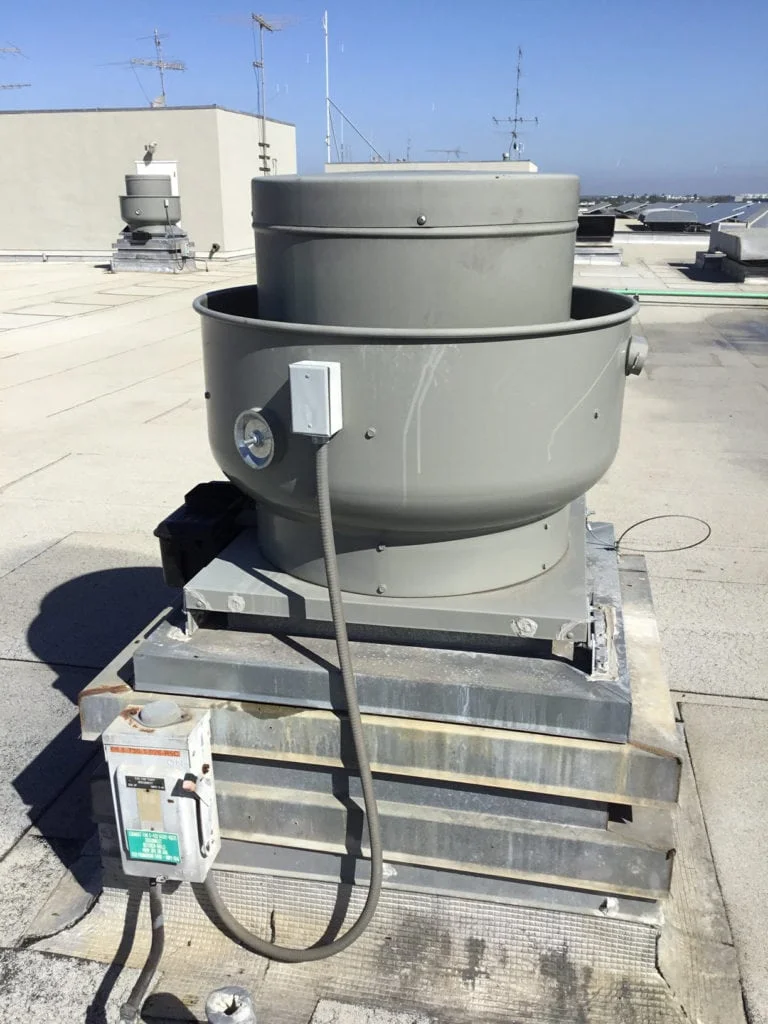
Modern R&D laboratories demand robust ventilation to ensure occupant safety while grappling with substantial energy consumption from 100% once-through air systems. Manifolded VAV lab exhaust systems offer a critical solution by consolidating multiple fume hood exhausts into a single, high-plume fan system. This approach allows for dynamic adjustment of exhaust airflow based on real-time fume hood sash positions and occupancy, significantly reducing the fan energy required compared to constant volume systems. The integration of VFD-controlled Strobic fans ensures sufficient exhaust plume height and dispersion, preventing re-entrainment into building air intakes, a crucial consideration in dense urban or campus environments across Southern California.
The core thermodynamic advantage lies in optimizing fan operation. Instead of multiple smaller fans running at constant speed, a single, larger, VFD-driven fan can operate more efficiently across a wider range of airflow demands. This consolidation also simplifies maintenance and reduces the overall footprint of exhaust equipment. Furthermore, the VAV strategy directly impacts the heating and cooling loads, as less conditioned air is expelled unnecessarily. Western Mechanical, Inc. engineers these systems to meet stringent codes like ASHRAE 170 and NFPA 45, ensuring both safety and peak energy performance for critical research facilities.
Run-Around Glycol Heat Recovery: Contamination-Free Energy Savings
Integrating run-around glycol heat recovery loops with manifolded VAV exhaust systems represents a paradigm shift in lab HVAC energy management. Unlike direct exhaust-to-supply heat exchangers, glycol loops provide a 100% physically separated barrier between the contaminated exhaust air and the clean incoming supply air. This critical feature eliminates any risk of cross-contamination, which is paramount in laboratory settings where hazardous fumes or biological agents may be present in the exhaust stream. The system consists of two independent coil banks—one in the exhaust air stream and one in the supply air stream—connected by a closed loop of circulating propylene glycol solution.
As warm, humid exhaust air passes over the exhaust coil, heat is transferred to the glycol. This heated glycol is then pumped to the supply coil, where it transfers its energy to the colder, incoming outdoor air, preheating it before it enters the main HVAC system. In summer, the process reverses, pre-cooling the incoming air. This continuous energy transfer can recover 35-45% of the sensible and latent heat that would otherwise be wasted, dramatically reducing the load on central chillers and boilers. The precise control of glycol flow via VFD pumps further optimizes heat recovery efficiency based on ambient conditions and lab demand, delivering substantial operational cost savings for Southern California facilities.
Lifecycle ROI and Regulatory Compliance in Southern California
The initial investment in manifolded VAV lab exhaust with glycol heat recovery is quickly offset by significant lifecycle cost reductions. Reduced energy consumption directly translates to lower utility bills, a crucial factor given Southern California's escalating energy costs and Title 24 Part 6 energy efficiency mandates. Beyond energy savings, the enhanced indoor air quality and safety provided by these systems protect valuable research, personnel, and equipment. The robust design, coupled with our UA Local 250 signatory union journeymen's expertise, ensures long-term reliability and minimal downtime, which is critical for continuous research operations.
Western Mechanical, Inc. meticulously designs and installs these complex systems to comply with all applicable standards, including ASHRAE 90.1 for energy efficiency, ASHRAE 170 for healthcare facilities (often referenced for labs), and SCAQMD Rule 1146 for boiler and heater emissions, if applicable to the heating plant. Our comprehensive approach ensures that facilities not only achieve optimal performance and energy savings but also maintain full regulatory compliance, avoiding costly penalties and operational disruptions. The proven track record of 40% energy reduction makes this technology a strategic investment for any R&D institution.
UA Local 250 Certified Field Diagnostic & Commissioning Protocol
Verify VFD operation and setpoints for Strobic fan against design exhaust flow rates using a calibrated anemometer and pitot tube traverse.
Measure glycol loop pressure differential across exhaust and supply coils to confirm proper flow and identify potential fouling using a differential pressure gauge.
Confirm glycol concentration (e.g., 35% propylene glycol) using a refractometer and test for pH and corrosion inhibitor levels.
Log supply and exhaust air temperatures entering and leaving both glycol coils to calculate heat recovery effectiveness and approach temperatures.
Calibrate fume hood sash sensors and verify VAV damper response to sash position changes, ensuring proper face velocity (e.g., 100 FPM +/- 10%) with a hot-wire anemometer.
Facility Director & Chief Engineer FAQs
How does glycol heat recovery prevent cross-contamination?
Glycol heat recovery systems utilize two separate air coils, one in the exhaust and one in the supply, connected by a closed glycol loop. The glycol acts as an intermediary fluid, transferring heat without direct contact between the two air streams, ensuring zero cross-contamination, critical for lab safety.
What maintenance is required for glycol loops?
Regular maintenance includes checking glycol concentration with a refractometer, pH levels, and corrosion inhibitor efficacy. Annual fluid analysis and periodic strainer cleaning are essential to prevent fouling and ensure optimal heat transfer and system longevity.
Can these systems be retrofitted into existing labs?
Yes, manifolded VAV exhaust and glycol heat recovery can often be retrofitted. The feasibility depends on existing ductwork, available space for coils and pumps, and the structural capacity for new fan systems. Western Mechanical, Inc. provides detailed site assessments to determine retrofit viability.
What is the typical payback period for these energy recovery systems?
The payback period for manifolded VAV lab exhaust with glycol heat recovery typically ranges from 3 to 7 years, depending on energy costs, system size, and operational hours. Substantial energy savings and potential utility rebates contribute significantly to rapid ROI.
Acton Headquarters & 24/7 Southern California Dispatch
Western Mechanical, Inc. • 2210 Soledad Canyon Road, Suite O, Acton, CA 93510 • Primary Phone: (661) 251-0111 • 24/7 Toll-Free: (800) 585-5085 • CSLB #618138 (C-20, C-38, C-4)