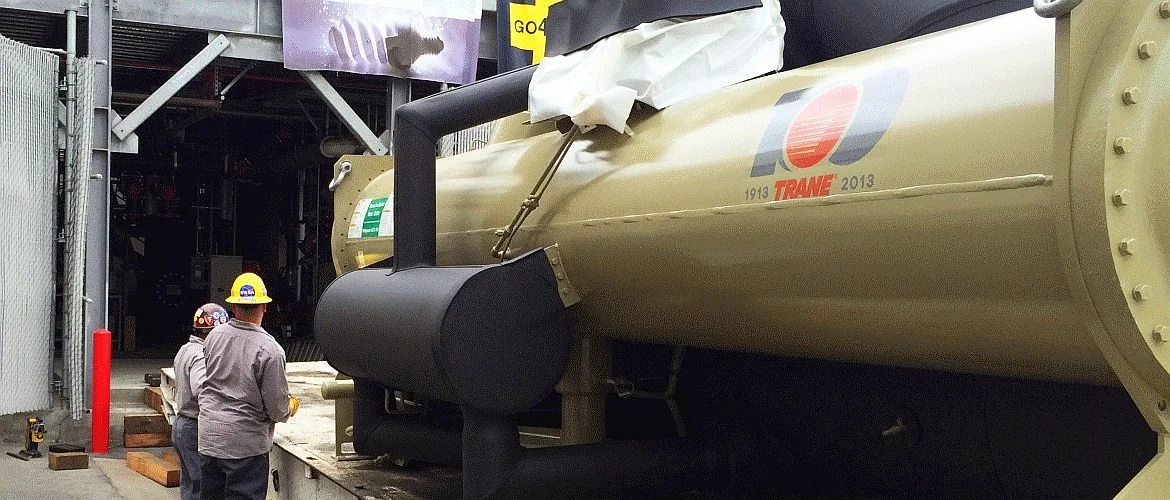
Precision environmental control for sensitive embryo cultures, featuring oil-free construction, CODA filtration, and N+1 redundancy.
Direct Engineering Summary
IVF and embryology cleanroom HVAC systems, installed by Western Mechanical, Inc. (CSLB #618138) with UA Local 250 journeymen, require ultralow VOC materials (less than 10 ppb), positive pressure (minimum 0.05 in. w.c.), and multi-stage air filtration including ULPA filters (99.999% at 0.12 microns) and CODA-certified carbon/potassium permanganate beds. N+1 redundancy for cooling and airflow is critical for continuous operation, ensuring stable temperature (23-24°C) and humidity (30-50% RH) to protect delicate embryo cultures. Contact us at (661) 251-0111.
Engineering Tolerances & Governing Standards
Parameter
Specification
Standard
VOC Concentration Limit
< 10 ppb (Total VOCs)
ISO 14644-1 Annex B.6, ASHRAE 170
Cleanroom Pressure Differential
+0.05 in. w.c. (min) relative to adjacent areas
ISO 14644-4, HCAI PIN 70
Airborne Particulate Filtration
ULPA filters (99.999% @ 0.12 um)
ISO 14644-1 Class 7/8, IEST-RP-CC001.6
Temperature Setpoint & Tolerance
23-24°C ± 0.5°C
ASRM, ESHRE Guidelines
Humidity Setpoint & Tolerance
30-50% RH ± 5% RH
ASRM, ESHRE Guidelines
Ultralow VOC & Oil-Free Air Handling for Embryo Viability
The paramount concern in IVF and embryology cleanroom HVAC is the elimination of volatile organic compounds (VOCs) and airborne particulates that can compromise embryo development. Western Mechanical, Inc. engineers systems utilizing only zero-VOC sealants, gaskets, and construction materials, rigorously specified to prevent off-gassing. Ductwork is constructed with oil-free and silicone-free components, often employing stainless steel or specially coated aluminum, to ensure that no contaminants are introduced into the conditioned air stream. This meticulous material selection is critical for maintaining an environment where total VOCs remain below 10 ppb, a stringent requirement for successful embryo culture.
Beyond material selection, the air handling units (AHUs) themselves are designed for minimal VOC generation. This includes using direct-drive fan arrays to eliminate belt dust, employing specific lubricants for bearings that do not off-gas, and incorporating multi-stage filtration. The initial filtration stages capture larger particulates, followed by high-efficiency particulate air (HEPA) filters, and finally, ultralow penetration air (ULPA) filters, which achieve 99.999% efficiency at 0.12 microns. This layered approach ensures that the air delivered to the cleanroom is not only particulate-free but also chemically inert, safeguarding the delicate cellular processes within the incubators.
Advanced Chemical Filtration: CODA-Certified Carbon & Potassium Permanganate Beds
To actively remove gaseous contaminants, IVF cleanroom HVAC systems incorporate specialized chemical filtration. Western Mechanical, Inc. integrates CODA-certified (Controlled Organic Detection Apparatus) inline carbon and potassium permanganate media beds. These beds are strategically placed downstream of particulate filters. Activated carbon adsorbs a broad spectrum of organic VOCs, while potassium permanganate chemically oxidizes and removes specific inorganic gases like formaldehyde and sulfur compounds, which can be highly detrimental to embryo viability. The CODA certification ensures that the filtration media itself does not introduce new contaminants and performs as specified under stringent laboratory conditions.
The design of these chemical filtration beds considers factors such as contact time, airflow velocity, and media depth to achieve optimal removal efficiency. Regular monitoring of VOC levels using sensitive photoionization detectors (PIDs) or gas chromatographs is essential to determine the saturation point of the media and schedule timely replacement. In Southern California, ambient air quality fluctuations necessitate robust chemical filtration to mitigate external pollutants, ensuring the cleanroom environment remains pristine regardless of outdoor conditions. This proactive approach minimizes the risk of embryotoxicity and supports high success rates for fertility clinics.
Positive Pressure Control & N+1 Redundancy for Uninterrupted Operation
Maintaining a consistent positive pressure differential within the IVF cleanroom (typically +0.05 in. w.c. relative to adjacent areas) is fundamental to preventing the infiltration of unfiltered air and contaminants. This is achieved through precise airflow balancing and dedicated pressure control systems utilizing differential pressure transducers and variable air volume (VAV) boxes. Western Mechanical, Inc. designs these systems to dynamically adjust airflow based on door openings and personnel movement, ensuring the pressure cascade is maintained. This positive pressure regime, coupled with unidirectional airflow in critical zones, creates a protective envelope around the embryo culture areas.
Given the irreplaceable nature of embryo cultures, N+1 redundancy for critical HVAC components, including chillers, boilers (for humidification), pumps, and air handling units, is non-negotiable. This ensures that in the event of a component failure, a standby unit automatically takes over, preventing any disruption to temperature, humidity, or airflow. Our UA Local 250 journeymen install robust control systems that continuously monitor all parameters and trigger immediate alerts for deviations. This N+1 strategy, combined with redundant power supplies, provides the highest level of reliability, safeguarding multi-million dollar research and patient outcomes against unforeseen mechanical failures or utility interruptions common in the Southern California grid.
UA Local 250 Certified Field Diagnostic & Commissioning Protocol
Verify cleanroom positive pressure differential using a calibrated digital manometer, aiming for +0.05 in. w.c. minimum.
Perform total VOC (TVOC) scan with a PID detector (e.g., ppbRAE 3000) at multiple points to confirm levels < 10 ppb.
Inspect ULPA filter integrity via aerosol photometer scan (e.g., TSI 8026) for leaks, ensuring 99.999% efficiency.
Measure supply air temperature and humidity at diffuser outlets, confirming 23-24°C ± 0.5°C and 30-50% RH ± 5% RH.
Check CODA carbon/potassium permanganate bed pressure drop and visually inspect media for saturation indicators.
Facility Director & Chief Engineer FAQs
Why are VOCs so critical in an embryology lab?
Even trace levels of VOCs (parts per billion) can be embryotoxic, impairing embryo development and viability. Our HVAC systems employ zero-VOC materials and advanced chemical filtration to maintain an ultraclean air environment, crucial for successful IVF outcomes and research integrity.
What is N+1 redundancy in this context?
N+1 redundancy means having one extra, fully operational component (e.g., chiller, AHU) beyond what's minimally required. If a primary unit fails, the standby unit automatically activates, ensuring continuous, uninterrupted environmental control for critical embryo cultures, preventing catastrophic losses.
How does Western Mechanical ensure positive pressure control?
We utilize precision differential pressure transducers and modulating VAV boxes to maintain a constant positive pressure (e.g., +0.05 in. w.c.) within the cleanroom. This prevents unfiltered air infiltration, creating a protective barrier and maintaining ISO 14644-1 compliance for particulate control.
What is CODA certification for carbon beds?
CODA (Controlled Organic Detection Apparatus) certification verifies that chemical filtration media, like carbon and potassium permanganate beds, are free of contaminants and effectively remove specific VOCs without off-gassing. This is vital for guaranteeing the purity of air supplied to sensitive embryology environments.
Acton Headquarters & 24/7 Southern California Dispatch
Western Mechanical, Inc. • 2210 Soledad Canyon Road, Suite O, Acton, CA 93510 • Primary Phone: (661) 251-0111 • 24/7 Toll-Free: (800) 585-5085 • CSLB #618138 (C-20, C-38, C-4)