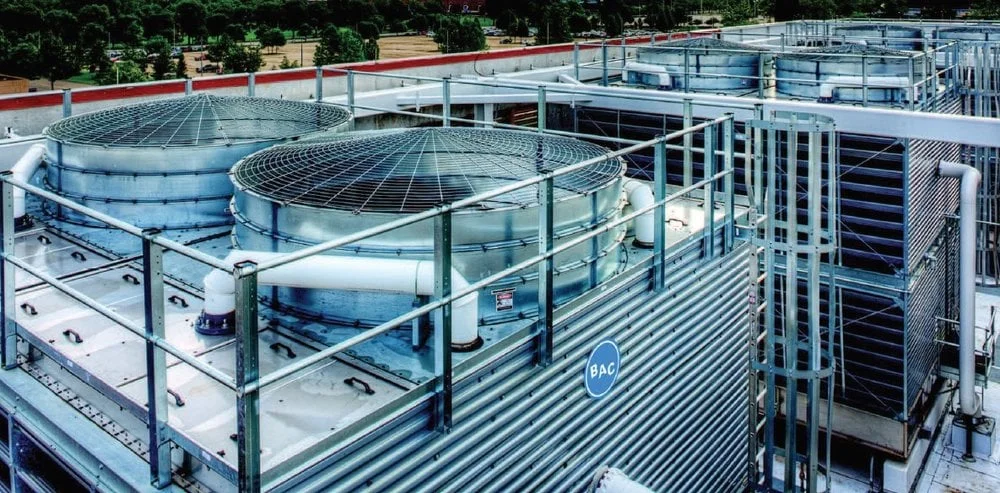
Engineered Solutions for Northern Los Angeles County Industrial Cooling Tower Freeze Protection
Direct Engineering Summary
Preventing cooling tower louver icing in high-desert regions like Palmdale, Mojave, and the Foothills involves implementing VFD-controlled low-speed fan reversal sequences, diverting warm return water directly to the cold basin via bypass headers, and utilizing 480V stainless steel immersion heaters with low-water cutouts to maintain basin water temperature above 40°F (4.4°C). Western Mechanical, Inc., CSLB #618138, employs UA Local 250 journeymen to engineer and install these critical freeze protection systems, ensuring continuous industrial operation. Contact us at (661) 251-0111 for expert service.
Engineering Tolerances & Governing Standards
Parameter
Specification
Standard
Basin Water Temperature Setpoint
40°F (4.4°C) Minimum
ASHRAE 90.1-2019 Section 6.5.4.1
Fan Reversal De-icing Sequence
10-20% Nominal Fan Speed, 5-10 Minute Cycles
CTI STD-201 Guidelines
Immersion Heater Power Density
Max 50 W/in² (7.75 W/cm²)
NEC Article 424
Low-Water Cutout Activation
1.5 inches (38mm) Below Normal Operating Level
ASME CSD-1 (Applicable for Safety Interlocks)
Glycol Concentration (Closed Loop)
30-50% Propylene Glycol for -5°F (-20.5°C) Protection
The unique climate of Palmdale, Mojave, and the Foothills presents significant challenges for industrial cooling towers, particularly during winter nights when ambient temperatures can drop below freezing, often compounded by low humidity and high wind. This combination accelerates evaporative cooling, leading to ice formation on fill media, louvers, and even structural components. Louver icing is especially problematic as it restricts airflow, reduces cooling efficiency, and can cause structural damage if ice accumulates excessively, potentially leading to fan motor overload or catastrophic failure. Effective freeze protection is paramount for continuous operation and equipment longevity.
The physics of louver icing involves supercooled water droplets freezing upon contact with cold surfaces, exacerbated by insufficient water flow over the louvers or inadequate basin heating. Without proper controls, the cold basin can become a heat sink, rapidly freezing makeup water and return water. Western Mechanical, Inc. engineers evaluate each facility's specific load profile, local microclimate, and existing controls infrastructure to design robust solutions. This includes analyzing the system's thermal inertia and potential for transient cold events to ensure the selected de-icing strategies are appropriately sized and responsive.
Advanced De-Icing Strategies: VFD Fan Reversal and Bypass Headers
One highly effective method for preventing louver icing is the intelligent application of Variable Frequency Drives (VFDs) for fan reversal. By briefly operating the cooling tower fan in reverse at a low speed (typically 10-20% of nominal), warm, moist air from the tower interior is directed outwards over the louvers. This localized heating melts ice accumulation and prevents further formation without significantly impacting the overall cooling process. The VFD allows for precise control of fan speed and duration, enabling optimized de-icing cycles that minimize energy consumption while maximizing ice removal efficiency.
Another critical strategy involves modifying the piping to include bypass return headers that directly route a portion of the warm return water into the cold basin. This ensures that even during periods of low cooling demand, a consistent flow of warmer water is introduced into the basin, preventing it from freezing. This active recirculation maintains the basin water temperature above critical thresholds, often in conjunction with basin heaters. Our UA Local 250 journeymen are experts in fabricating and integrating these bypass systems, ensuring seamless operation and compliance with all applicable codes, including Title 24 Part 6 for energy efficiency.
Robust Basin Heating with 480V Immersion Heaters and Safety Interlocks
For comprehensive freeze protection, particularly in the high desert's extreme cold, reliable basin heating is indispensable. Western Mechanical, Inc. specifies and installs industrial-grade 480V stainless steel immersion heaters. These heaters are sized based on the basin volume, minimum ambient temperature, and heat loss calculations to maintain the basin water temperature above 40°F (4.4°C). Stainless steel construction ensures corrosion resistance and longevity in the harsh cooling tower environment, minimizing maintenance and maximizing uptime.
Crucially, these basin heating systems are integrated with essential safety interlocks, including low-water cutouts. A low-water cutout automatically deactivates the heaters if the water level drops below a safe operating threshold, preventing heater burnout and potential fire hazards. Our CSLB #618138 certified technicians ensure that all electrical installations comply with NEC Article 424 for fixed electric space-heating equipment, providing robust, safe, and energy-efficient freeze protection systems. This proactive approach safeguards expensive equipment and ensures uninterrupted industrial processes throughout the winter months.
UA Local 250 Certified Field Diagnostic & Commissioning Protocol
Verify VFD programming for low-speed fan reversal sequence (10-20% speed, 5-10 min cycle) and proper activation logic.
Inspect basin heater elements for scale buildup and confirm 480V supply voltage and amperage draw per manufacturer specifications.
Test low-water cutout switch functionality by slowly draining basin to confirm heater deactivation at specified level (e.g., 1.5 inches below normal).
Confirm proper operation and valve positioning of bypass return header to cold basin, ensuring adequate warm water recirculation.
Measure basin water temperature with calibrated thermometer/RTD to verify maintenance above 40°F (4.4°C) during coldest periods.
Facility Director & Chief Engineer FAQs
How does fan reversal prevent louver icing?
Fan reversal at low speed directs warm, moist air from inside the tower outwards over the louvers. This localized warm airflow melts existing ice and prevents new ice formation by raising the surface temperature of the louvers, ensuring continuous airflow and preventing structural damage.
What is the primary benefit of a bypass return header for freeze protection?
A bypass return header ensures that a portion of the warm return water is continuously routed directly into the cold water basin. This maintains the basin water temperature above freezing, preventing ice formation in the critical collection area, even during periods of low cooling demand.
Why are low-water cutouts essential for basin heaters?
Low-water cutouts are critical safety devices that automatically de-energize basin heaters if the water level drops too low. This prevents the heating elements from overheating and burning out, which could lead to equipment damage, fire hazards, or premature heater failure, ensuring safe operation.
What maintenance is required for cooling tower freeze protection systems?
Regular maintenance includes verifying VFD programming, inspecting heater elements for scale, testing low-water cutouts, checking bypass valve operation, and monitoring basin water temperature setpoints. Annual inspections by UA Local 250 journeymen ensure optimal performance and compliance.
Acton Headquarters & 24/7 Southern California Dispatch
Western Mechanical, Inc. • 2210 Soledad Canyon Road, Suite O, Acton, CA 93510 • Primary Phone: (661) 251-0111 • 24/7 Toll-Free: (800) 585-5085 • CSLB #618138 (C-20, C-38, C-4)