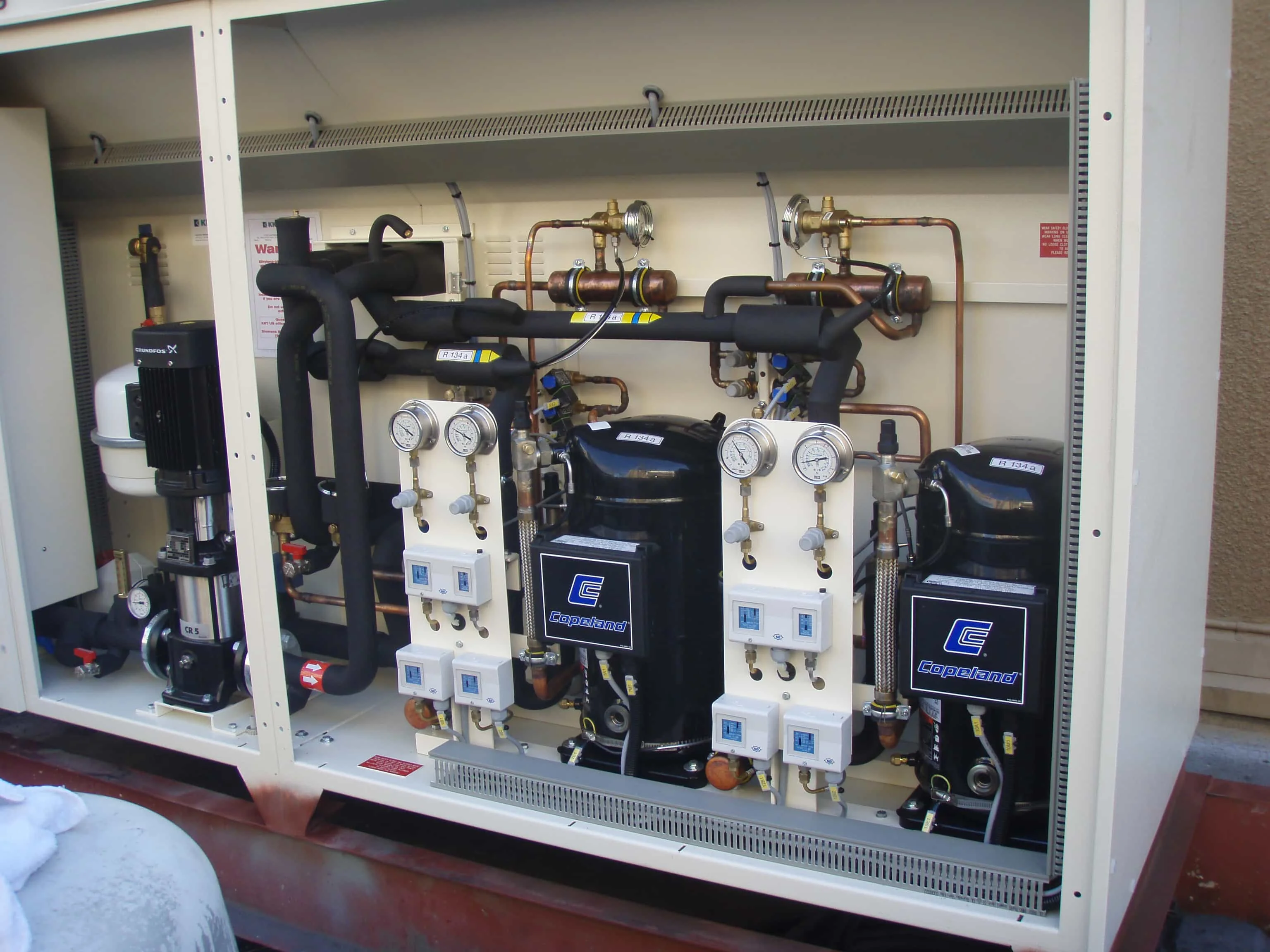
Expert diagnostics for hydronic air binding, pressure reducing valve failures, and hidden leaks in commercial and industrial closed-loop systems.
Direct Engineering Summary
Closed hydronic loops lose pressure due to air binding, thermal contraction, and leaks, often masked by failing automatic fill pressure reducing valves (PRVs). A PRV stuck open allows continuous makeup water, concealing leaks and introducing oxygenated city water that accelerates corrosion and scaling. Western Mechanical, Inc. diagnoses these issues by monitoring makeup water totalizer meters for excessive consumption (e.g., >50 gallons/day for a 5,000-gallon system), inspecting expansion tanks, and validating PRV setpoints and function, ensuring system integrity and efficiency. Our UA Local 250 journeymen are CSLB #618138 certified. Call (661) 251-0111.
Engineering Tolerances & Governing Standards
Parameter
Specification
Standard
Makeup Water Totalizer Limit (Typical)
< 1% of system volume per day
ASHRAE 180-2018
PRV Setpoint Tolerance
System static height + 4 psi (min. 12 psi)
ASME Section IV
Expansion Tank Pre-charge Pressure
Equal to system static height (cold fill)
Hydronic Institute H-2007
Dissolved Oxygen Limit (Closed Loops)
< 0.05 mg/L
NACE SP0775-2013
System Operating Pressure Differential
10-20 psi above static fill pressure
Manufacturer Specific
The Insidious Impact of Automatic Fill PRV Failures
Automatic fill pressure reducing valves (PRVs) are critical components in maintaining stable pressure within closed hydronic loops, ensuring proper flow and preventing cavitation. However, when these valves fail, often by sticking open due to sediment, scale, or diaphragm fatigue, they can mask significant underlying issues like hidden leaks. A continuously open PRV allows raw, oxygenated city water to flood the system, maintaining pressure even as water escapes through a leak. This constant influx of fresh water introduces dissolved oxygen and minerals, rapidly accelerating corrosion, scale formation, and biological growth within boilers, chillers, and piping.
The consequence of a failed PRV extends beyond mere water waste; it fundamentally compromises the longevity and efficiency of the entire hydronic infrastructure. The continuous replenishment of oxygenated water depletes corrosion inhibitors, leading to pitting and general corrosion, especially in boiler heat exchangers and steel piping. Furthermore, the mineral content contributes to scaling, reducing heat transfer efficiency in coils and chillers, increasing pumping energy, and potentially leading to premature equipment failure. Detecting these hidden leaks requires diligent monitoring of makeup water totalizer meters, a critical diagnostic step often overlooked in routine maintenance.
Diagnosing Hidden Leaks with Makeup Water Totalizer Meters
A makeup water totalizer meter is an invaluable diagnostic tool for identifying hidden leaks in closed hydronic systems. While a properly functioning closed loop should require minimal to no makeup water after initial fill and deaeration, a system consistently consuming hundreds or even thousands of gallons per month indicates a significant leak. Many facility managers initially attribute pressure drops solely to air binding or expansion tank issues, failing to recognize that a continuously active PRV is compensating for a physical water loss. Western Mechanical, Inc. utilizes historical makeup water data to establish baseline consumption, flagging any deviations that suggest a leak in underground piping, slab penetrations, or inaccessible areas.
The physics behind this diagnostic approach are straightforward: for every pound of water lost to a leak, the PRV introduces a pound of fresh water. This continuous exchange, especially in Southern California where water hardness varies, introduces new challenges. Our UA Local 250 journeymen meticulously log totalizer readings over time, correlating them with system pressure, temperature, and operational cycles. An unexplained surge in makeup water consumption, even if system pressure appears stable due to the PRV, is a definitive indicator of a leak that requires immediate investigation to prevent catastrophic system damage and excessive utility costs.
Preventing Air Binding and Optimizing System Integrity
Air binding, the accumulation of air pockets within hydronic piping, significantly impedes flow, reduces heat transfer, and can lead to pump cavitation. While often a symptom of insufficient deaeration or improper system design, persistent air binding can also indicate a failing expansion tank or a PRV that allows too much fresh, air-laden water into the system. Proper air elimination is crucial for system efficiency and longevity. This involves correctly sized and located air separators, automatic air vents, and maintaining adequate system pressure above the highest point to keep dissolved gases in solution.
Optimizing closed-loop integrity requires a holistic approach, starting with precise PRV calibration and regular inspection of expansion tanks to ensure correct pre-charge pressure. Western Mechanical, Inc.'s CSLB #618138 certified technicians verify that PRV setpoints are accurately matched to system static height and operational requirements. We also perform comprehensive system deaeration and chemical treatment to manage dissolved oxygen and corrosion. Proactive monitoring of makeup water totalizers, coupled with routine inspection of all hydronic components, ensures that minor issues are identified and rectified before they escalate into costly failures, preserving asset value and operational reliability.
UA Local 250 Certified Field Diagnostic & Commissioning Protocol
Verify automatic fill PRV static setpoint and dynamic operation using a calibrated pressure gauge, ensuring it maintains system minimum pressure (e.g., 12 psi or static height + 4 psi).
Record makeup water totalizer meter reading daily for 7-10 days to establish baseline consumption; investigate any usage exceeding 1% of system volume per day.
Isolate and test the expansion tank pre-charge pressure with a tire gauge after draining system pressure to zero, ensuring it matches cold static fill pressure.
Perform dissolved oxygen (DO) test on system water using a portable DO meter; levels exceeding 0.05 mg/L indicate excessive oxygen ingress, often from makeup water.
Inspect all accessible piping, valves, and connections for visible signs of leaks, corrosion, or scale, paying close attention to pump seals and heat exchanger gaskets.
Facility Director & Chief Engineer FAQs
How does a stuck-open PRV lead to boiler corrosion?
A stuck-open automatic fill PRV continuously introduces fresh, oxygenated city water into the closed loop. This oxygen reacts with boiler metallurgy, accelerating pitting and general corrosion. The constant influx also dilutes corrosion inhibitors, further compromising system protection and significantly reducing boiler lifespan.
What is the acceptable range for makeup water consumption in a closed hydronic loop?
For a properly sealed and maintained closed hydronic loop, makeup water consumption should be minimal, ideally less than 1% of the total system volume per day. Any consistent consumption above this threshold strongly indicates a hidden leak or an issue with the expansion tank or PRV.
Can air binding cause a false pressure drop in a hydronic system?
Air binding itself doesn't directly cause a false pressure drop in the sense of water loss, but it can lead to erratic pressure readings and poor flow, which might be misdiagnosed. The air pockets reduce the effective volume of water, and if not properly vented, can prevent accurate pressure transmission to sensors or gauges.
How often should makeup water totalizer meters be checked?
Makeup water totalizer meters should be checked and logged at least weekly for commercial and industrial hydronic systems. For critical facilities or those with known issues, daily monitoring is recommended. Consistent data logging allows for early detection of abnormal consumption and potential leaks.
Acton Headquarters & 24/7 Southern California Dispatch
Western Mechanical, Inc. • 2210 Soledad Canyon Road, Suite O, Acton, CA 93510 • Primary Phone: (661) 251-0111 • 24/7 Toll-Free: (800) 585-5085 • CSLB #618138 (C-20, C-38, C-4)