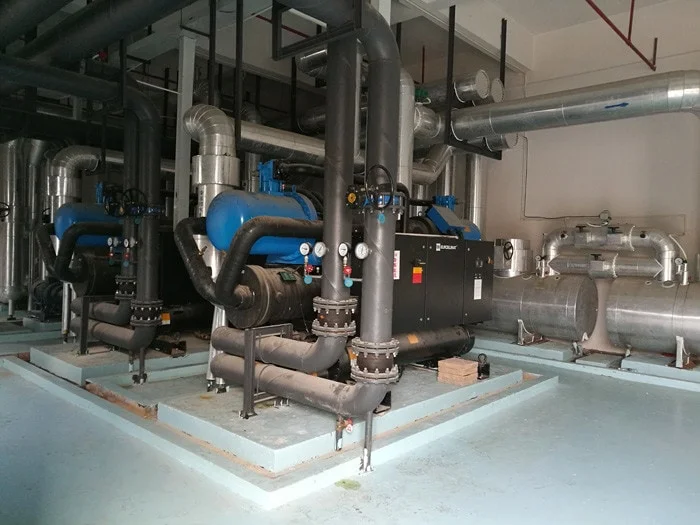
Meticulous cleanup and restoration protocols for hermetic chiller systems after stator winding burnout, preventing cascading failures.
Direct Engineering Summary
Post-burnout chiller recovery involves a rigorous, multi-stage process to neutralize residual acids (hydrofluoric, hydrochloric) and remove carbonized particulates from the entire refrigeration circuit. This includes installing oversized suction line filter-driers with acid scavenging cores, multiple oil changes, and comprehensive system flushing. Western Mechanical, Inc., CSLB #618138, employs UA Local 250 journeymen to perform these critical procedures, ensuring refrigerant acid levels are below 0.05 ppm and particulate contamination is mitigated. Contact (661) 251-0111 for emergency recovery services.
Engineering Tolerances & Governing Standards
Parameter
Specification
Standard
Refrigerant Acid Level (Post-Cleanup)
< 0.05 ppm (parts per million)
ASHRAE Standard 15
Particulate Contamination (Oil Analysis)
ISO 4406 Cleanliness Code 18/16/13
ISO 4406:2017
Filter-Drier Pressure Drop (Max)
2.0 psid (pounds per square inch differential)
Manufacturer Specific
Vacuum Level (Non-condensable Removal)
500 microns (0.5 Torr)
ASHRAE Guideline 3-2018
Oil Change Frequency (Initial Recovery)
Every 24-72 operating hours (minimum 3 changes)
OEM & Industry Best Practice
Understanding Hermetic Motor Burnout Contamination
A hermetic chiller motor burnout is a catastrophic event where the stator windings overheat and fail, leading to the decomposition of refrigerant and lubricating oil. This thermal breakdown generates highly corrosive acids, primarily hydrofluoric (HF) and hydrochloric (HCl), along with carbonized soot and metallic particulates. These contaminants circulate throughout the entire refrigeration system, attacking compressor bearings, motor insulation, and heat exchanger surfaces, necessitating immediate and thorough cleanup to prevent subsequent compressor failures.
The presence of these acids and particulates renders the entire system toxic to any replacement compressor. Hydrofluoric acid corrodes copper and aluminum, while hydrochloric acid attacks steel. Even trace amounts left behind can accelerate wear, degrade new oil, and compromise the integrity of the new motor's insulation. Western Mechanical, Inc. utilizes specialized diagnostic tools, including acid test kits and spectrophotometric oil analysis, to quantify the extent of contamination and guide our rigorous recovery protocols in Southern California's demanding industrial environments.
Precision Acid Scavenging & System Flushing Protocols
Our post-burnout recovery protocol begins with isolating the failed compressor, draining all contaminated oil, and performing a preliminary flush with a compatible flushing agent or refrigerant. Crucially, we install oversized suction line filter-driers specifically designed with acid scavenging cores (e.g., activated alumina and molecular sieve blends) to aggressively absorb residual acids and filter out solid particulates. These cores are selected for their high acid capacity and moisture removal capabilities, essential for restoring system chemical balance.
Multiple oil changes are performed using the OEM-specified lubricant, typically after 24-72 hours of operation, to dilute and remove dissolved contaminants. Each oil sample undergoes laboratory analysis to track acid levels and particulate counts, ensuring the system reaches acceptable cleanliness thresholds (e.g., < 0.05 ppm acid). This iterative process, combined with meticulous vessel decontamination and line flushing, is performed by UA Local 250 journeymen to safeguard the longevity and efficiency of the new compressor and the entire chiller system.
Preventing Recurrence and Ensuring Long-Term Reliability
Beyond immediate cleanup, Western Mechanical, Inc. focuses on identifying the root cause of the original motor burnout to prevent recurrence. This involves analyzing operating logs, electrical parameters (voltage, current, phase balance), and refrigerant charge history. Common culprits include sustained low refrigerant charge leading to motor overheating, excessive head pressure, or persistent liquid floodback. Addressing these underlying issues is paramount for the long-term reliability of the recovered chiller system.
Our comprehensive recovery includes verifying proper superheat and subcooling, optimizing expansion valve operation, and ensuring adequate condenser airflow, especially critical in Southern California's high ambient temperatures. Commissioning involves a detailed performance test to confirm the chiller meets OEM specifications and ASHRAE 90.1 energy efficiency standards. This holistic approach, executed by CSLB #618138 certified technicians, minimizes future operational risks and maximizes the return on investment for facility owners.
UA Local 250 Certified Field Diagnostic & Commissioning Protocol
Perform immediate refrigerant analysis with acid test kit to quantify initial contamination (e.g., Total Acid Number).
Install oversized suction line filter-driers with high-capacity acid scavenging cores; record differential pressure across filters.
Execute initial oil drain and flush; refill with OEM-specified oil and operate for 24-72 hours.
Collect and send oil samples for spectrographic analysis (acid level, particulate count, moisture) after each oil change.
Verify system vacuum to 500 microns and hold for 30 minutes to ensure non-condensable and moisture removal.
Facility Director & Chief Engineer FAQs
What acids are formed during a hermetic motor burnout?
Hermetic motor burnouts generate highly corrosive acids like hydrofluoric (HF) and hydrochloric (HCl) from the thermal decomposition of refrigerant and oil. These acids attack metal components and degrade new compressor lubricants, necessitating immediate and thorough removal to prevent cascading failures.
How many oil changes are typically needed after a burnout?
Typically, at least three to five oil changes are required after a motor burnout. Each change is followed by a period of system operation (24-72 hours) and subsequent oil analysis to ensure acid and particulate levels are reduced to acceptable thresholds, often below 0.05 ppm.
Why are oversized filter-driers critical for burnout recovery?
Oversized filter-driers with acid scavenging cores are critical because they provide significantly increased surface area and chemical capacity to absorb acids and trap carbonized particulates. This prevents these contaminants from circulating and damaging the replacement compressor and other system components.
Can a chiller system be fully decontaminated after a burnout?
Yes, with rigorous, multi-stage protocols, a chiller system can be effectively decontaminated. Western Mechanical, Inc. employs UA Local 250 journeymen for comprehensive acid scavenging, flushing, and oil analysis to restore system integrity and ensure the longevity of the new compressor.
Acton Headquarters & 24/7 Southern California Dispatch
Western Mechanical, Inc. • 2210 Soledad Canyon Road, Suite O, Acton, CA 93510 • Primary Phone: (661) 251-0111 • 24/7 Toll-Free: (800) 585-5085 • CSLB #618138 (C-20, C-38, C-4)