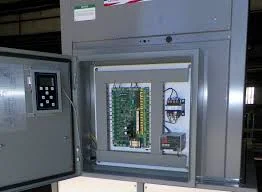
Ensuring Life Safety Compliance with Actuator Replacement and Fusible Link Integrity
Direct Engineering Summary
NFPA 80 and NFPA 105 mandate specific inspection and testing frequencies for fire and smoke dampers to maintain life safety in commercial and healthcare facilities. Commercial buildings require operational testing every four years, while hospitals and other healthcare occupancies, subject to Joint Commission Environment of Care (EC) standards, require testing every six years. Western Mechanical, Inc. provides comprehensive testing, repair, and replacement services, including burned-out spring-return actuators and corroded fusible links, ensuring compliance with CSLB #618138 and utilizing UA Local 250 journeymen. Contact us at (661) 251-0111 for expert service.
Engineering Tolerances & Governing Standards
Parameter
Specification
Standard
Fire Damper Test Frequency (Commercial)
Every 4 years (initial test 1 year after installation)
NFPA 80, Section 19.4
Fire/Smoke Damper Test Frequency (Hospitals)
Every 6 years (initial test 1 year after installation)
NFPA 101, Section 18/19.3.7.6; HCAI PIN 70
Maximum Allowable Leakage (Smoke Damper)
8 CFM/sq ft at 4 in. w.g. (Class I)
UL 555S, AMCA 500-D
Actuator Spring Return Time
Max 15 seconds to fully close
NFPA 80, Section 19.5.4
Fusible Link Temperature Ratings
165°F (74°C) or 212°F (100°C) typically
NFPA 80, Section 19.5.2
Adhering to NFPA 80 & 105 Compliance for Damper Integrity
The rigorous standards set forth by NFPA 80 (Fire Doors and Other Opening Protectives) and NFPA 105 (Smoke Door Assemblies and Other Opening Protectives) are not merely guidelines but critical mandates for life safety in commercial and institutional facilities. These codes dictate the precise inspection, testing, and maintenance protocols for fire and smoke dampers, which are integral components of a building's passive fire protection system. The primary goal is to ensure these dampers activate reliably during a fire event, compartmentalizing smoke and flames to prevent their spread through HVAC ductwork and maintain safe egress paths. Non-compliance can lead to severe penalties, compromised occupant safety, and significant liability for facility owners.
Western Mechanical, Inc. specializes in navigating these complex regulatory landscapes, understanding the nuances between commercial (4-year testing cycle) and hospital (6-year testing cycle) requirements. Our UA Local 250 journeymen are proficient in performing the necessary drop tests, operational checks, and visual inspections to identify issues such as seized linkages, corroded components, or failed actuators. We meticulously document all findings, providing comprehensive reports essential for Joint Commission Environment of Care (EC) surveys and local Authority Having Jurisdiction (AHJ) audits, ensuring your facility remains in strict compliance with all applicable fire and life safety codes.
Diagnosing and Replacing Critical Damper Components
Beyond routine inspections, the longevity and reliability of fire and smoke dampers hinge on the condition of their critical components. Burned-out spring-return actuators are a common failure point, especially in dampers that rarely cycle, as the spring can lose tension or the motor can fail due to prolonged inactivity or electrical surges. These actuators are designed to fail-safe, closing the damper upon loss of power, but a compromised unit will prevent proper operation. Our technicians are skilled in diagnosing actuator malfunctions using multimeters to check coil resistance and control signals, and replacing them with manufacturer-specified replacements to restore full functionality.
Corroded fusible links, particularly prevalent in high-humidity or corrosive environments, represent another significant failure mechanism. These links are designed to melt at a specific temperature, releasing the damper blade to close. Corrosion can either prevent the link from separating or, conversely, cause premature failure, leading to false alarms or non-compliance. Similarly, inaccessible or seized shaft linkages can prevent the damper from closing fully or smoothly. Our team employs specialized tools and techniques to access and repair or replace these components, ensuring the damper's mechanical integrity and its ability to respond effectively during an emergency, often requiring custom fabrication for older systems.
Lifecycle ROI and Preventative Maintenance Strategies
Investing in robust preventative maintenance for fire and smoke dampers offers substantial long-term return on investment, particularly for large commercial and healthcare campuses in Southern California. Proactive identification and replacement of failing components like actuators and fusible links mitigate the risk of catastrophic system failures during an actual fire event, which can prevent extensive property damage and, more critically, save lives. Furthermore, maintaining a compliant damper system reduces the likelihood of costly fines from regulatory bodies and avoids the operational disruptions associated with failed inspections or emergency repairs.
Western Mechanical, Inc. designs tailored preventative maintenance programs that align with your facility's operational demands and regulatory obligations. Our programs include scheduled testing, detailed component inspections, lubrication of moving parts, and precise adjustments to ensure optimal damper performance. By extending the operational life of existing damper systems and preventing premature failures, we help facility managers optimize their budget allocations while upholding the highest standards of life safety and compliance. Our CSLB #618138 license signifies our commitment to quality and adherence to strict industry standards.
UA Local 250 Certified Field Diagnostic & Commissioning Protocol
Verify damper operation by cycling the actuator (electric) or releasing the fusible link (fire damper) and confirm full closure within 15 seconds.
Measure actuator control voltage (24V AC/DC or 120/230V AC) and current draw against manufacturer specifications using a true-RMS multimeter.
Inspect fusible links for corrosion, paint, or physical damage; replace if temperature rating is obscured or integrity is compromised.
Check all damper linkages, hinges, and bearings for freedom of movement, lubrication, and absence of obstructions or debris in the duct path.
Document damper location, type, manufacturer, last test date, and any deficiencies found, noting corrective actions taken per NFPA 80/105 requirements.
Facility Director & Chief Engineer FAQs
What is the primary difference in damper testing frequency for hospitals versus commercial buildings?
Hospitals and healthcare occupancies, due to higher life safety risks and Joint Commission oversight, require fire and smoke dampers to be tested every six years. Commercial buildings, in contrast, must have their dampers tested every four years, as mandated by NFPA 80 and NFPA 105.
Why are spring-return actuators a common failure point in fire and smoke dampers?
Spring-return actuators can fail due to electrical component burnout, mechanical fatigue of the spring, or prolonged inactivity causing seizure. Their critical function is to close the damper upon power loss, so a failed actuator compromises the damper's ability to activate during an emergency, necessitating prompt replacement.
What are the specific risks associated with corroded fusible links?
Corroded fusible links pose two main risks: they can either fail prematurely, causing false damper activation, or become inhibited from melting at their rated temperature, preventing the damper from closing during a fire. Both scenarios compromise passive fire protection and require immediate attention.
How does Western Mechanical, Inc. ensure compliance with HCAI PIN 70 for healthcare facilities?
Western Mechanical, Inc. ensures compliance with HCAI PIN 70 by strictly adhering to NFPA 101 and NFPA 105, which mandate the 6-year testing cycle for healthcare facilities. Our UA Local 250 technicians perform detailed inspections, repairs, and documentation required for Joint Commission EC surveys, ensuring all life safety requirements are met.
Acton Headquarters & 24/7 Southern California Dispatch
Western Mechanical, Inc. • 2210 Soledad Canyon Road, Suite O, Acton, CA 93510 • Primary Phone: (661) 251-0111 • 24/7 Toll-Free: (800) 585-5085 • CSLB #618138 (C-20, C-38, C-4)