WESTERN MECHANICAL, INC. | Primary Dispatch: (661) 251-0111 | 24/7 Hotline: (800) 585-5085 | CSLB #618138 (C-20, C-38, C-4) | 100% UA Local 250 Union
Replacing 75 HP Belt-Drive AHU Blowers With N+1 Redundant ECM Fan Walls
Optimizing Air Handling Units for Reliability and Energy Efficiency in Commercial & Industrial Facilities
Direct Engineering Summary
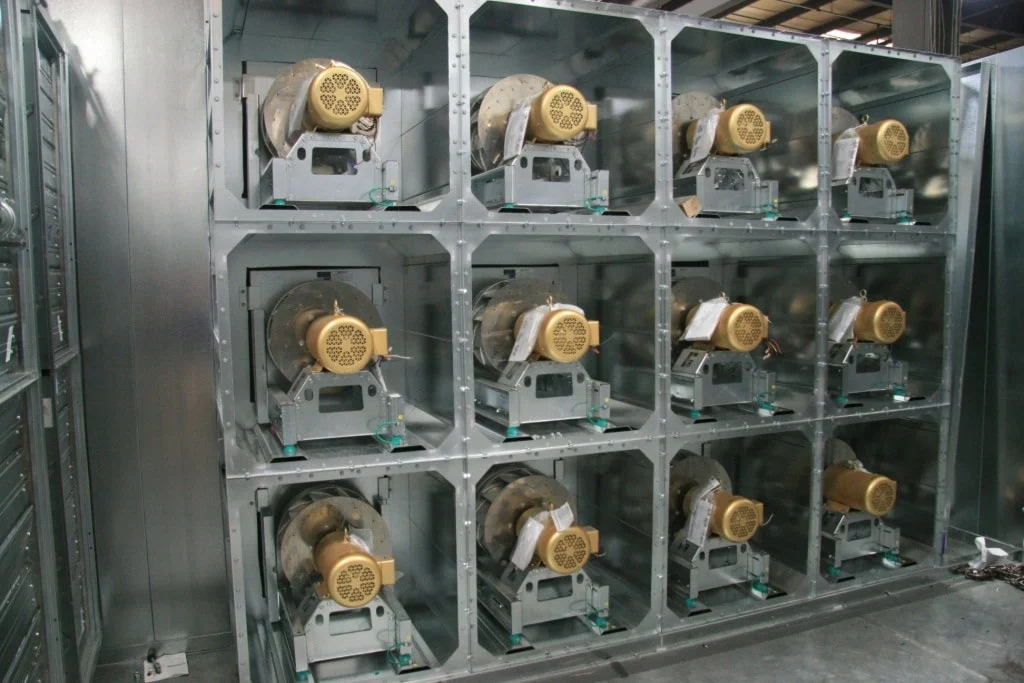
Replacing a 75 HP belt-drive AHU blower with an N+1 redundant ECM fan wall array mitigates catastrophic fan-shaft failures, eliminates V-belt dust, and significantly improves energy efficiency by up to 30% through direct-drive technology and precise airflow control. This modular approach, championed by Western Mechanical, Inc. (CSLB #618138) and executed by UA Local 250 journeymen, allows for easier installation without crane rigging, as individual 5–10 HP plenum fans can fit in standard elevators. Contact us at (661) 251-0111 for expert retrofits.
Engineering Tolerances & Governing Standards
Parameter
Specification
Standard
Fan Efficiency Improvement
15-30% reduction in fan power (BHP)
ASHRAE 90.1, Title 24 Part 6
Vibration Limit (ECM Array)
0.15 in/sec RMS (ISO 20816-3, Category II)
ISO 20816-3
Motor Efficiency (ECM)
IE5 (Ultra-Premium Efficiency)
IEC 60034-30-2
Airflow Turndown Ratio
10:1 (10-100% of design airflow)
AHRI 210/240
Sound Power Level Reduction
3-5 dBA at fan discharge
AMCA 300
Mitigating Catastrophic Failure Modes with ECM Fan Walls
Traditional 75 HP belt-drive DWDI (Double-Width, Double-Inlet) blowers in AHUs are prone to several critical failure modes, most notably catastrophic fan-shaft bearing failure. When a bearing seizes, the immense torque can shear the shaft, leading to immediate and complete loss of airflow. This single point of failure can cripple an entire facility's HVAC system, necessitating costly emergency repairs, extensive downtime, and often requiring crane rigging to replace the massive blower assembly. The inherent fragility of a single, large rotating mass, coupled with the wear and tear on belts, contributes to unpredictable operational interruptions.
In contrast, an N+1 redundant ECM (Electronically Commutated Motor) fan wall array fundamentally re-architects the airflow delivery system. By distributing the total airflow across multiple smaller, direct-drive plenum fans, the system gains inherent redundancy. If one 5-10 HP ECM fan fails, the remaining fans can ramp up to compensate, maintaining critical airflow with minimal disruption. This modularity not only eliminates the single point of failure but also removes V-belts, pulleys, and associated maintenance, significantly reducing friction losses and airborne particulate matter from belt wear, a critical consideration for cleanroom or healthcare environments under HCAI PIN 70.
Enhanced Energy Efficiency and Precise Airflow Control
The energy consumption of large belt-drive blowers is notoriously inefficient, particularly at part-load conditions. V-belt slippage, friction losses, and the inherent inefficiencies of AC induction motors operating with VFDs at low speeds contribute to significant energy waste. Furthermore, the inertia of a large impeller makes rapid airflow adjustments challenging, often leading to over-pressurization or under-pressurization in zones, impacting comfort and process control. Southern California's fluctuating energy costs and Title 24 Part 6 mandates make these inefficiencies increasingly unsustainable for facility operators.
ECM fan walls offer a substantial leap in energy efficiency. Each ECM motor integrates a permanent magnet synchronous motor with onboard electronics, providing superior efficiency across the entire operating range, especially at part-load. Direct-drive technology eliminates belt losses entirely, while the precise digital control of each fan allows for granular airflow modulation. This enables the AHU to accurately match building load demands, reducing fan power consumption by 15-30% compared to traditional systems. The ability to precisely control static pressure setpoints and maintain optimal airflow volumes translates directly into lower utility bills and compliance with stringent energy codes.
Simplified Installation and Maintenance Logistics
The logistics of replacing a 75 HP DWDI blower are often daunting. These monolithic units typically require extensive rigging, crane lifts, and often necessitate opening up the building envelope, leading to significant structural modifications and operational downtime. For facilities located in high-rise buildings or those with limited access, such an undertaking can be prohibitively expensive and disruptive. The sheer size and weight of these components present formidable challenges during both installation and subsequent major repairs.
The modularity of ECM fan wall arrays revolutionizes installation and maintenance. Individual 5–10 HP plenum fans are compact enough to be transported through standard passenger elevators and doorways, eliminating the need for crane rigging or extensive demolition. This allows Western Mechanical, Inc.'s UA Local 250 journeymen to perform retrofits with minimal disruption to ongoing operations. Furthermore, routine maintenance on an ECM fan wall involves servicing individual fans, not the entire assembly, simplifying diagnostics and reducing the impact of any single component failure on overall system availability. This translates to significantly reduced lifecycle costs and improved operational continuity.
UA Local 250 Certified Field Diagnostic & Commissioning Protocol
Verify existing AHU static pressure profile and airflow requirements using pitot tubes and manometer across the coil and filter bank.
Conduct vibration analysis on existing belt-drive blower (ISO 20816-3) to establish baseline and identify potential bearing/belt issues.
Measure existing motor amperage and voltage (IEEE 519) to calculate actual brake horsepower (BHP) and system efficiency.
Confirm structural integrity of AHU plenum for new fan wall array mounting, including vibration isolation requirements.
Perform post-retrofit commissioning for each ECM fan, verifying individual fan speed, current draw, and total system static pressure control.
Facility Director & Chief Engineer FAQs
What is the typical ROI for an ECM fan wall retrofit?
The typical ROI for an ECM fan wall retrofit ranges from 2 to 5 years, driven by significant energy savings (15-30%), reduced maintenance costs, and eliminated downtime from catastrophic failures. Facilities often see immediate improvements in operational reliability and comfort, especially in Southern California's demanding climate.
Can an ECM fan wall be installed in any existing AHU?
Most existing AHUs can accommodate an ECM fan wall retrofit, provided there is sufficient plenum depth and structural integrity. Western Mechanical, Inc. performs detailed site surveys to assess compatibility, often customizing fan wall configurations to fit unique AHU dimensions and airflow requirements, ensuring optimal performance.
How does an N+1 redundancy benefit my facility?
N+1 redundancy in an ECM fan wall means that if one fan fails, the remaining fans can automatically compensate, maintaining critical airflow without interruption. This eliminates the single point of failure inherent in traditional blowers, ensuring continuous operation and preventing costly downtime, particularly vital for hospitals or data centers.
What maintenance is required for an ECM fan wall array?
Maintenance for an ECM fan wall array is significantly reduced compared to belt-drive systems. It primarily involves routine inspection of individual fan motors for cleanliness, checking electrical connections, and monitoring fan performance via the building management system. No belts, pulleys, or shaft bearings require lubrication or replacement.
Acton Headquarters & 24/7 Southern California Dispatch
Western Mechanical, Inc. • 2210 Soledad Canyon Road, Suite O, Acton, CA 93510 • Primary Phone: (661) 251-0111 • 24/7 Toll-Free: (800) 585-5085 • CSLB #618138 (C-20, C-38, C-4)