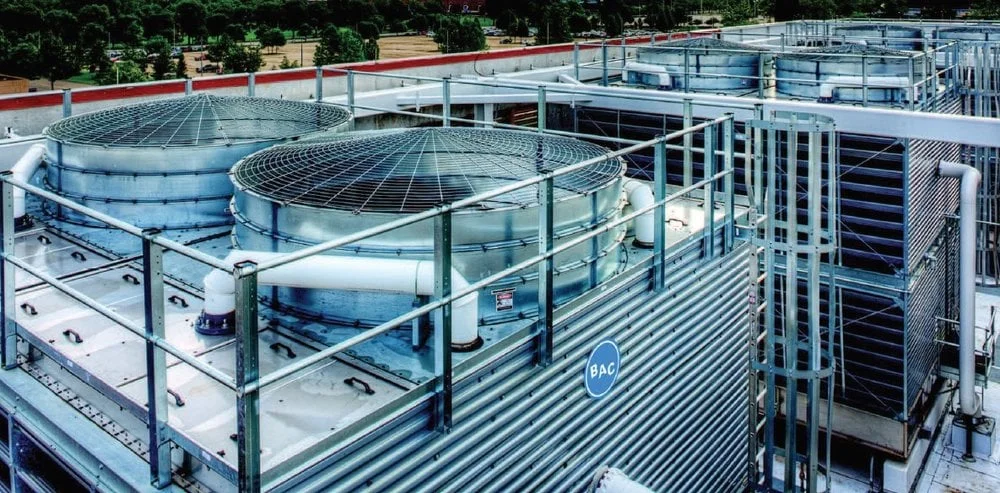
Upgrade to Stilling-Well Electronic Level Control and Municipal Evaporation Deduct Meters for Peak Water Efficiency
Direct Engineering Summary
Stopping silent cooling tower overflows, which can waste over 50,000 gallons monthly, requires replacing outdated mechanical float valves with advanced electronic stilling-well conductivity or ultrasonic level sensors. These systems provide precise water level control, preventing overflow and optimizing makeup water usage. Additionally, installing municipal evaporation deduct water meters allows facilities to capture significant sewer credits by accurately subtracting evaporated water from discharged wastewater. Western Mechanical, Inc., CSLB #618138, provides these critical upgrades with UA Local 250 journeymen, ensuring compliance and efficiency. Call (661) 251-0111 for expert service.
Engineering Tolerances & Governing Standards
Parameter
Specification
Standard
Makeup Water Level Tolerance
0.125 inch (3.175 mm) from setpoint
ASHRAE 189.1, Title 24 Part 6
Overflow Detection Response Time
< 5 seconds
NEMA 4X Enclosure Standards
Conductivity Sensor Range
0-10,000 microSiemens/cm
ASTM D1125
Ultrasonic Level Accuracy
0.1% of full scale
ISA-TR20.00.01
Evaporation Deduct Meter Accuracy
+/- 1.5% of reading
AWWA C700, C701
The Inefficiency of Mechanical Float Valves in Cooling Towers
Traditional brass mechanical float valves, while seemingly simple, are a primary culprit behind silent cooling tower overflows, often wasting over 50,000 gallons of treated water per month in Southern California facilities. Their inherent design flaws, including susceptibility to mineral scale buildup, corrosion from aggressive water treatment chemicals, and physical wear on pivot points, lead to erratic operation. A 'bouncing' or sticking float ball fails to provide consistent level control, resulting in continuous overfilling and subsequent discharge directly to the sewer system, an expensive and environmentally irresponsible practice.
The thermodynamic principle at play in cooling towers demands precise makeup water replenishment to compensate for evaporation, drift, and blowdown. When a mechanical float valve malfunctions, the delicate balance is disrupted. Instead of maintaining the optimal basin level, the valve either sticks open, leading to overflow, or sticks closed, causing low water conditions that can damage pumps and heat exchangers. This inefficiency is exacerbated by Southern California's high evaporation rates and the escalating cost of potable water, making accurate level control a critical operational and financial imperative.
Implementing Stilling-Well Electronic Level Control for Precision
To mitigate costly overflows, Western Mechanical, Inc. engineers recommend replacing antiquated mechanical floats with advanced electronic level control systems, typically housed within a stilling well. These systems employ either conductivity probes or ultrasonic transducers to accurately measure the water level, providing a stable, non-contact, and highly repeatable signal to a robust makeup water solenoid valve. Stilling wells dampen surface turbulence, ensuring consistent readings even under varying tower loads and wind conditions, which is crucial for maintaining the tight level tolerances required for optimal cooling tower performance.
Electronic level sensors offer superior reliability and precision compared to their mechanical predecessors. Conductivity probes detect water presence at discrete points, while ultrasonic sensors provide continuous, analog level measurement. Both methods are less prone to fouling and wear, significantly reducing maintenance requirements and eliminating the 'bouncing' effect. This upgrade not only prevents wasteful overflows but also optimizes water treatment chemical dosing, as the stable water volume allows for more consistent cycles of concentration, ultimately extending equipment life and reducing operational expenses for large-scale industrial and commercial facilities.
Securing Municipal Evaporation Deduct Water Meters and Sewer Credits
Beyond preventing overflows, a significant opportunity for cost savings lies in capturing municipal sewer credits through the installation of dedicated evaporation deduct water meters. Many Southern California municipalities charge sewer fees based on potable water consumption, assuming all incoming water eventually enters the sewer system. However, a substantial portion of cooling tower makeup water is lost to evaporation, never entering the sewer. By installing a separate, calibrated meter on the makeup water line to measure only the evaporated volume, facilities can accurately prove this non-sewered discharge.
Western Mechanical, Inc. assists facilities in navigating the complex process of applying for and implementing these municipal evaporation deduct programs. Our UA Local 250 journeymen install certified, tamper-proof meters that meet local utility specifications, ensuring accurate data collection for credit applications. This strategic investment provides a substantial return by reducing monthly sewer bills, often offsetting the installation cost within a few years. It represents a tangible commitment to water conservation and fiscal responsibility, aligning with both environmental stewardship and sound financial management practices in Southern California's arid climate.
UA Local 250 Certified Field Diagnostic & Commissioning Protocol
Verify electronic level sensor calibration against a known water level using a certified tape measure, ensuring accuracy within 1/8 inch.
Inspect stilling well for debris, bio-fouling, or structural integrity issues that could impede sensor operation.
Confirm makeup water solenoid valve actuates correctly in response to electronic level controller signals; measure valve response time.
Verify municipal evaporation deduct meter is correctly installed with appropriate strainers and check valves, and that flow direction matches utility specifications.
Test alarm setpoints for high and low water levels, ensuring proper notification and shutdown protocols are active and functional.
Facility Director & Chief Engineer FAQs
How much water can a typical cooling tower overflow waste?
A single, silently overflowing cooling tower can waste upwards of 50,000 gallons of water per month. This constant discharge to the sewer system represents a significant financial drain from both water purchasing and sewer discharge fees, particularly in water-stressed regions like Southern California.
What are the benefits of electronic level control over mechanical floats?
Electronic level control offers superior precision, reliability, and reduced maintenance compared to mechanical floats. It eliminates issues like scale buildup, corrosion, and sticking, providing consistent water level management, preventing overflows, and optimizing chemical treatment efficiency. This leads to substantial operational savings.
How do municipal evaporation deduct meters save money?
These meters accurately measure the portion of cooling tower makeup water that evaporates and does not enter the sewer system. By providing this verifiable data to local utilities, facilities can receive credits on their sewer bills, as they are not charged for water that is not discharged as wastewater, leading to significant cost reductions.
Is upgrading to electronic level control a complex process?
Western Mechanical, Inc. makes the upgrade seamless. Our UA Local 250 journeymen are experts in integrating advanced electronic level sensors and solenoid valves into existing cooling tower systems with minimal downtime. We ensure precise calibration and compliance with all relevant codes and standards for optimal performance.
Acton Headquarters & 24/7 Southern California Dispatch
Western Mechanical, Inc. • 2210 Soledad Canyon Road, Suite O, Acton, CA 93510 • Primary Phone: (661) 251-0111 • 24/7 Toll-Free: (800) 585-5085 • CSLB #618138 (C-20, C-38, C-4)