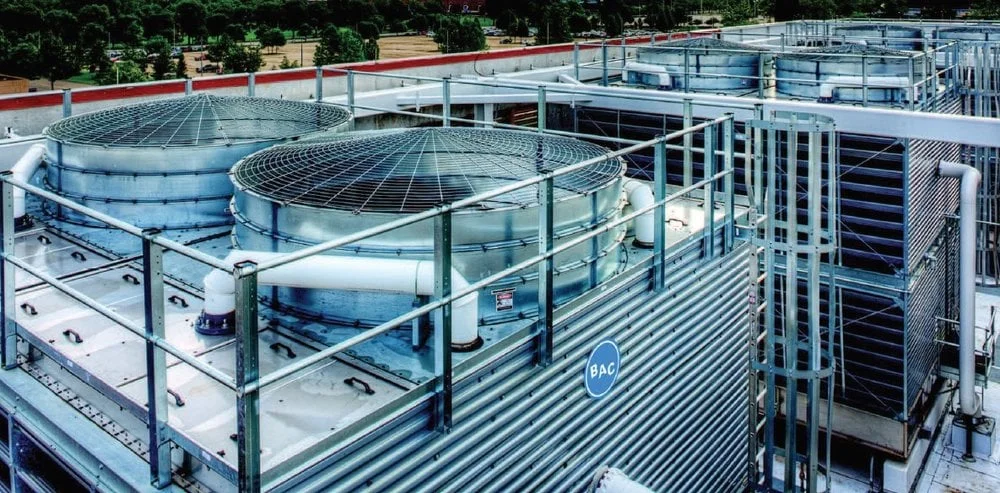
Optimizing Heat Rejection and Mitigating Corrosion in Commercial & Industrial Applications
Direct Engineering Summary
Western Mechanical, Inc. specializes in repairing and passivating closed-circuit evaporative fluid cooler serpentine bundles, addressing common failure modes like white rust on galvanized coils and freeze-induced pinhole leaks in copper. Our UA Local 250 journeymen utilize silver-brazing techniques for copper and implement precise passivation for galvanized surfaces, ensuring optimal heat rejection capacity recovery for Water Source Heat Pump (WSHP) loops. We adhere to stringent standards like ASHRAE 188 for legionella control and maintain CSLB #618138, offering 24/7 emergency service at (661) 251-0111.
Engineering Tolerances & Governing Standards
Parameter
Specification
Standard
Galvanized Coil Passivation pH Range
8.5 - 9.5 (initial 48-72 hrs)
NACE SP0169
Copper Tube Brazing Alloy
BCuP-5 (AWS A5.8), 15% Silver
ASME Boiler & Pressure Vessel Code Section IX
Freeze Protection Setpoint (Glycol)
-10°F (-23°C) below lowest ambient
ASHRAE 90.1
WSHP Loop Temperature Differential
10-15°F (5.6-8.3°C) across fluid cooler
AHRI 1200
Spray Pump Discharge Pressure
20-30 psi (138-207 kPa)
Manufacturer Specific
Mitigating White Rust and Zinc Stripping on Galvanized Coils
New galvanized closed-circuit fluid cooler coils are particularly susceptible to 'white rust' or zinc stripping, a phenomenon often exacerbated by improper water chemistry during initial startup or sustained operation with high alkalinity. This corrosion pathway compromises the protective zinc layer, leading to premature coil degradation and potential leaks. Western Mechanical, Inc. employs meticulous passivation procedures, utilizing specific chemical inhibitors and maintaining a controlled pH range (typically 8.5-9.5) during the critical initial operational period to foster the formation of a stable, protective zinc carbonate layer, thereby extending coil longevity and preventing costly early failures.
Beyond initial passivation, ongoing water treatment protocols are crucial for galvanized coils in Southern California's hard water regions. Our UA Local 250 journeymen implement advanced monitoring systems for pH, conductivity, and corrosion inhibitor levels to prevent recurrence of zinc stripping. We also address issues like inadequate spray pump coverage, which can create localized dry spots and accelerate corrosion. By ensuring uniform water distribution and proper chemical dosing, we safeguard the coil's integrity, maintaining optimal heat transfer efficiency for critical industrial and commercial processes.
Diagnosing and Repairing Freeze-Induced Pinhole Leaks in Copper Bundles
While less common in Southern California's mild climate, severe winter cold snaps can still cause freeze-induced pinhole leaks in copper fluid cooler bundles, particularly in systems with inadequate glycol concentration or failed freeze protection controls. These micro-fractures typically occur at brazed joints or areas of stress concentration where water expands upon freezing. Our diagnostic approach involves pressure testing with inert gas and ultrasonic leak detection to precisely pinpoint these elusive leaks, minimizing downtime and avoiding unnecessary coil replacement.
Once identified, Western Mechanical, Inc.'s UA Local 250 certified welders perform precision silver-brazing repairs using BCuP-5 alloy, ensuring a robust, leak-free seal that restores the bundle's structural and thermal integrity. This specialized repair technique, compliant with ASME Section IX, is critical for maintaining the operational reliability of mission-critical systems like data center cooling or industrial process fluid loops. We also investigate the root cause of freeze protection failure, whether it's a malfunctioning glycol pump, faulty temperature sensor, or incorrect glycol concentration, to prevent future occurrences and protect your investment.
Restoring WSHP Loop Heat Rejection Capacity and System Efficiency
A compromised closed-circuit fluid cooler, whether due to scaling, corrosion, or leaks in its serpentine bundle, directly impacts the heat rejection capacity of a Water Source Heat Pump (WSHP) loop. Reduced heat rejection leads to elevated WSHP condenser water temperatures, decreased coefficient of performance (COP), and increased energy consumption. Our comprehensive service includes thorough cleaning of the coil's exterior (fins) to remove scale and debris, as well as internal inspection for fouling, ensuring optimal heat transfer across the entire bundle surface.
Beyond physical repairs, we meticulously check and calibrate spray pump systems, ensuring adequate and uniform water flow over the coil. We also verify proper fan operation and control sequences, which are vital for maintaining the specified approach temperature. By restoring the fluid cooler's design heat rejection capabilities, Western Mechanical, Inc. helps facilities in Southern California recover lost WSHP system efficiency, reduce operational costs, and prevent premature compressor failures, aligning with Title 24 Part 6 energy efficiency mandates.
UA Local 250 Certified Field Diagnostic & Commissioning Protocol
Verify glycol concentration using a refractometer, ensuring freeze protection to -10°F below design ambient.
Perform inert gas pressure decay test on isolated coil bundle to 150 psi for 30 minutes, monitoring for drops.
Inspect galvanized coil for white rust or zinc carbonate buildup, documenting affected areas with boroscope.
Measure spray pump discharge pressure and nozzle flow rates, ensuring uniform wetting of coil surfaces.
Conduct infrared thermography scan of active coil during operation to identify localized hot spots or dry areas.
Facility Director & Chief Engineer FAQs
How does Western Mechanical, Inc. prevent white rust on new galvanized fluid cooler coils?
We implement a controlled passivation process using specialized chemical inhibitors and maintain a strict pH range (8.5-9.5) during initial startup. This promotes a stable zinc carbonate layer, preventing premature zinc stripping and protecting the coil's integrity, extending its operational lifespan.
What causes freeze-induced pinhole leaks in copper fluid cooler bundles?
These leaks typically result from insufficient glycol concentration or failed freeze protection controls, allowing water to freeze and expand within the tubes. Our UA Local 250 journeymen diagnose and repair these using precision silver-brazing techniques.
How do you restore WSHP loop heat rejection capacity after fluid cooler issues?
We address issues like scaling, corrosion, and leaks through comprehensive cleaning, precise repairs, and calibration of spray pump and fan systems. This ensures optimal heat transfer, restoring WSHP efficiency and reducing energy consumption for your facility.
What is the typical lifespan of a properly maintained galvanized fluid cooler coil?
With proper initial passivation, continuous water treatment, and regular maintenance, a galvanized fluid cooler coil can achieve a lifespan of 15-20 years. Neglecting these aspects can significantly reduce its service life and lead to early failures.
Acton Headquarters & 24/7 Southern California Dispatch
Western Mechanical, Inc. • 2210 Soledad Canyon Road, Suite O, Acton, CA 93510 • Primary Phone: (661) 251-0111 • 24/7 Toll-Free: (800) 585-5085 • CSLB #618138 (C-20, C-38, C-4)