WESTERN MECHANICAL, INC. | Primary Dispatch: (661) 251-0111 | 24/7 Hotline: (800) 585-5085 | CSLB #618138 (C-20, C-38, C-4) | 100% UA Local 250 Union
Why VFD Chillers Reject Hospital & Data Center Backup Diesel Generators
Solving Leading Power Factor, 6-Pulse VFD Current Harmonics, and Voltage Regulator Hunting for Critical Chiller Standby Genset Starts
Direct Engineering Summary
Variable Frequency Drive (VFD) chillers often reject backup diesel generators due to leading power factor, 6-pulse current harmonics, and voltage regulator hunting. These issues destabilize generator output, preventing reliable chiller startup. Western Mechanical, Inc., with UA Local 250 signatory journeymen, addresses these complex power quality challenges by implementing harmonic mitigation, phase-shifting transformers, or active filters to ensure critical chillers operate seamlessly on standby power, meeting IEEE 519 standards. Contact CSLB #618138 at (661) 251-0111 for expert solutions.
Engineering Tolerances & Governing Standards
Parameter
Specification
Standard
Total Harmonic Distortion (THD) Voltage
< 5.0% at Point of Common Coupling (PCC)
IEEE 519-2014
Total Harmonic Distortion (THD) Current
< 8.0% for Isc/IL < 20
IEEE 519-2014
Voltage Dip Tolerance for Chiller VFD
Typically < 10% for 0.5 cycles
NEMA MG 1, Part 30
Generator Transient Voltage Response
Recovery to +/- 1% within 5 seconds
NFPA 110, Level 1
Power Factor Correction Target
> 0.95 lagging
Utility Requirements / IEEE 519
Understanding VFD Chiller Harmonic Distortion on Standby Power
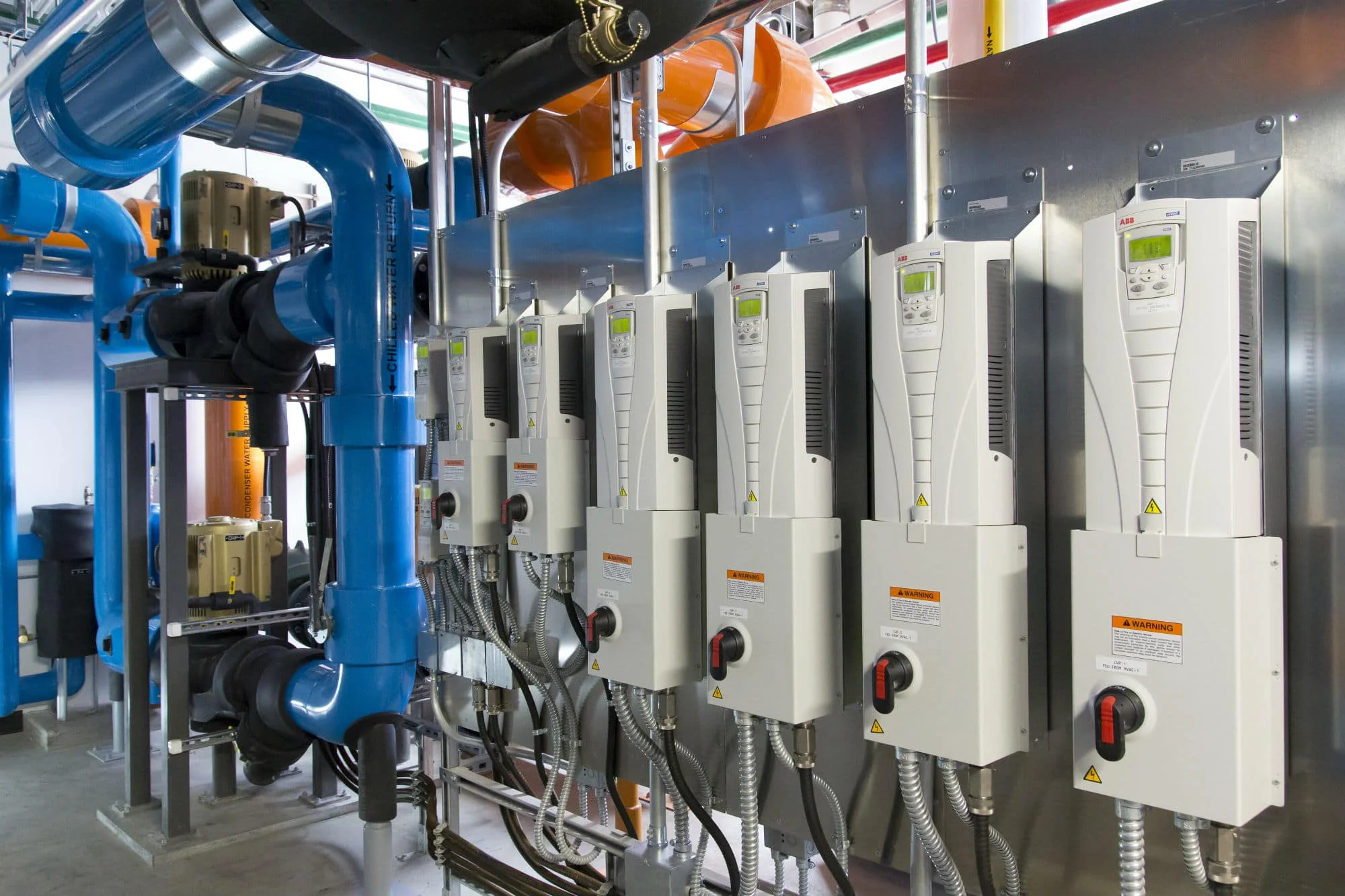
Variable Frequency Drives (VFDs) in modern chillers, while highly efficient under normal utility power, present significant challenges when operating on backup diesel generators. The rectifiers in 6-pulse VFDs draw non-sinusoidal currents, injecting current harmonics back into the electrical system. These harmonics, primarily 5th and 7th order, distort the voltage waveform supplied by the generator, leading to excessive Total Harmonic Distortion (THD) that often exceeds the limits set by IEEE 519. Generators, especially those not specifically oversized or equipped for harmonic loads, struggle to maintain a stable voltage output, causing the chiller's VFD to trip on overvoltage or undervoltage faults.
The inherent impedance of a generator is typically higher than that of a utility grid, making it more susceptible to voltage distortion from harmonic currents. This increased impedance means even moderate harmonic currents can cause substantial voltage drops and waveform irregularities. Furthermore, the leading power factor exhibited by VFDs at light loads can be particularly problematic for older or less sophisticated generator automatic voltage regulators (AVRs). These AVRs may "hunt" or oscillate excessively trying to compensate for the leading reactive power, leading to unstable voltage and frequency, which is detrimental to the sensitive electronics within the VFD and can prevent reliable chiller operation during critical power outages.
Mitigating Leading Power Factor and Voltage Regulator Hunting
Addressing leading power factor and voltage regulator hunting requires a comprehensive electrical engineering approach. One common strategy involves deploying passive harmonic filters, such as tuned LC filters, to absorb specific harmonic currents and improve the power factor. However, these filters are load-dependent and can introduce resonance issues if not precisely designed. A more robust solution for critical facilities like hospitals and data centers often involves active harmonic filters (AHFs) or multi-pulse (12-pulse or 18-pulse) VFDs. AHFs dynamically inject counter-phase currents to cancel harmonics, maintaining THD levels well within IEEE 519 compliance, typically below 5% for voltage and 8% for current, even under varying load conditions.
For existing chiller VFDs, Western Mechanical, Inc. frequently assesses the generator's AVR capabilities and considers installing line reactors or isolation transformers. Line reactors help to increase the source impedance seen by the VFD, reducing the magnitude of harmonic currents drawn. Isolation transformers can provide galvanic isolation and attenuate common-mode noise. In cases where the generator's internal AVR struggles with leading power factor, external power factor correction (PFC) capacitors or synchronous condensers can be strategically applied, though careful analysis is required to avoid over-correction or resonance. Our UA Local 250 journeymen are adept at integrating these solutions to ensure seamless chiller operation during emergency power events across Southern California.
Lifecycle ROI and Compliance for Critical Facilities
Investing in proper harmonic mitigation and generator compatibility for VFD chillers yields significant lifecycle ROI, particularly for HCAI-regulated hospitals and mission-critical data centers. Unreliable chiller startup on backup power can lead to catastrophic system failures, data loss, or compromised patient care. By ensuring compliance with standards like IEEE 519 and NFPA 110, facilities avoid costly downtime, extend the lifespan of both the VFDs and generators, and reduce maintenance expenditures related to harmonic stress. The initial capital outlay for advanced harmonic solutions is quickly offset by enhanced operational resilience and reduced risk exposure.
Furthermore, adhering to stringent power quality standards protects other sensitive equipment connected to the same electrical bus from harmonic-induced malfunctions. Western Mechanical, Inc. provides expert commissioning and ongoing maintenance to verify that these integrated systems perform optimally under all load conditions, including simulated power outages. Our CSLB #618138 certified technicians ensure that your critical cooling infrastructure remains robust and reliable, safeguarding your facility's operations and ensuring regulatory compliance with Southern California's demanding utility and building codes.
UA Local 250 Certified Field Diagnostic & Commissioning Protocol
Measure generator output voltage and current THD (Voltage and Current) using a power quality analyzer (e.g., Fluke 438-II) during chiller startup on standby power, verifying IEEE 519 compliance.
Monitor generator voltage and frequency stability during VFD chiller load application to detect AVR hunting or excessive transient dips/surges, targeting NFPA 110 Level 1 recovery.
Assess chiller VFD DC bus ripple voltage and input current waveform distortion using an oscilloscope, identifying potential rectifier bridge issues or insufficient line reactance.
Verify proper sizing and tuning of any installed passive or active harmonic filters, confirming harmonic current attenuation and power factor correction to >0.95 lagging.
Conduct a full load bank test on the generator with the VFD chiller operating at varying loads to simulate real-world conditions and confirm stable operation and transient response.
Facility Director & Chief Engineer FAQs
Why do VFD chillers often trip when switching to backup generators?
VFD chillers trip on backup generators primarily due to harmonic distortion from the VFDs, leading power factor at light loads, and the generator's inability to maintain stable voltage and frequency. Generators have higher impedance, making them more susceptible to voltage distortion from VFD-generated harmonics, causing the VFD to fault.
What is leading power factor and why is it an issue for generators?
Leading power factor occurs when the current waveform leads the voltage waveform, often seen with VFDs at light loads. This can confuse the generator's automatic voltage regulator (AVR), causing it to "hunt" or oscillate excessively, leading to unstable voltage output and potential trips for sensitive equipment like chillers.
How does IEEE 519 relate to VFD chiller and generator compatibility?
IEEE 519-2014 sets limits on harmonic distortion in electrical systems. For VFD chillers operating on generators, exceeding these limits (e.g., >5% voltage THD, >8% current THD) can cause generator instability, equipment overheating, and VFD faults. Compliance ensures system reliability and equipment longevity.
What solutions does Western Mechanical, Inc. offer for these issues?
Western Mechanical, Inc. provides comprehensive solutions including active harmonic filters, multi-pulse VFDs, line reactors, isolation transformers, and generator AVR tuning. Our UA Local 250 journeymen diagnose the root cause and implement tailored engineering solutions to ensure reliable VFD chiller operation on backup power for critical facilities.
Acton Headquarters & 24/7 Southern California Dispatch
Western Mechanical, Inc. • 2210 Soledad Canyon Road, Suite O, Acton, CA 93510 • Primary Phone: (661) 251-0111 • 24/7 Toll-Free: (800) 585-5085 • CSLB #618138 (C-20, C-38, C-4)