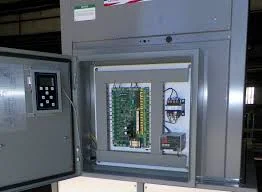
Precision Diagnostics for Chiller Superheat Instability in Southern California
Direct Engineering Summary
Electronic Expansion Valve (EXV) stepper motor failures on industrial chillers manifest as erratic superheat control, often leading to evaporator liquid-level hunting. Western Mechanical, Inc. diagnoses these issues by evaluating bipolar stepper winding integrity (resistance within 5% of OEM spec), verifying capacitance or optical liquid-level sensor accuracy (typically +/- 2mm), and analyzing PID controller tuning parameters. Our UA Local 250 journeymen ensure precise refrigerant metering, restoring chiller efficiency and stability. Contact Western Mechanical, Inc., CSLB #618138, at (661) 251-0111 for expert service.
Engineering Tolerances & Governing Standards
Parameter
Specification
Standard
Stepper Motor Winding Resistance Tolerance
Within +/- 5% of OEM specified value
Manufacturer's Data Sheet
Evaporator Liquid Level Sensor Accuracy
+/- 2 mm (capacitance/optical)
ASHRAE 15 Safety Standard
Superheat Control Stability
Within +/- 1.0 K (1.8 F) of setpoint
ASHRAE 90.1 Energy Standard
EXV Step Resolution
Minimum 16000 steps for full stroke
OEM Design Specification
Refrigerant Charge Accuracy
Within +/- 2% of optimal charge
AHRI 550/590 Performance Standard
Diagnosing EXV Stepper Motor Malfunctions
Electronic Expansion Valves (EXVs) are critical for precise refrigerant superheat control in modern industrial chillers, utilizing stepper motors for incremental valve adjustments. When a stepper motor malfunctions, often due to winding degradation, short circuits, or mechanical binding, it loses its ability to accurately position the valve pintle. This results in erratic refrigerant flow, leading to unstable evaporator superheat. Our UA Local 250 technicians employ specialized multimeters and oscilloscopes to test individual winding resistances and current waveforms, ensuring the motor's electrical integrity meets OEM specifications and diagnosing subtle failures before they escalate.
A common diagnostic challenge involves differentiating between an electrical stepper motor fault and a mechanical obstruction within the EXV body. While electrical tests pinpoint winding issues, a complete diagnosis requires observing the valve's physical response to control signals. In Southern California's fluctuating ambient temperatures, precise superheat control is paramount for optimal chiller efficiency and preventing liquid slugging back to the compressor. Addressing these stepper motor failures promptly mitigates energy waste and extends the operational life of high-value centrifugal and screw compressors.
Evaporator Liquid Level Hunting & PID Oscillation
Evaporator liquid level hunting is a direct consequence of unstable refrigerant metering, frequently initiated by a failing EXV stepper motor or poorly tuned PID control loops. In flooded evaporators, maintaining a consistent liquid level is crucial for maximizing heat transfer surface area. When the EXV overshoots or undershoots, the liquid level oscillates, causing the chiller's capacity to fluctuate wildly. Our engineers analyze trends from evaporator liquid-level sensors (capacitance or optical types) to identify the amplitude and frequency of these oscillations, pinpointing the root cause whether it's the EXV or the control logic.
PID (Proportional-Integral-Derivative) controller oscillation exacerbates liquid level hunting, as the controller attempts to correct an already unstable system. Incorrectly tuned P, I, or D gains can lead to sustained oscillations around the superheat setpoint, preventing the chiller from achieving stable and efficient operation. Western Mechanical, Inc. specializes in re-tuning these complex control algorithms, leveraging our deep understanding of refrigerant dynamics and chiller thermodynamics. This optimization is vital for facilities in regions like Acton and the broader Southern California industrial corridor, where consistent cooling performance directly impacts production and operational costs.
Advanced Sensor Integration & Control Optimization
Modern industrial chillers integrate sophisticated sensors to monitor and control refrigerant flow and evaporator conditions. Capacitance and optical liquid-level sensors provide real-time data on the refrigerant charge within the evaporator, feeding critical information to the chiller's control system. Failures or inaccuracies in these sensors can directly contribute to EXV stepper motor mispositioning and subsequent superheat hunting, even if the stepper motor itself is functional. Our approach includes validating sensor calibration and integrity, ensuring that the control system receives accurate feedback for precise metering.
Optimizing EXV performance extends beyond component replacement; it involves a holistic review of the chiller's entire control architecture. This includes verifying communication protocols between the chiller controller and the EXV, assessing power supply stability, and ensuring proper grounding to prevent electrical noise interference. For facilities regulated by Title 24 Part 6 or HCAI PIN 70, achieving and maintaining optimal chiller efficiency through precise EXV control is not just about performance, but also about compliance and energy stewardship. Our UA Local 250 journeymen are adept at these complex system integrations, delivering robust and reliable solutions.
UA Local 250 Certified Field Diagnostic & Commissioning Protocol
Verify EXV stepper motor winding resistance across all phases using a digital multimeter; compare to OEM specifications (typically +/- 5% tolerance).
Monitor evaporator superheat stability using calibrated temperature and pressure transducers; log data for PID oscillation analysis over 15-minute intervals.
Inspect and calibrate evaporator liquid-level sensors (capacitance or optical); confirm output signal linearity and accuracy against known refrigerant levels.
Actuate EXV manually through its full stroke (0-100%) via the chiller's HMI or service tool, observing pintle movement and listening for mechanical binding.
Analyze chiller control panel's EXV fault codes and alarm history; cross-reference with system operating parameters to identify intermittent failures.
Facility Director & Chief Engineer FAQs
What causes an EXV stepper motor to fail on a large chiller?
EXV stepper motor failures often stem from winding degradation due to heat, electrical spikes, or insulation breakdown. Mechanical wear on the lead screw or pintle, ingress of contaminants, or even sustained vibration can also lead to binding and eventual motor failure, disrupting precise refrigerant flow control.
How does evaporator liquid level hunting impact chiller efficiency?
Liquid level hunting significantly reduces chiller efficiency by causing inconsistent heat transfer in the evaporator. When the level fluctuates, the effective heat exchange surface area changes, leading to unstable superheat, reduced capacity, and increased energy consumption as the compressor works harder to compensate.
Can PID tuning resolve EXV superheat oscillation?
Yes, proper PID tuning can often resolve or significantly mitigate EXV superheat oscillation, especially if the underlying stepper motor and sensors are functional. Adjusting the proportional, integral, and derivative gains helps the controller react more stably to changes, preventing overshoots and undershoots around the superheat setpoint.
What is the role of liquid-level sensors in EXV control?
Liquid-level sensors (capacitance or optical) provide crucial feedback to the chiller's control system regarding the refrigerant charge in the evaporator. This data allows the EXV to precisely meter refrigerant, maintaining optimal superheat and preventing liquid slugging, which is vital for compressor longevity and overall system efficiency.
Acton Headquarters & 24/7 Southern California Dispatch
Western Mechanical, Inc. • 2210 Soledad Canyon Road, Suite O, Acton, CA 93510 • Primary Phone: (661) 251-0111 • 24/7 Toll-Free: (800) 585-5085 • CSLB #618138 (C-20, C-38, C-4)