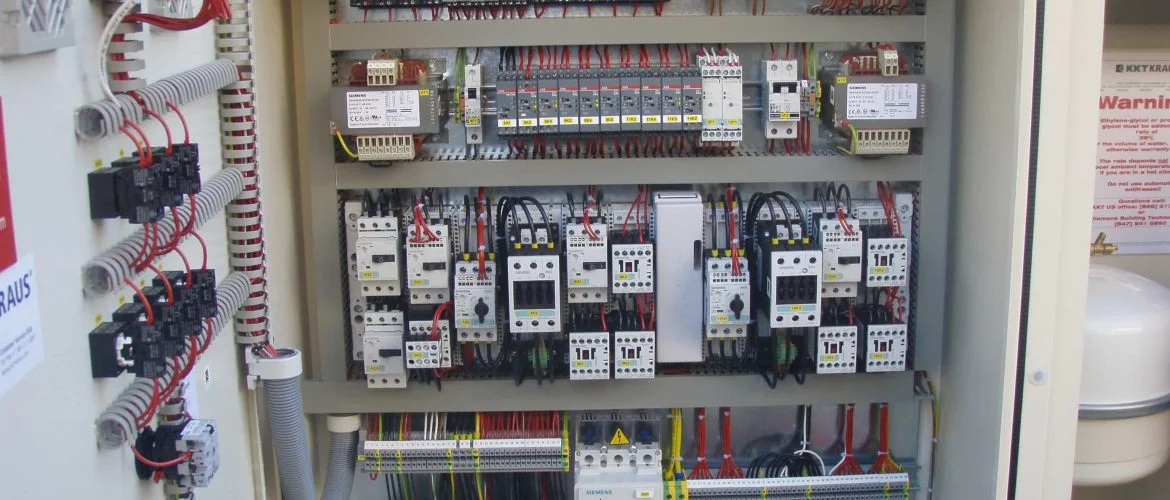
Protecting Non-Condensing Cast-Iron and Steel Boilers from Cold Hydronic Return Slugs
Direct Engineering Summary
Preventing firetube boiler thermal shock and subsequent tube-sheet ligament cracking requires maintaining return water temperatures above 140°F (60°C) for steel boilers and 120°F (49°C) for cast-iron boilers, as per ASME Section IV. This is achieved through controlled blending of hot supply water with cold return water using dedicated blend pumps, 3-way thermostatic valves, and header temperature sensors. Western Mechanical, Inc., with CSLB #618138 and UA Local 250 journeymen, specializes in these protective installations for optimal boiler longevity and efficiency. Contact us at (661) 251-0111.
Engineering Tolerances & Governing Standards
Parameter
Specification
Standard
Minimum Steel Boiler Return Temperature
>140°F (60°C)
ASME Section IV, HG-300
Minimum Cast Iron Boiler Return Temperature
>120°F (49°C)
ASME Section IV, H-300
Temperature Differential (Supply-Return)
<20°F (11°C) during startup
Manufacturer Specific Guidelines
Blend Valve Response Time
<10 seconds to 90% setpoint
ASHRAE 90.1 Control Requirements
Return Water Velocity (Min)
2-4 ft/s (0.6-1.2 m/s)
Hydronic Institute Standards
The Physics of Thermal Shock and Ligament Cracking
Thermal shock in firetube boilers occurs when cold hydronic return water, often below 140°F (60°C), rapidly contacts the hot tube-sheet and boiler sections. This sudden temperature differential induces severe localized thermal stresses. The steel or cast iron, already under tensile stress from internal pressure, experiences rapid contraction in the colder zones. Repeated cycles of this stress can exceed the material's fatigue limit, particularly in the ligaments between tube holes, leading to micro-cracks that propagate over time into catastrophic failures, significantly reducing boiler lifespan and increasing maintenance costs.
The non-uniform expansion and contraction create shear forces at the interfaces of materials with different thermal masses and temperatures. For instance, a cold slug of water entering a boiler operating at 200°F (93°C) can cause a localized temperature drop of 60°F or more in seconds. This rapid change generates stress concentrations around critical areas like tube-to-tube sheet welds and header connections. Western Mechanical, Inc. engineers understand these failure mechanisms and implement robust solutions to mitigate these damaging thermal gradients.
Engineered Solutions: Blend Pumps and Thermostatic Valves
To effectively combat thermal shock, Western Mechanical, Inc. designs and installs integrated systems utilizing blend pumps, 3-way thermostatic mixing valves, and precise temperature sensors. A blend pump circulates a portion of the hot boiler supply water directly into the cold return line, pre-heating the incoming water before it reaches the boiler. This proactive approach ensures the return water temperature remains above the critical threshold, typically 140°F for steel and 120°F for cast-iron boilers, as mandated by ASME Section IV.
The 3-way thermostatic valve plays a pivotal role by modulating the flow of hot supply water into the return line based on real-time temperature readings from a sensor placed in the boiler return header. This dynamic control prevents cold slugs and maintains a stable, elevated return water temperature. Our UA Local 250 journeymen are experts in sizing and calibrating these components for optimal performance, ensuring compliance with Southern California's stringent energy codes and maximizing boiler efficiency and longevity for industrial and institutional facilities.
Instrumentation, Control, and Lifecycle ROI
Accurate instrumentation is paramount for effective thermal shock prevention. We deploy high-resolution RTD or thermistor sensors in the boiler return header, interfaced with a robust Building Management System (BMS) or dedicated boiler controller. This allows for precise monitoring and control of the blend valve's modulation, ensuring immediate response to fluctuating load conditions or sudden influxes of cold condensate. Proper control logic prevents short-cycling of the blend pump and optimizes energy consumption while safeguarding the boiler.
Investing in a properly designed thermal shock protection system yields significant lifecycle ROI. By preventing premature tube-sheet cracking and boiler failure, facilities avoid costly repairs, unscheduled downtime, and potential regulatory fines. The extended operational life of the boiler, coupled with optimized efficiency from stable operating temperatures, translates into substantial long-term savings. Western Mechanical, Inc. provides comprehensive commissioning and ongoing maintenance to ensure these systems perform reliably for decades, protecting your critical assets.
UA Local 250 Certified Field Diagnostic & Commissioning Protocol
Verify boiler return water temperature sensor calibration against a certified standard, ensuring accuracy within +/- 1°F.
Confirm blend pump operation and flow rate against design specifications using a calibrated ultrasonic flow meter.
Actuate 3-way thermostatic mixing valve through its full range, verifying smooth modulation and no hunting or sticking.
Monitor boiler return header temperature during startup and load swings, ensuring it consistently remains above 140°F (steel) or 120°F (cast-iron).
Inspect boiler tube sheets and ligaments for any signs of existing cracking or stress corrosion, documenting findings with borescope imaging.
Facility Director & Chief Engineer FAQs
Why is cold return water so detrimental to firetube boilers?
Cold return water causes rapid, localized cooling of hot boiler components, particularly the tube sheet. This differential contraction creates immense thermal stresses that can lead to fatigue cracking, especially in the ligaments between tube holes, significantly shortening the boiler's operational life and increasing the risk of catastrophic failure.
What is the ideal return water temperature for a steel firetube boiler?
For steel firetube boilers, the ASME Section IV code and most manufacturers recommend maintaining the return water temperature above 140°F (60°C). For cast-iron boilers, this threshold is typically 120°F (49°C). Consistent adherence to these minimums is crucial for preventing thermal shock.
How do blend pumps and 3-way valves prevent thermal shock?
Blend pumps recirculate hot boiler supply water into the cold return line, pre-heating it. Three-way thermostatic valves then precisely modulate this hot water injection based on return line temperature, ensuring the incoming water is always above the critical thermal shock threshold before it enters the boiler, thus equalizing temperatures.
Can thermal shock protection improve boiler efficiency?
Yes, by maintaining stable and elevated return water temperatures, thermal shock protection systems help the boiler operate within its designed parameters, reducing stress on materials and minimizing scale formation. This leads to more consistent heat transfer, less fuel consumption, and overall improved operational efficiency and longevity.
Acton Headquarters & 24/7 Southern California Dispatch
Western Mechanical, Inc. • 2210 Soledad Canyon Road, Suite O, Acton, CA 93510 • Primary Phone: (661) 251-0111 • 24/7 Toll-Free: (800) 585-5085 • CSLB #618138 (C-20, C-38, C-4)